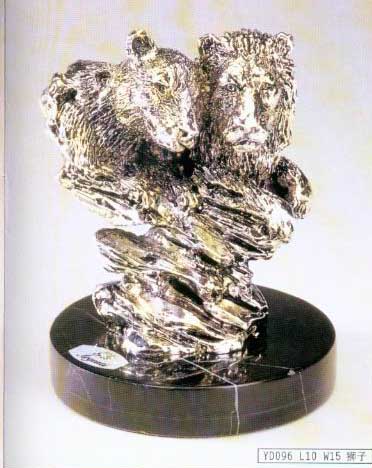
Sculptures
Source decorative sculptures in bulk directly from vetted manufacturers. This category serves importers, home decor wholesalers, distributors, and brands seeking reliable OEM and private-label production. Find suppliers capable of meeting your volume requirements and quality standards for indoor and outdoor sculptural accents.
Sourcing sculptures at scale requires navigating a fragmented manufacturing landscape where material mastery and finishing techniques dictate the final product's market viability. Whether you are procuring cast resin pieces for mass-market retail or large-scale metal installations for commercial spaces, the core challenge lies in translating design intent into consistent, defect-free production runs while managing heavy and fragile freight.
Material Specifications and Manufacturing Processes
The choice of material fundamentally alters the production process, tooling costs, and the factory profile you need. A facility excelling in polyresin casting rarely possesses the specialized equipment required for lost-wax bronze casting or CNC marble carving.
Common Production Methods
| Material / Method | Tooling Cost | Lead Time Impact | Typical Application |
|---|---|---|---|
| Polyresin (Casting) | Low to Medium | Fast mold creation | Intricate indoor decor, mass market |
| Metal (Lost-Wax/Sand Casting) | High | Slower, multi-step process | High-end outdoor, commercial installations |
| Ceramic (Slip Casting) | Medium | Requires firing cycles | Contemporary indoor accents |
| Stone (CNC/Hand Carving) | Low (CNC programming) | Slow per unit | Premium garden and architectural |
When engaging a factory for custom designs, OEM/ODM services become critical. For cast materials, you must specify the exact resin-to-filler ratio. High filler content (like calcium carbonate) reduces costs but increases brittleness and weight, leading to higher transit damage rates.
Struggling to find a factory with the right material expertise for your design? We match your specifications with vetted manufacturers.
Talk to our teamQuality Control and Defect Prevention
Sculptures are highly susceptible to aesthetic and structural defects during manufacturing. Relying solely on a final visual check is insufficient; quality must be engineered into the process.
Critical Inspection Points
- Mold Degradation: Silicone molds for resin casting degrade over time. Specify the maximum number of pulls per mold (often 40 to 60) before a new mold must be created to maintain detail sharpness.
- Surface Porosity: In metal and resin casting, trapped air causes pinholes. This requires careful control of pouring techniques and vacuum degassing.
- Finishing and Patina: Hand-applied finishes (painting, electroplating, chemical patinas) are prone to batch-to-batch variation. Establish clear physical "golden samples" and acceptable variance ranges.
- Structural Integrity: For large or multi-part sculptures, check joint strength, internal armatures (especially for outdoor pieces facing wind loads), and base stability (center of gravity).
Implementing robust quality control & inspection protocols, including in-line checks during the casting and finishing phases, is essential to prevent costly rework.
Pre-Shipment QC Checklist for Sculptures
- Verify dimensions and weight against approved specifications
- Inspect for casting defects (pinholes, seam lines, warping)
- Check finish consistency against the golden sample under standard lighting
- Conduct drop tests on packaging (crucial for fragile materials)
- Verify base stability and mounting hardware (if applicable)
Packaging and Freight Considerations
The true cost of sourcing sculptures often lies in logistics and damage rates rather than the unit price. Sculptures frequently have irregular shapes, leading to poor container utilization (shipping "air").
Packaging must be over-engineered. For fragile items, bespoke molded EPS (expanded polystyrene) or EPE foam is mandatory; generic bubble wrap is inadequate for bulk transit. For heavy stone or metal pieces, ISPM-15 compliant wooden crating with secure internal strapping is required to prevent shifting. Managing these complexities often requires experienced shipping & freight coordination to optimize container loads and minimize breakage.
MOQs, Lead Times, and Pricing
Order minimums and production timelines vary drastically based on the material and the factory's scale.
Pricing is driven primarily by material weight, complexity of the mold, and the labor intensity of the finishing process. Tooling costs for resin are relatively low, making it accessible for new designs, whereas steel molds for high-pressure die casting or complex bronze molds require significant upfront investment.
Need to optimize your landed costs? We help negotiate pricing, manage tooling investments, and consolidate freight for bulky items.
Get a free consultationFAQ
Successfully sourcing sculptures requires a rigorous approach to material selection, tooling management, and packaging engineering. By controlling the variables on the factory floor and optimizing your freight strategy, you can secure high-quality pieces that arrive intact and protect your margins.
Get Sourcing Help for Sculptures
Tell us your requirements and our experts will connect you with verified manufacturers.