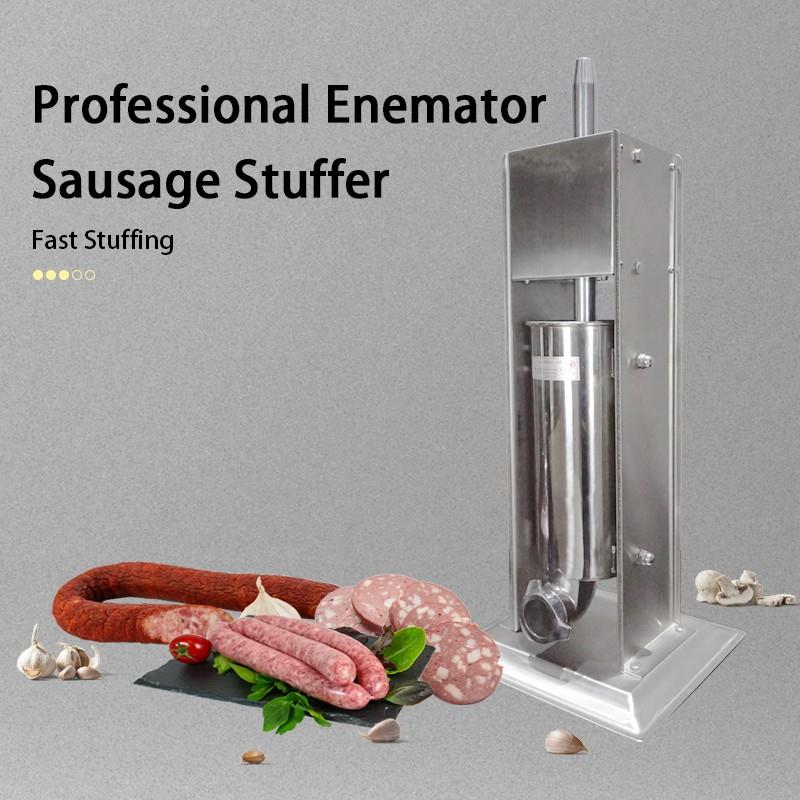
Sausage Stuffers
Source commercial sausage stuffers from vetted manufacturers and wholesale suppliers. Designed for importers, distributors, and brands seeking reliable OEM/ODM production, our factory-direct network ensures competitive bulk pricing on high-capacity meat processing equipment without compromising on build quality or food safety compliance.
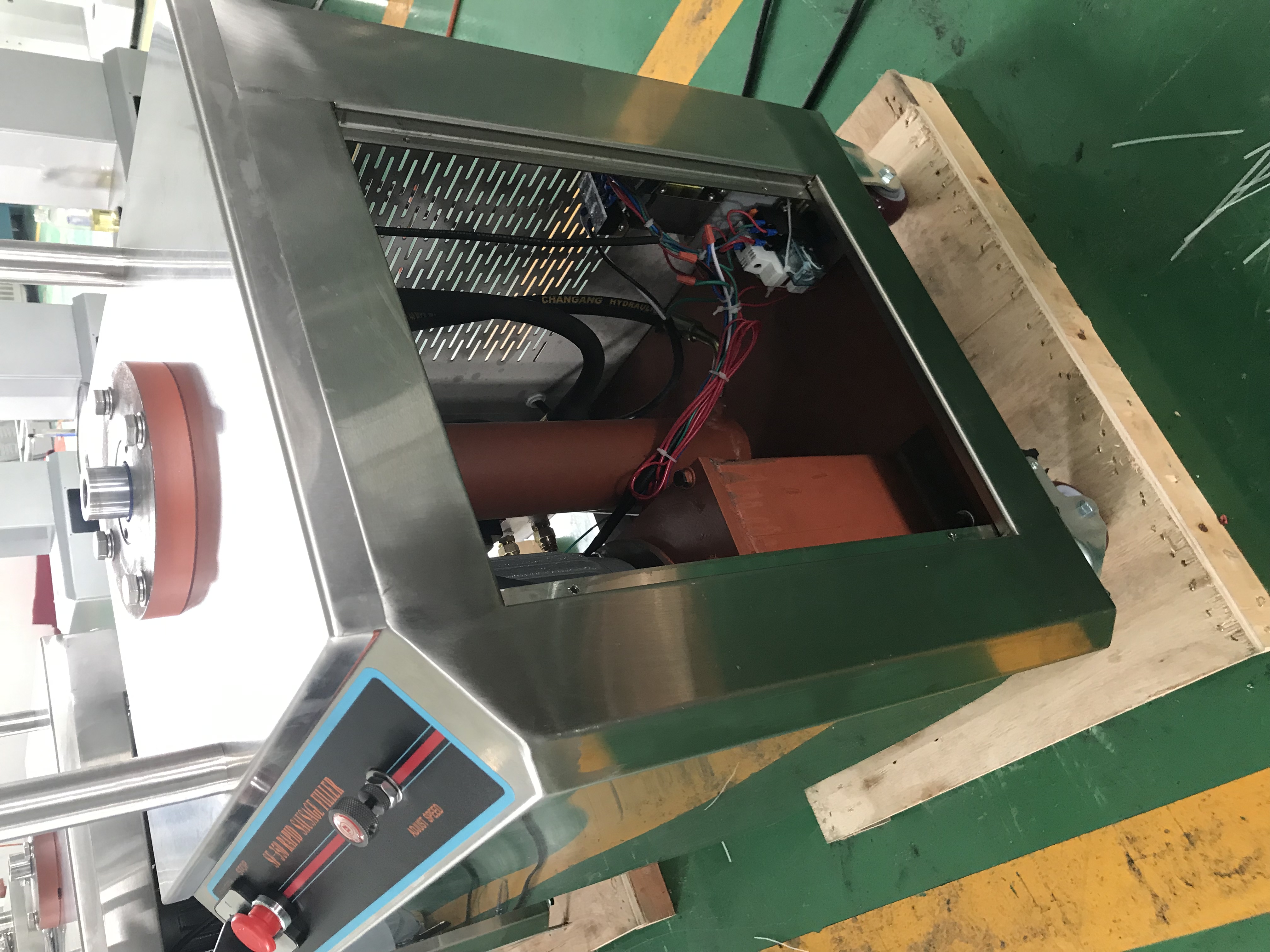
Sourcing commercial sausage stuffers at scale requires navigating a highly fragmented supplier base where identical outward appearances often mask significant internal compromises. For volume buyers, the primary challenge is ensuring that the critical internal components—specifically the gear reduction systems, hydraulic pumps, and piston seals—can withstand continuous use in demanding food processing environments without failing or posing food safety risks.
Critical Specifications for Commercial Stuffers
When negotiating with factories, precision in your specification sheet is your first line of defense against quality fade. Suppliers frequently offer tiered pricing based on material substitutions that are not immediately visible.
- Material Grades: The cylinder, base, and extrusion tubes must be specified as SUS304 stainless steel. Lower-tier suppliers will often substitute SUS201 to cut costs, which is highly susceptible to corrosion when exposed to the salt and organic acids present in meat processing.
- Air Release Valves: A high-quality piston must feature a reliable, easily cleanable air release valve. If the valve sticks or fails, air pockets will form in the casing, leading to product spoilage and casing blowouts.
- Motor and Gearbox (Electric/Hydraulic Models): For electric models, specify pure copper-wound motors. Aluminum-wound motors are a common cost-saving measure but suffer from rapid thermal degradation under the heavy torque required for cold meat extrusion.
| Drive Type | Typical Capacity | Primary Use Case | Failure Points to Check |
|---|---|---|---|
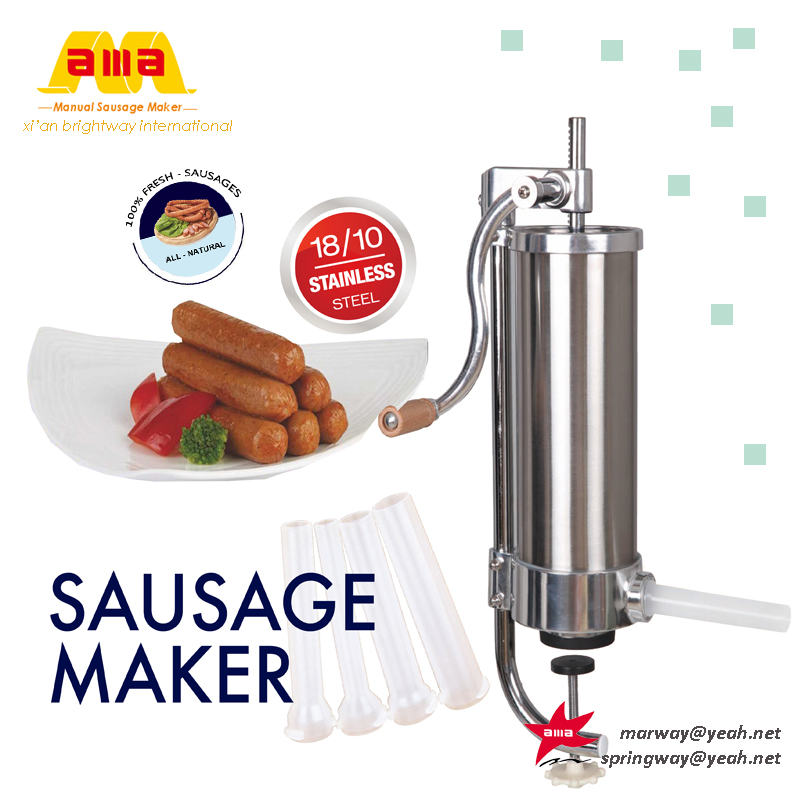
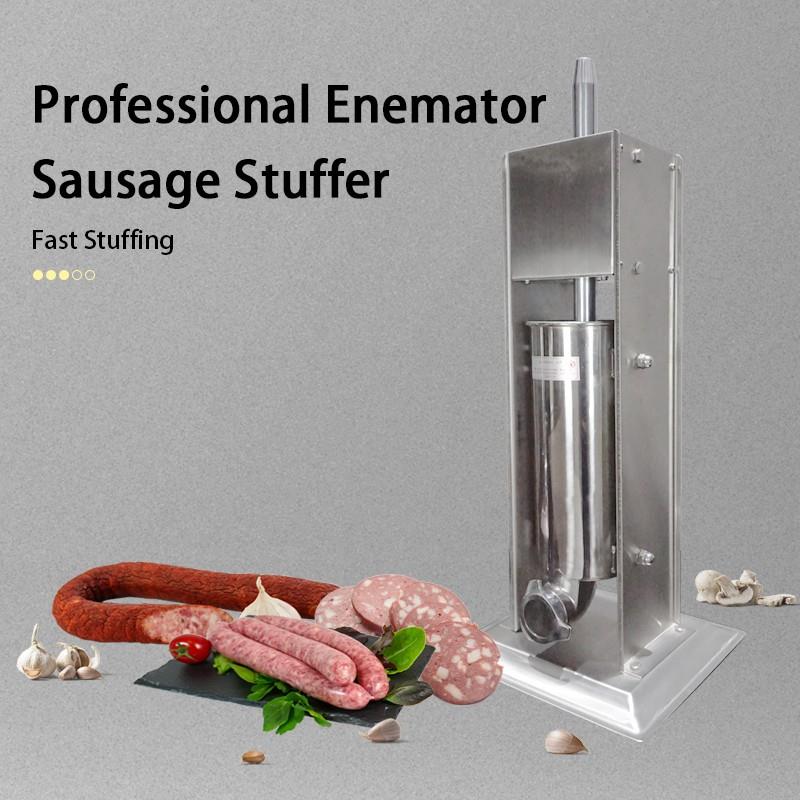
| Manual (Geared) | 3L - 15L | Light commercial, butcher shops | Stripped nylon gears, handle weld failure |
| Electric (Motorized) | 10L - 30L | Medium volume, continuous retail | Motor burnout, foot pedal switch failure |
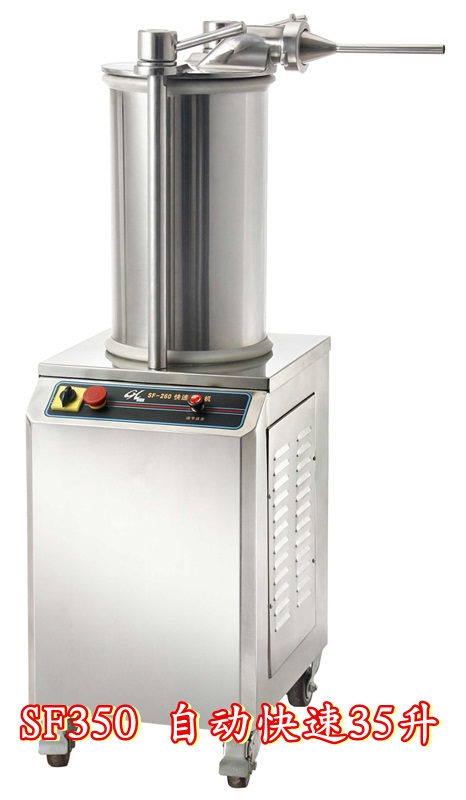
| Hydraulic | 15L - 50L+ | Industrial processing, high volume | Hydraulic fluid leaks, pump seal degradation |
Struggling to verify whether a supplier's specifications match their actual production quality? Let us handle the technical vetting.
Talk to our teamManufacturing Realities and Quality Control
The gap between a sample unit and mass production can be significant in food processing machinery. The most common defects occur in the welding and sealing phases of production.
Cylinders must be seamlessly welded and polished. Porous welds or unpolished seams act as bacteria traps, instantly failing sanitation inspections in western markets. Furthermore, the tolerances between the piston O-ring and the cylinder wall must be exact; too tight, and the motor overloads; too loose, and meat bypasses the piston.
Conducting thorough Factory Audits before placing an order is essential to verify that the manufacturer possesses the necessary CNC machining capabilities to maintain these tight tolerances.
Pre-Shipment Inspection Focus Areas
- Verify SUS304 composition using chemical testing reagents on both the cylinder and base.
- Conduct motor load testing under simulated continuous operation (for electric models).
- Inspect all cylinder welds for porosity, ensuring a sanitary, mirror-polished finish.
- Check the durometer (hardness) and food-grade certification of the silicone piston O-rings.
- Test the hydraulic pressure stability over a 30-minute cycle (for hydraulic models).
Implementing rigorous Quality Control & Inspection protocols before the container is loaded is the only way to catch these structural defects before they reach your warehouse.
Sourcing Mechanics: MOQs, Pricing, and Customization
Buying direct from factories offers substantial margin improvements, provided you understand the standard commercial terms and customization pathways.
OEM and Private Labeling
Many brands leverage OEM/ODM Services to differentiate their equipment. Common customizations include branded stainless steel etching, custom foot-pedal designs for better ergonomics, and upgraded gear ratios for handling stiffer, colder meat mixtures.
Compliance and Certification
If you are importing electric or hydraulic stuffers into North America or Europe, electrical safety and sanitation certifications (such as CE, ETL, or NSF) are non-negotiable. Ensure your supplier's certifications are current and apply specifically to the model you are purchasing, not just a generic factory ISO certificate. Utilizing professional Compliance & Testing services ensures your equipment meets all regional regulatory standards before shipping.
Ready to source commercial sausage stuffers at scale? We can help you negotiate better terms and secure reliable OEM production.
Get a free consultationFrequently Asked Questions
Successful sourcing in the meat processing equipment category requires looking past the polished exterior of a sample unit. By strictly defining your material grades, motor specifications, and compliance requirements upfront, you protect your brand from costly returns and safety liabilities. Partnering with experienced sourcing professionals ensures these standards are enforced on the factory floor, every single time.
Get Sourcing Help for Sausage Stuffers
Tell us your requirements and our experts will connect you with verified manufacturers.