Rubber Extruders
Source industrial-grade rubber extruders from vetted suppliers and manufacturers. Designed for importers, heavy machinery distributors, and manufacturing facilities, our network provides reliable access to both standard configurations and custom OEM production lines to meet your exact processing requirements.
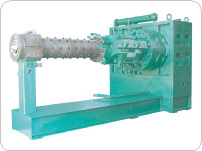
Sourcing rubber extruders requires aligning machine specifications directly with your target rubber compounds, whether you are processing EPDM, NBR, SBR, or silicone. The primary sourcing challenge isn't merely locating a factory with the right capacity; it is verifying that the supplier possesses the engineering depth to customize screw geometries and temperature control systems. Without this precision, operators risk premature vulcanization (scorch) or inconsistent material density during the extrusion process.
Defining Core Extruder Specifications
When communicating with manufacturers, vague specifications lead to underperforming machinery. You must explicitly define the mechanical and thermal parameters based on your compound's Mooney viscosity and the required output profile.
- Screw Diameter and L/D Ratio: The Length-to-Diameter (L/D) ratio dictates the mixing duration and shear heat generation. Standard cold feed extruders typically range from 12:1 to 18:1, while specialized pin-barrel extruders may require different ratios to optimize distributive mixing without excessive heat buildup.
- Temperature Control Zones: Rubber extrusion demands precise, multi-zone temperature regulation (heating and cooling) across the barrel, screw, and die head. Specify closed-loop Water Temperature Control Units (TCUs) rather than relying on basic friction heat management.
- Drive Systems and Gearboxes: Extruding high-viscosity rubber requires immense torque. Specify hardened-tooth gearboxes and premium variable-frequency drives (VFDs) to handle the load without premature wear.
| Extruder Type | Feed State | Mixing Capability | Typical Application |
|---|---|---|---|
| Hot Feed | Pre-warmed on a mill | Low (relies on upstream mixing) | High-volume, continuous profile extrusion |
| Cold Feed | Ambient temperature strips | Moderate to High | General automotive and industrial hoses |
| Pin-Barrel | Ambient temperature strips | Very High | Complex compounds requiring low extrusion temperatures |
Need to verify a manufacturer's engineering capabilities? We can help vet suppliers to ensure they meet your technical requirements.
Talk to our teamFactory Vetting and Manufacturing Quality
The visual appearance of a rubber extruder tells you very little about its operational lifespan. The true quality of heavy processing machinery is hidden in the metallurgy, machining tolerances, and component sourcing. When evaluating a supplier, it is critical to conduct thorough Factory Audits to verify their in-house capabilities versus what they outsource.
Critical Quality Checkpoints for Extruder Manufacturers
- Barrel and Screw Metallurgy: Ensure the use of nitrided alloy steel (e.g., 38CrMoAlA) with a hardness rating of at least HV850 for wear resistance.
- Machining Tolerances: Verify the factory's CNC boring and milling equipment used to maintain tight clearances between the screw and barrel.
- Component Provenance: Check the brands used for critical electrical components (PLCs, VFDs) and bearings (e.g., Siemens, ABB, NSK, or SKF).
- Testing Infrastructure: Confirm the supplier has a dedicated testing bay with adequate power and cooling water to run the machine under load before shipment.
Pricing, MOQs, and Lead Times
Rubber extruders are capital equipment. Prices vary drastically based on the screw diameter, automation level, and the inclusion of downstream equipment (like continuous vulcanization lines or cooling tanks).
Because these machines are heavy and irregularly shaped, logistics require careful planning. Standard extruders may fit in standard 20ft or 40ft containers, but larger lines or pin-barrel systems often require flat-rack containers or break-bulk shipping. Coordinating the Shipping & Freight early in the procurement process prevents costly delays at the port of origin.
Managing heavy machinery logistics and customs clearance is complex. Let our experts handle the end-to-end supply chain.
Get a free consultationFrequently Asked Questions
Ultimately, the upfront cost of a rubber extruder is only a fraction of its total cost of ownership. Sourcing successfully means focusing on the machine's ability to maintain consistent output without excessive downtime or material waste. By rigorously vetting the manufacturer's engineering pedigree and insisting on strict quality controls during assembly, you protect your production line and your bottom line.
Get Sourcing Help for Rubber Extruders
Tell us your requirements and our experts will connect you with verified manufacturers.