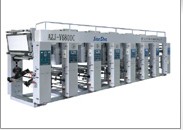
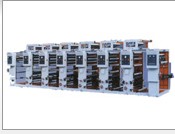
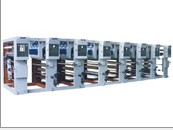
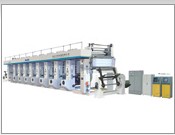
Rotogravure Printing Machines
Source high-performance rotogravure printing machines directly from vetted manufacturers and suppliers in Asia. Designed for industrial packaging producers, commercial printers, and equipment importers, our network offers scalable, high-speed presses for flexible packaging, paper, and foil production.
Rotogravure printing machines represent a massive capital expenditure, forming the backbone of flexible packaging production. Sourcing these presses from overseas manufacturers offers significant cost advantages, but the stakes for precision, web tension stability, and long-term durability are exceptionally high. For industrial buyers, evaluating a factory requires looking past the spec sheet to understand their engineering tolerances, component supply chains, and assembly standards.
Defining Specifications for Industrial Rotogravure Presses
When commissioning a rotogravure press, the specifications dictate not only the production capacity but the structural integrity required of the machine frame.
- Web Width & Printing Width: Standard machines range from 600mm to 1500mm. The printing width is typically 50mm narrower than the maximum web width. Wider webs require exponentially stiffer guide rollers and frame construction to prevent deflection.
- Mechanical vs. Printing Speed: A machine rated for a mechanical speed of 250 m/min may only achieve a stable printing speed of 200 m/min depending on the substrate (BOPP, PET, CPP, nylon, or foil) and ink drying times.
- Tension Control: High-speed presses require closed-loop tension control systems utilizing dancer rollers and load cells across multiple zones (unwind, in-feed, out-feed, rewind) to maintain register accuracy.
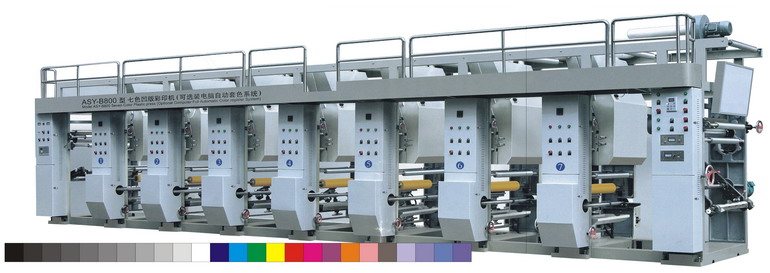
- Color Stations: Ranging from 2 to 12+ colors. Each additional station increases the cumulative friction and tension variables the drive system must manage.
Drive Systems: Mechanical vs. Electronic Line Shaft (ELS)
The most significant architectural choice when sourcing a modern gravure press is the drive system. This dictates the machine's price point, setup speed, and long-term maintenance requirements.
| Feature | Mechanical Line Shaft (MLS) | Electronic Line Shaft (ELS) |
|---|---|---|
| Drive Mechanism | Single main motor driving a long transmission shaft | Individual servo motors driving each color station independently |
| Register Accuracy | Susceptible to mechanical wear and backlash over time | Maintained digitally via high-frequency servo corrections |
| Job Changeover | Slower, manual mechanical adjustments required | Rapid, with automated pre-register functions |
| Ideal Application | Budget-conscious operations with long, continuous runs | High-speed production with frequent job changeovers |
Procuring heavy industrial equipment requires rigorous supplier vetting. Let our engineers help validate factory capabilities and technical requirements.
Discuss your machinery specsCritical Quality Checkpoints on the Factory Floor
Not all manufacturers build to the same standard, even if their spec sheets look identical. When evaluating suppliers or conducting Factory Audits, pay close attention to the following areas:
Factory Evaluation Criteria
- Wall Plate Thickness: Cast iron frames (70mm to 100mm thick) are mandatory for dampening vibration at speeds exceeding 250 m/min. Welded steel plates are a red flag for high-speed applications.
- Component Provenance: Verify the origin of critical electronics. Premium machines utilize genuine servo motors and PLCs from brands like Siemens, Yaskawa, or Bosch Rexroth.
- Drying Tunnel Efficiency: Inspect the air nozzle design and thermal insulation. Efficient, high-volume air circulation is critical for water-based inks or high-speed solvent applications.
- Guide Roller Precision: Rollers must be dynamically balanced to handle high RPMs without introducing web flutter.
Never authorize shipment without a comprehensive Factory Acceptance Test (FAT). Implementing strict Quality Control & Inspection during the FAT ensures the machine hits the contracted printing speeds and register tolerances (typically ±0.1mm) using your specific substrates and cylinders.
Pricing, Lead Times, and Import Logistics
Rotogravure presses are build-to-order machinery. Off-the-shelf purchasing does not exist in this category.
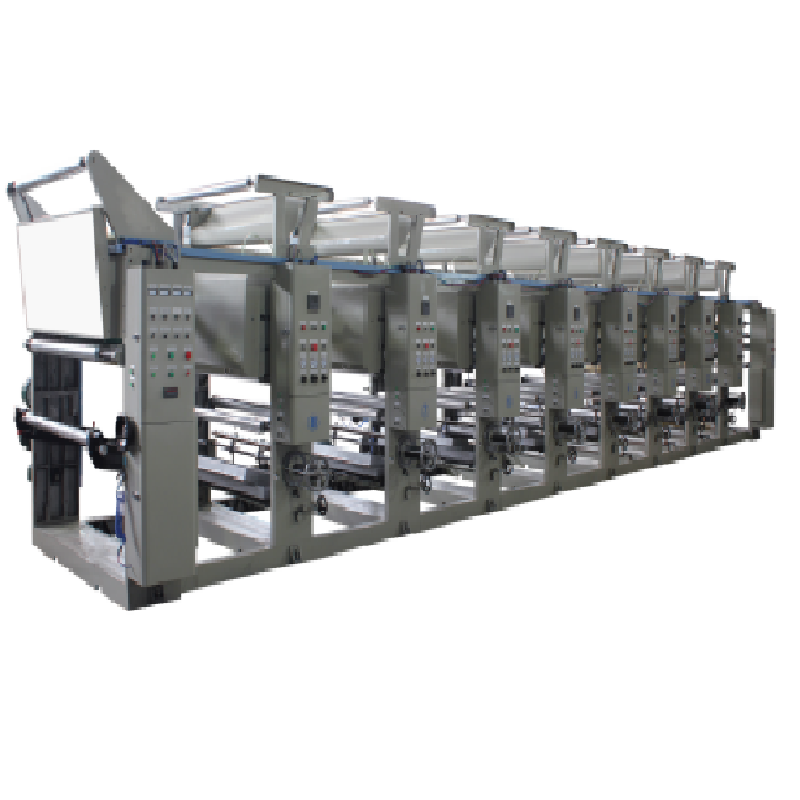
Logistics for these machines are highly complex. A standard 8-color press can weigh upwards of 25 tons and span 20 meters in length. Shipping requires multiple 40HQ containers or specialized flat racks. Proper dismantling, anti-rust packaging, and rigging are critical to prevent transit damage. Coordinating these movements requires experienced Shipping & Freight management to ensure seamless export and customs clearance.
Navigating heavy machinery freight and customs clearance? We manage the end-to-end logistics for oversized industrial equipment.
Talk to our logistics teamFrequently Asked Questions
Sourcing a rotogravure press is more than a transaction; it is integrating a highly complex, high-stakes system into your production line. Success requires strict oversight from the initial specification sheet through to the final factory acceptance test.
Get Sourcing Help for Rotogravure Printing Machines
Tell us your requirements and our experts will connect you with verified manufacturers.