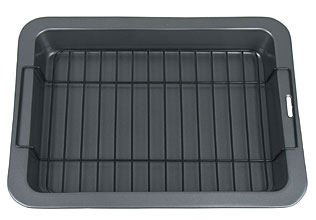
Roasting Pans
Source high-quality roasting pans from vetted suppliers and manufacturers across Asia. Designed for importers, wholesalers, distributors, and brands seeking reliable bulk purchasing and OEM/private-label production, our network delivers commercial-grade and consumer cookware built to your exact specifications.
Sourcing roasting pans at volume requires balancing material costs with structural integrity. Because these vessels are subjected to high oven temperatures and heavy loads (like large poultry or roasts), the primary manufacturing challenges revolve around preventing thermal warping, ensuring even heat distribution, and securing handle attachments capable of bearing significant sheer weight.
Material Specifications and Performance
The core material dictates the stamping process, tooling requirements, and the final retail positioning of the pan. Specifying the correct gauge is critical; thinner materials reduce shipping weight and unit cost but drastically increase the risk of warping under broiler temperatures.
| Material | Heat Distribution | Warp Resistance | Typical Gauge/Thickness |
|---|---|---|---|
| Tri-Ply Stainless Steel | Excellent | High | 2.5mm to 3.0mm |
| Hard-Anodized Aluminum | Very Good | Moderate | 3.0mm to 4.0mm |
| Carbon Steel (Enamel) | Good | Very High | 1.0mm to 1.5mm |
| Cast Iron | Poor (but high retention) | Extreme | 4.0mm+ |
When dealing with stainless steel, specify the exact grade (e.g., 304 for the interior cooking surface, 430 for the exterior if magnetic induction compatibility is required). For coated aluminum or carbon steel pans, the application method of the non-stick or enamel coating must be tightly controlled to prevent blistering.
Need help verifying factory capabilities for heavy-gauge cookware production?
Get a free consultationManufacturing and Quality Control
The production of roasting pans typically involves deep drawing or stamping. Deep drawing requires precision tooling to ensure uniform wall thickness; if the tooling is imprecise, the corners of the pan will thin out, creating weak points that warp or burn food.
Handle attachment is another critical failure point. Handles are generally riveted or spot-welded. Heavy-duty roasting pans should utilize heavy-gauge stainless steel rivets. If welded, the factory must demonstrate consistent voltage control to prevent weak welds that snap under load. Implementing rigorous Quality Control & Inspection protocols during production is essential to catch these structural defects before assembly is completed.
Critical QC Checks for Roasting Pans
- Flatness tolerance: Base must not deviate more than 1mm to ensure stability.
- Handle shear strength: Load testing to minimum 15kg (33 lbs) per handle.
- Coating adhesion: Cross-hatch testing for non-stick or enamel finishes.
- Edge finishing: Rolled or flared edges must be completely smooth with no sharp burrs.
OEM/ODM and Customization
Many brands choose to develop custom tooling to differentiate their product lines. Developing a proprietary pan shape or handle design requires upfront investment in molds. When utilizing OEM/ODM Services, ensure the factory has in-house tooling capabilities, as this reduces lead times for prototypes and modifications.
Additionally, roasting pans are rarely sold alone; they almost always include a roasting rack (V-shaped or flat). Racks are often made of chrome-plated steel, stainless steel, or non-stick coated wire. Ensure the rack dimensions are perfectly matched to the pan's draft angle so it sits securely without scratching the interior walls.
Pricing, MOQs, and Lead Times
Cookware manufacturing is capital-intensive, and minimum order quantities reflect the setup time required for heavy stamping machinery.
Because tooling costs and production minimums are high, conducting thorough Factory Audits before transferring deposits is highly recommended. You need to verify the supplier's raw material sourcing, machinery tonnage, and adherence to international food-contact safety standards (like FDA or LFGB).
Streamline your cookware supply chain from mold creation to final delivery.
Talk to our teamFrequently Asked Questions
Successfully sourcing roasting pans requires strict oversight of raw material thickness, stamping precision, and handle integrity. By clearly defining these specifications upfront, you protect your brand from costly returns and safety liabilities associated with structural failures under high heat.
Get Sourcing Help for Roasting Pans
Tell us your requirements and our experts will connect you with verified manufacturers.