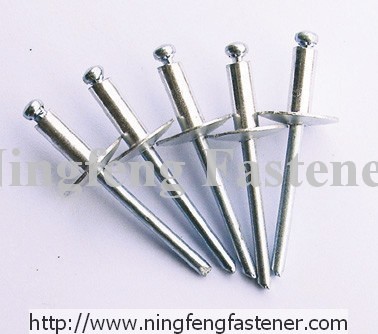
Rivets
Source industrial-grade rivets directly from vetted manufacturers and suppliers. Designed for importers, wholesalers, distributors, and brands requiring reliable bulk supply or custom OEM production. Secure competitive pricing, strict tolerance control, and consistent quality across high-volume fastener orders.
Sourcing rivets in commercial volumes is fundamentally an exercise in metallurgical precision and supply chain risk management. Because rivets form permanent mechanical joints, a single fastener failure—whether due to improper heat treatment, inadequate shear strength, or poor dimensional tolerances—can compromise an entire assembly. Securing a reliable supply chain requires partnering with manufacturers who maintain strict control over their cold-heading processes and raw material sourcing.
Critical Specifications for Volume Procurement
When negotiating with fastener factories, generic requests yield inconsistent results. Precise technical specifications must be established before production begins, particularly regarding material grades, grip ranges, and finish requirements.
Material Combinations and Metallurgy
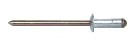
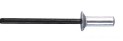
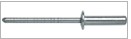
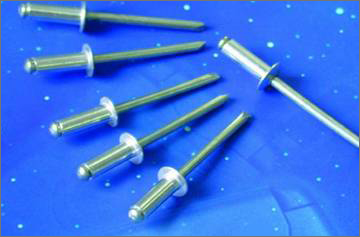
For blind rivets, the relationship between the rivet body (hat) and the mandrel is critical. Mismatched materials can lead to galvanic corrosion or improper setting.
| Body / Mandrel Material | Primary Application | Corrosion Resistance |
|---|---|---|
| Aluminum / Aluminum | Lightweight, low-stress assemblies | Excellent |
| Aluminum / Steel | General purpose, higher shear strength | Moderate (requires zinc plating on steel) |
| Steel / Steel | High-strength structural joints | Low to Moderate (plating dependent) |
| Stainless 304 / Stainless 304 | Marine, chemical, or food processing | Superior |
Beyond the base metal, you must specify the exact alloy. For instance, aluminum bodies should typically be specified as 5050, 5052, or 5056 alloys depending on the required tensile strength and malleability.
Struggling with inconsistent fastener performance? Let us connect you with audited manufacturers capable of meeting strict metallurgical standards.
Talk to our teamHead Styles and Grip Ranges
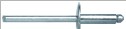
The grip range—the total thickness of the materials being joined—dictates the required rivet length. Factories produce rivets with specific grip ranges, and ordering the incorrect length results in loose joints or mandrel pull-through. Additionally, specify the head style based on load distribution requirements:
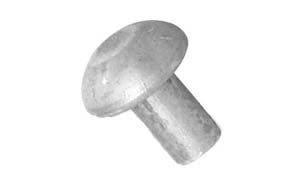
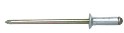
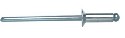
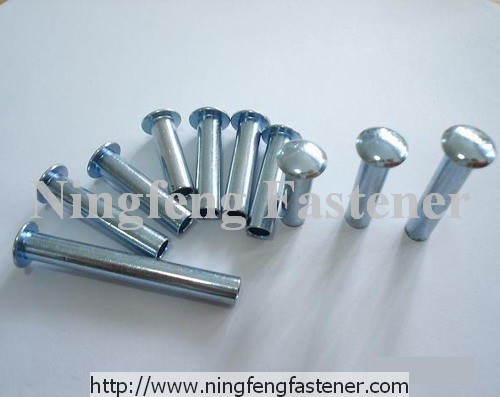
- Dome Head: The standard profile for general applications.
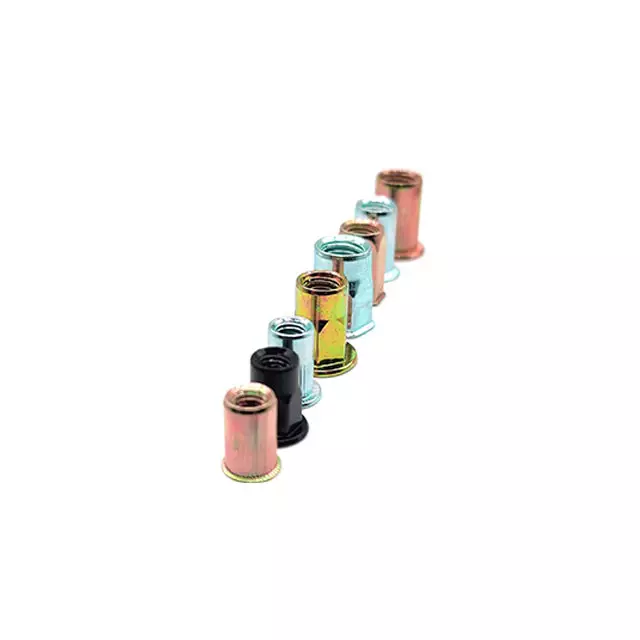
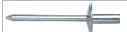
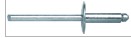
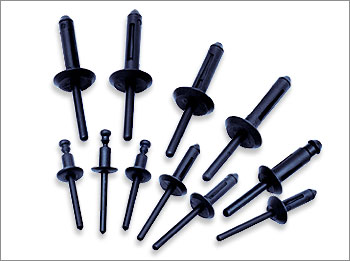
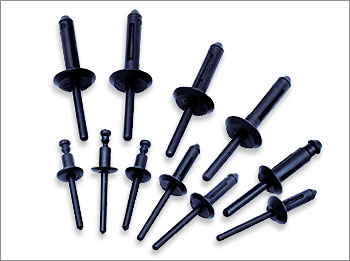
- Large Flange: Provides a wider bearing surface, essential for fastening brittle or soft materials like plastics and thin sheet metal.
- Countersunk (120-degree or 100-degree): Used for flush surface finishes.
Manufacturing Quality and Factory Verification
The majority of global fastener production is concentrated in specific industrial clusters, notably in Zhejiang province (Jiaxing and Wenzhou) and Jiangsu. However, the region is heavily populated with trading companies posing as manufacturers. Conducting comprehensive factory audits is essential to verify that a supplier actually owns cold-forging machinery, optical sorting equipment, and internal testing labs.
Key Quality Control Checkpoints
Defects in rivets often occur during the cold-heading or plating phases. Implementing rigorous quality control & inspection protocols before shipment is non-negotiable.
Pre-Shipment Inspection Criteria for Rivets
- Dimensional accuracy: Measure head diameter, body diameter, and mandrel length using digital calipers.
- Mechanical testing: Verify shear and tensile strength against ISO 15977 or DIN 7337 standards.
- Mandrel break load: Ensure the mandrel snaps at the correct tension without leaving burrs.
- Plating thickness: Use X-ray fluorescence (XRF) to confirm zinc or nickel plating thickness (typically 3 to 8 microns).
- Salt spray testing: Minimum 48 to 96 hours for standard zinc-plated carbon steel.
Pricing Drivers, MOQs, and Lead Times
Fastener economics are driven by raw material indices (like the LME or SHFE for aluminum and copper), production speed, and surface treatment costs.
If you require custom head markings, specific painted colors, or non-standard alloys, factories will treat this under OEM/ODM services. Custom orders typically demand higher MOQs to justify the machine setup and tooling costs. Tooling for a custom cold-heading die is relatively inexpensive, but the setup time is where the factory incurs costs.
Need competitive pricing on bulk fastener orders? We negotiate directly with top-tier factories to secure the best rates and lead times for your supply chain.
Get a free consultationFrequently Asked Questions
Managing a high-volume fastener supply chain demands constant vigilance over raw material quality and machine tolerances. By partnering with vetted manufacturers and enforcing strict technical specifications, you can eliminate assembly failures and stabilize your procurement costs.
Get Sourcing Help for Rivets
Tell us your requirements and our experts will connect you with verified manufacturers.