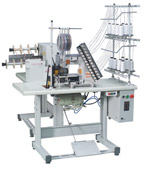
Rhinestone Machines
Source commercial-grade rhinestone machines from vetted manufacturers and wholesale suppliers. Built for high-volume apparel decorators, distributors, and equipment importers, our network provides reliable OEM and private-label production tailored to your specific application and capacity requirements.
Sourcing commercial rhinestone equipment requires balancing mechanical precision with continuous operational uptime. The core challenge for equipment buyers and distributors isn't merely finding a machine that applies hot-fix stones, but securing units built with reliable pneumatics, accurate servo motors, and durable ultrasonic generators that can withstand multi-shift production environments without constant jamming.
Whether you are importing direct-to-garment ultrasonic setters or high-speed computerized motif machines, evaluating the underlying component quality is critical to avoiding heavy after-sales support burdens.
Core Technologies and Specifications
Rhinestone application machinery generally falls into two primary categories based on the production workflow. Specifying the correct architecture dictates the machine's internal components, footprint, and required air pressure (typically ranging from 0.4 to 0.6 MPa).
| Technology Type | Application Method | Typical Speed | Primary Use Case |
|---|---|---|---|
| Ultrasonic Hot Fix | Direct to garment/fabric | 100 to 150 stones/min | Finished apparel, complex multi-color designs |
| Computerized Motif | Onto transfer paper | Up to 400 stones/min | High-volume production of heat transfers |
| Automatic Brushing | Template sweeping | Batch processing | Large scale, single-color/size bulk runs |
When defining technical requirements for manufacturers, you must dictate the exact stone sizes the machine must handle. Most commercial machines use rotary discs calibrated for specific standard stone sizes (e.g., SS6 through SS30). Multi-head or multi-disc machines allow for seamless switching between colors and sizes, but require more sophisticated PLC (Programmable Logic Controller) programming and precise pneumatic valving.
Need help verifying machine specifications or auditing a manufacturer's assembly line? Ensure your next equipment order meets strict commercial standards.
Talk to our teamManufacturing Quality and Vulnerability Points
The reliability of a rhinestone machine is won or lost in the machining tolerances of its moving parts and the quality of its electrical components. Low-cost manufacturers often cut corners by using generic air cylinders and unbranded stepper motors, leading to skipped stones, double-drops, or inconsistent heating.
When assessing a supplier, it is highly recommended to conduct thorough factory audits to verify their in-house CNC machining capabilities. The sorting discs and suction nozzles require extreme precision; if a factory outsources these parts to low-tier job shops, the resulting dimensional variations will cause continuous stone jamming.
Pre-Shipment Inspection Priorities
Catching defects before the equipment leaves the factory is critical, as returning heavy machinery is financially unviable. Rigorous quality control & inspection should focus on the following operational metrics:
Critical Inspection Points for Rhinestone Machines
- Vacuum suction stability: Test continuous operation for 60 minutes to ensure no pressure drops.
- Ultrasonic generator frequency: Verify consistency to prevent fabric burns or weak stone adhesion.
- X-Y axis calibration: Check servo motor positioning accuracy against the digital design file.
- Disc tolerance: Run maximum and minimum rated stone sizes (e.g., SS6 and SS30) to test for jamming.
- Air leakage: Inspect all pneumatic lines, manifolds, and valves under maximum rated pressure.
Buying Mechanics: MOQ, Pricing, and Lead Times
Because these are industrial machines, Minimum Order Quantities (MOQs) are highly accessible, though pricing scales significantly based on the internal components you specify.
Pricing is driven primarily by the number of heads/colors, the working area dimensions, and the brand of the internal components. Upgrading from standard stepper motors to branded servo motors, or specifying premium pneumatic cylinders (like SMC or Festo) rather than generic equivalents, will increase the unit cost but drastically reduce maintenance downtime. Engaging professional product sourcing support can help you negotiate these specific component upgrades directly with the factory engineers, ensuring you pay for functional reliability rather than just a brand name.
Optimize your equipment sourcing strategy and secure better component configurations for your volume orders.
Get a free consultationFrequently Asked Questions
Sourcing Insight
The true cost of a commercial rhinestone machine is measured in its operational uptime. Saving marginal amounts on initial capital expenditure by accepting inferior pneumatics or poorly machined sorting discs will inevitably result in lost production hours and high support costs. Focus your sourcing efforts on manufacturers who provide total transparency regarding their component supply chain and who welcome rigorous third-party testing of their equipment under load.
Get Sourcing Help for Rhinestone Machines
Tell us your requirements and our experts will connect you with verified manufacturers.