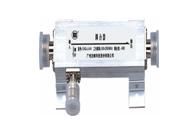
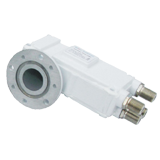
RF Circulators and Isolators
Source high-performance RF circulators and isolators from vetted suppliers and manufacturers across Asia. Designed for telecommunications distributors, procurement managers, and brands requiring reliable bulk or OEM production, our network delivers precision microwave components built for demanding signal routing applications.
Sourcing RF circulators and isolators at scale requires balancing unit cost with stringent insertion loss and isolation parameters. Because these passive components rely on the precise interaction between ferrite materials and magnetic fields, variations in raw material quality or assembly tolerances directly impact signal integrity. Procuring these components in volume means identifying manufacturers capable of consistent, repeatable tuning across entire production runs.
Defining Critical Specifications for Bulk Orders
When approaching manufacturers, vague specifications lead to unacceptable yield rates. Factories need exact parameters to select the correct ferrite pucks, magnets, and housing materials.
Beyond the basic frequency band, you must clearly specify power handling requirements (both average and peak power). High-power applications require specialized thermal management, often necessitating custom housing designs or specific mounting flanges to dissipate heat effectively. Be explicit about the operating temperature range; ferrite materials are temperature-sensitive, and manufacturers must compensate for thermal drift during the tuning process.
Need to verify a manufacturer's technical capability before placing a high-volume order? We can help vet their engineering and production standards.
Talk to our teamManufacturing Tolerances and Quality Control
The performance of a circulator or isolator is largely determined on the factory floor during the tuning phase. Even with CNC-machined housings and high-grade ferrites, the final alignment of the magnetic field dictates the component's center frequency and bandwidth.
In many facilities, tuning remains a semi-manual process requiring skilled technicians and calibrated Vector Network Analyzers (VNAs). Relying solely on final testing is risky; robust Quality Control & Inspection must be implemented during production to catch thermal drift issues or housing mismatches early.
Factory Audit Focus Areas for RF Components
- VNA Calibration: Ensure test equipment is calibrated regularly and traceable to international standards.
- Thermal Chamber Testing: Verify that components are tested across the full specified temperature range, not just at room temperature.
- Ferrite Sourcing: Confirm the factory has stable, documented supply chains for high-grade microwave ferrites and permanent magnets.
- Intermodulation Distortion (IMD): For telecommunications applications, check their capability to measure and guarantee low PIM (Passive Intermodulation).
Before committing to a new supplier, conducting thorough Factory Audits is highly recommended to verify their testing infrastructure and the consistency of their manual tuning processes.
Pricing, MOQs, and Lead Times
Pricing for RF circulators and isolators is highly dependent on frequency, bandwidth, and power handling. Standard cellular band components (e.g., 4G/5G frequencies) benefit from economies of scale, while broadband or high-frequency (mmWave) variants command significant premiums due to tighter machining tolerances and specialized ferrites.
- Minimum Order Quantities (MOQs): Standard off-the-shelf frequency bands typically require MOQs of 500 to 1,000 units. For custom-tuned frequencies or specialized high-power units requiring OEM/ODM Services, factories may accept lower MOQs (50 to 100 units), though tooling and NRE (Non-Recurring Engineering) charges will apply.
- Lead Times: Expect 4 to 8 weeks for production. Lead times can stretch to 10 to 12 weeks if custom ferrite shapes or specific rare-earth magnets need to be procured.
Struggling with inconsistent lead times or high defect rates? Let us manage your RF component supply chain from factory floor to final delivery.
Get a free consultationFrequently Asked Questions
Securing a reliable supply of RF circulators and isolators means looking past the datasheet and understanding the manufacturer's internal quality systems and tuning expertise. Partnering with facilities that maintain strict raw material controls and comprehensive environmental testing is the most effective way to protect your product's signal integrity and your bottom line.
Get Sourcing Help for RF Circulators and Isolators
Tell us your requirements and our experts will connect you with verified manufacturers.