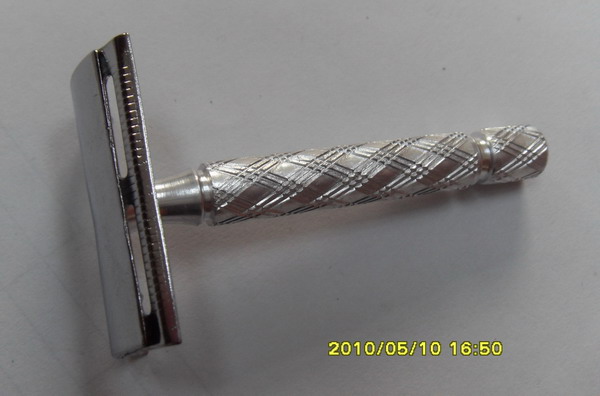
Razors
Source high-quality razors from vetted suppliers and manufacturers across Asia. Designed for importers, wholesalers, distributors, and brands seeking reliable OEM and private-label production, our network delivers bulk shaving products built to exact specifications, ensuring consistent performance and competitive margins.
Sourcing razors at scale requires balancing unit economics with uncompromising blade performance. The difference between a premium shaving experience and a high-return rate lies in microscopic tolerances: steel metallurgy, grind angles, and friction-reducing coatings. For bulk buyers and private-label brands, success depends on partnering with factories capable of maintaining strict quality standards across millions of units.
Blade Metallurgy and Edge Geometry
Blade performance starts with the raw material. Most high-volume manufacturers utilize martensitic stainless steel, but the origin and grade significantly dictate hardness, edge retention, and unit cost.
| Steel Origin | Typical Grades | Performance Characteristics |
|---|---|---|
| Swedish (Sandvik) | 13C26 | High purity, excellent edge retention, premium tier |
| Japanese | AUS-8, VG-10 equivalents | Superior hardness, very sharp initial edge |
| Chinese Domestic | 3Cr13, 4Cr13 | Cost-effective, adequate for disposables, lower retention |
Bare steel degrades rapidly, even when hardened correctly. To reduce friction and prevent micro-corrosion, blades must undergo a multi-layer coating process. You should specify a Chromium layer for corrosion resistance, Platinum or Titanium for edge durability, and a final PTFE (Teflon) coating to ensure a smooth glide.
Manufacturing Tolerances and Quality Control
Heat treatment is where many lower-tier factories fail. Inconsistent tempering leads to brittle blades that micro-chip during use, causing skin irritation. Furthermore, the grinding process—typically creating a "gothic arch" profile—must be monitored continuously, as grinding wheels wear down and alter the blade angle.
Catching these metallurgical and assembly defects requires rigorous quality control and inspection before shipment. Relying solely on a factory's internal QC often results in batch-to-batch inconsistency.
Critical QC Checks for Razor Production
- Salt spray testing (minimum 24 hours) to verify corrosion resistance
- CATRA or equivalent sharpness retention testing on sample batches
- Goniometer checks for precise blade edge angles
- Cartridge pivot fatigue testing (minimum cycle thresholds)
- Handle-to-cartridge pull-force testing to prevent detachment
Struggling with inconsistent blade quality across batches? Let us audit your factory's heat treatment and grinding processes to stabilize your supply chain.
Talk to our teamOEM & Private Label Customization
Developing a custom razor system involves distinct tooling for the handle and the cartridge. Cartridge tooling is highly complex due to the micro-molding required for blade spacers, lubricating strips, and pivot springs.
If you are utilizing OEM/ODM services, modifying an existing factory-owned cartridge design while tooling a custom handle is the most cost-effective route to market. Developing a fully proprietary cartridge from scratch requires significant product development capital, extended lead times, and rigorous patent-clearance checks to avoid infringing on major brand IP.
Production Realities: MOQs, Pricing, and Lead Times
Volume requirements vary drastically depending on the product architecture (disposable vs. system razor) and the level of customization.
Pricing is driven primarily by the number of blades per cartridge (3, 5, or 6), the steel origin, and the handle material (e.g., premium zinc alloy die-casting vs. standard ABS plastic with TPR grips).
Verifying a supplier's actual production capacity—rather than their trading status—is critical. Proper factory audits ensure your partner actually owns the high-precision stamping, grinding, and automated assembly equipment required to produce at scale, rather than outsourcing to sub-tier workshops.
Need to negotiate better terms or verify a new razor manufacturer? Our sourcing experts can manage the process from end to end.
Get a free consultationFrequently Asked Questions
Sourcing razors in volume requires strict oversight of metallurgy, grinding tolerances, and assembly precision. When you are ready to scale production without compromising on edge retention or ergonomics, having experienced representation on the factory floor makes all the difference.
Get Sourcing Help for Razors
Tell us your requirements and our experts will connect you with verified manufacturers.