Rail Freight
Secure reliable rail freight services from vetted logistics providers and forwarders. Designed for importers, wholesalers, and brands managing bulk supply chains, rail transport offers a strategic middle ground between ocean and air. Source competitive FCL and LCL rates to optimize your high-volume import operations.
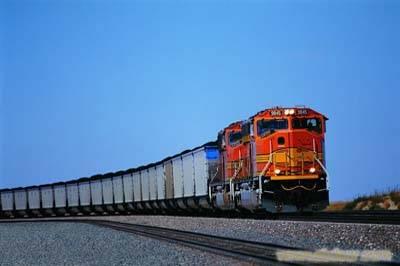
Rail freight has matured from a niche routing option into a core pillar of Eurasian and cross-border supply chains. For high-volume importers balancing inventory holding costs against transport expenses, the China-Europe Railway Express (and similar rail corridors) offers a compelling middle ground: transit times that are roughly half those of ocean freight, at a fraction of the cost of air freight.
Sourcing reliable rail freight services requires vetting forwarders who actually hold block-train space allocations, rather than brokers layering margins. Success depends on understanding equipment limitations, transshipment risks, and seasonal operational shifts.
Routing and Equipment Specifications
Unlike ocean freight where 20-foot containers are standard, international rail freight is heavily optimized for 40-foot High Cube (40HC) containers. If you are shipping 20-foot containers, forwarders often require them to be paired (two 20-footers on one railcar) to balance the load, which can cause delays at the departure terminal if a match is not immediately available.
| Mode | Typical Transit (China to EU) | Cost Relative to Sea | Best For |
|---|---|---|---|
| Ocean Freight | 35 to 45 Days | Baseline (1x) | High-volume, low-margin bulk goods |
| Rail Freight | 14 to 22 Days | 2x to 3x | Mid-value electronics, seasonal apparel, automotive components |
| Air Freight | 3 to 7 Days | 8x to 12x | High-value, urgent, or highly perishable goods |
The Gauge Break Challenge
A critical technical factor in Eurasian rail freight is the change in track gauge. China and Europe use standard gauge, while Russia, Kazakhstan, and Belarus use broad gauge. Containers must be physically lifted and transferred between trains at border crossings (such as Alashankou/Dostyk or Khorgos). Vetting a logistics provider involves assessing their visibility and handling capabilities at these specific transshipment nodes, as this is where delays and physical container damage most frequently occur.
Struggling with transshipment delays and poor visibility? Let us help you secure direct block-train allocations.
Talk to our teamManaging Transit Risks and Quality Control
When integrating rail into your Supply Chain Management strategy, environmental factors play a much larger role than in ocean freight. Trains traverse regions with extreme temperature fluctuations.
Winter Embargoes and Temperature Risks
During winter months, temperatures along the northern rail corridors can drop below minus 30 degrees Celsius. Liquids, cosmetics, and certain electronics are at high risk of freezing or battery degradation.
To mitigate these risks, buyers must specify the correct protective measures:
- Thermal Blankets: Essential for temperature-sensitive cargo in standard containers.
- Diesel-Powered Reefers: Required for strict temperature control, though these command a significant premium and have limited availability.
- Dangerous Goods (DG) Restrictions: Rail operators are notoriously strict regarding lithium batteries. Products containing batteries often require specialized testing reports (UN38.3) and may be outright embargoed on certain routes.
Pricing Drivers and Volume Requirements
Rail freight pricing is generally calculated per 40HC for Full Container Load (FCL) or per Cubic Meter (CBM) for Less than Container Load (LCL). While ocean rates fluctuate wildly based on global capacity, rail rates tend to be slightly more stable, driven primarily by government subsidies, block-train operator schedules, and seasonal congestion.
When coordinating Shipping & Freight, be aware of the "pre-holiday rush." The weeks leading up to Chinese New Year and the October Golden Week see massive spikes in demand. Because trains have a hard cap on the number of cars they can pull (typically 41 to 50 containers), space rolls over much faster than on a mega-ship. Securing space requires booking 3 to 4 weeks in advance during peak seasons.
Need reliable LCL consolidation or FCL rail allocations? Connect with our logistics experts to review your routing.
Get a free consultationFrequently Asked Questions
Optimizing your logistics mix is just as critical as sourcing the right product. By strategically deploying rail freight for mid-urgency bulk orders, you can reduce your reliance on expensive air freight while maintaining faster inventory turns than ocean freight allows. Seamless execution requires aligning your factory production schedules with train departure cut-offs and ensuring your Warehousing & Fulfillment operations are prepared for rapid devanning upon arrival.
Get Sourcing Help for Rail Freight
Tell us your requirements and our experts will connect you with verified manufacturers.