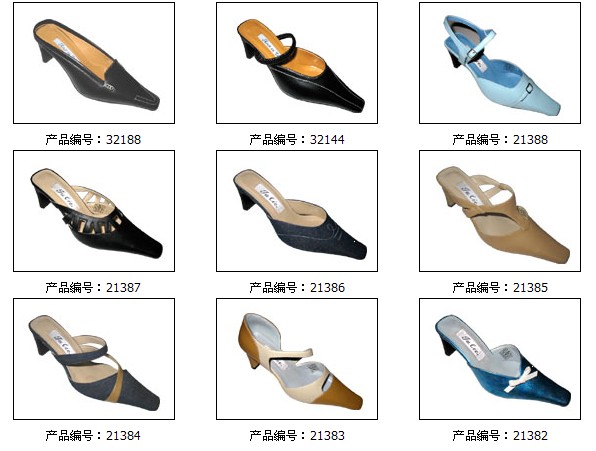
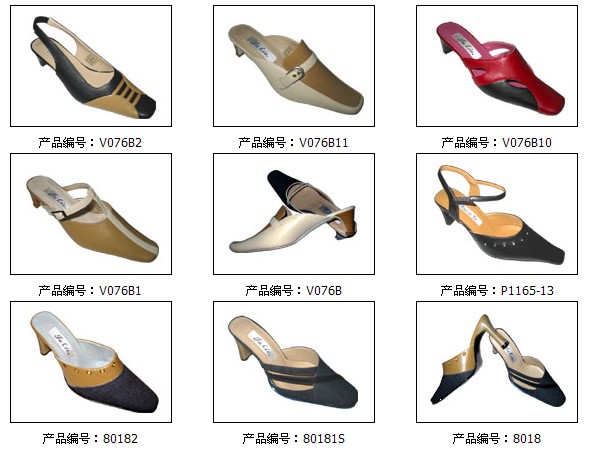
Pumps
Source premium and mass-market women's pumps directly from vetted manufacturers and suppliers in Asia. Designed for footwear importers, wholesale distributors, and brands seeking reliable OEM and private-label production, this catalog connects you with factories capable of scaling your footwear lines with precision and consistency.
Sourcing women's pumps requires a strict balance between aesthetic execution and structural engineering. Unlike flat footwear, heels place immense stress on specific points of the shoe. The margin for error on heel pitch, arch support, and lasting tension is practically zero. For volume buyers, securing a factory that consistently hits these technical tolerances across bulk production runs is the primary sourcing challenge.
Core Specifications for Production-Grade Pumps
When briefing a supplier for private-label or custom production, the bill of materials (BOM) must be explicitly detailed. Vague specifications lead to material substitution and compromised structural integrity.
- The Last: The physical mold that determines the shape, fit, and toe spring of the shoe. Custom lasts require upfront tooling costs but are non-negotiable for brands wanting a proprietary fit.
- Upper Materials: Ranges from genuine leather (cowhide, sheepskin) to high-grade PU (polyurethane), microfibers, and textiles like satin.
- Lining and Socks: Pigskin and breathable microfibers are standard for mid-to-high-tier pumps. Mass-market pumps often utilize standard PU, though this sacrifices breathability.
- Heel Core & Attachment: Heels are typically molded from ABS (Acrylonitrile Butadiene Styrene) plastic for high impact resistance. They must be secured to the insole board using both industrial adhesive and steel screws or nails.
- Outsole: TPR (Thermoplastic Rubber) and standard rubber are common for grip and durability. High-end pumps may feature genuine leather outsoles, which require specialized edge finishing.
Manufacturing Tolerances and Quality Control
The critical failure points in pump manufacturing occur during the lasting and sole attaching phases. If the upper is not pulled tightly and evenly over the last, the shoe will exhibit wrinkles and asymmetrical shaping.
Implementing rigorous quality control and inspection protocols at the factory level is essential to catch these defects before shipment.
Critical In-Line & Pre-Shipment Checks
- Heel pitch alignment: The heel must sit perfectly flat on a level surface without rocking.
- Adhesive integrity: Check for delamination or visible glue marks along the outsole and heel breast.
- Lasting tension: Inspect the toe box and heel counter for wrinkles, air pockets, or loose material.
- Heel attachment security: Ensure screws are fully driven into the ABS core and do not protrude into the footbed.
- Symmetry check: Compare the left and right shoes for identical vamp length, heel height, and top-line shape.
Need reliable quality oversight for your footwear production? Discuss your sourcing requirements with our footwear specialists.
Talk to our teamFootwear Manufacturing Hubs in China
The footwear industry in China is highly regionalized. Selecting the right supplier depends entirely on your material requirements and target price point. Conducting thorough factory audits is highly recommended to verify a supplier's core competency before placing an order.
| Material Focus | Primary Manufacturing Hub | Typical Target Market |
|---|---|---|
| Genuine Leather | Dongguan (Guangdong) | Premium Brands / Boutique |
| PU / Synthetic | Wenzhou (Zhejiang) | Mass Market / Fast Fashion |
| Mixed / Specialty Women's | Chengdu (Sichuan) | Mid-Tier / Department Stores |
Buying Mechanics: MOQs, Pricing, and Lead Times
Footwear production relies heavily on economies of scale due to the labor-intensive cutting and stitching processes. If you are utilizing OEM/ODM services to develop custom styles, expect higher initial thresholds.
Pricing is driven primarily by the upper material, the complexity of the heel design, and the quality of the insole board. Custom hardware (like branded buckles or specialized heel ornaments) will increase both the unit cost and the lead time.
Looking to optimize your footwear supply chain? Let's review your current manufacturing setup and identify areas for cost and quality improvement.
Get a free consultationFrequently Asked Questions
Successfully sourcing women's pumps at scale is about managing structural risk. A beautiful upper design is worthless if the heel attachment fails or the pitch is off by a few millimeters. Partnering with a team that understands footwear engineering ensures your bulk orders meet both aesthetic standards and rigorous structural requirements.
Get Sourcing Help for Pumps
Tell us your requirements and our experts will connect you with verified manufacturers.