Protective & Cushioning Materials
Source high-performance Protective & Cushioning Materials in bulk from vetted manufacturers and suppliers. Designed for importers, packaging wholesalers, and brands requiring reliable OEM and custom production, our network delivers consistent quality for demanding logistics environments.
Sourcing protective and cushioning materials at scale is fundamentally an exercise in balancing impact resistance against volumetric shipping costs. Whether you are procuring standard continuous rolls for wholesale distribution or custom die-cut inserts for high-value electronics, the margin for error is slim. Inconsistent density or poor resilience directly translates to elevated damage rates downstream, making strict supplier vetting and precise specification management critical.
Defining Core Material Specifications
When negotiating with manufacturers, vague requirements lead to substituted materials and compromised protection. You must define the exact physical properties required for your application. Density is the primary cost driver, as it dictates the raw material volume used per cubic meter.
| Material Type | Typical Density Range | Primary Characteristics | Best Application |
|---|---|---|---|
| EPE (Expanded Polyethylene) | 18 to 30 kg/m3 | High resilience, moisture resistant, non-abrasive | General void fill, electronics, fragile goods |
| EVA (Ethylene-Vinyl Acetate) | 35 to 80 kg/m3 | Premium feel, excellent shock absorption, firm | High-end tool cases, luxury product inserts |
| PU (Polyurethane) Sponge | 15 to 40 kg/m3 | Open-cell, highly compressible, soft surface | Lightweight delicate items, acoustic damping |
| Honeycomb Paper | 100 to 200 gsm (paper) | Eco-friendly, high vertical crush resistance | Sustainable packaging, heavy industrial parts |
Beyond density, specify the compression set (the material's ability to return to its original thickness after prolonged load) and surface resistivity if sourcing anti-static (ESD) variants. Standard pink anti-static EPE should maintain a surface resistance between 10^9 and 10^11 ohms; anything outside this range risks static discharge damage to sensitive components.
Need help verifying material specifications or auditing a new supplier's capabilities? We can manage the technical dialogue directly with the factory.
Talk to our teamManufacturing Tolerances and Quality Control
The manufacturing process—whether extrusion for EPE, foaming for PU, or die-cutting for custom shapes—introduces specific defect risks. During extrusion, temperature fluctuations can cause irregular cell structures, leading to hard spots or collapsed pockets that compromise shock absorption.
When sourcing custom inserts via OEM/ODM Services, dimensional tolerance is the most common failure point. Foam expands and contracts based on ambient temperature and humidity immediately after production. If a factory die-cuts the material before it has properly cured and stabilized, the final insert will shrink or warp, failing to fit the outer carton or the product itself.
Critical Pre-Shipment Inspection Points
- Dimensional accuracy: Verify length, width, and thickness against tolerances (typically ±2mm for die-cut foam).
- Cell structure uniformity: Inspect for collapsed cells, voids, or hard inclusions.
- Lamination strength: For multi-layer bonded foams, check for edge peeling or weak adhesive application.
- Cleanliness: Ensure no residual cutting dust, oil stains, or strong chemical odors from incomplete curing.
- ESD performance: Test anti-static variants with a surface resistance meter.
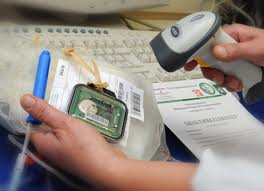
Implementing rigorous Quality Control & Inspection before the goods are loaded into the container is essential, as returning defective volumetric cargo is economically unviable.
Volumetric Economics and Sourcing Strategy
The defining challenge of importing cushioning materials is the high volumetric weight. You are essentially paying to ship air. Therefore, your sourcing and logistics strategies must be tightly integrated.
For standard items like bubble wrap or air pillows, sourcing uninflated film rolls for on-demand inflation at your destination facility is the only cost-effective method. For rigid foams (EPE, EVA), maximizing container utilization is paramount. Factories should optimize their cutting yields to reduce waste, and shipments must be expertly consolidated. Engaging specialized Shipping & Freight services can help you navigate the complexities of volumetric pricing and container loading plans.
Struggling with high freight costs on volumetric packaging? Let us analyze your sourcing setup and container utilization for potential efficiencies.
Get a free consultationFrequently Asked Questions
Securing reliable protective and cushioning materials requires looking past the per-unit price to understand the total landed cost, factoring in material performance, defect rates, and freight efficiency. By defining strict specifications and optimizing your logistics footprint, you can build a resilient packaging supply chain.
Get Sourcing Help for Protective & Cushioning Materials
Tell us your requirements and our experts will connect you with verified manufacturers.