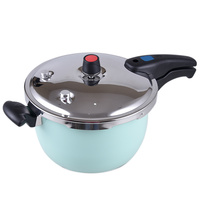
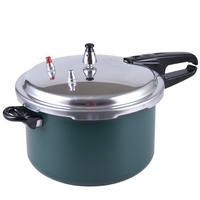
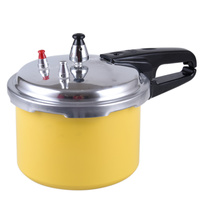
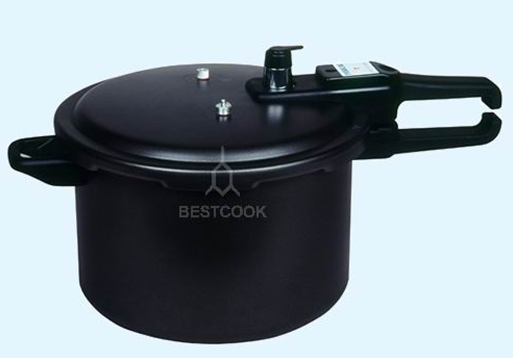
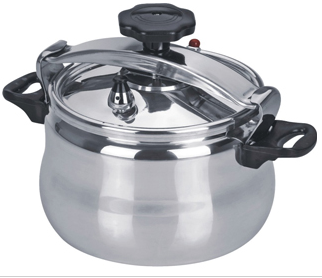
Pressure Cookers
Source premium pressure cookers from vetted manufacturers and wholesale suppliers across Asia. Designed for importers, regional distributors, and cookware brands seeking reliable OEM and private-label production, our factory network delivers certified, high-volume manufacturing at competitive unit costs.
Sourcing pressure cookers at scale is fundamentally an exercise in risk management. Because these vessels operate under significant atmospheric stress, structural integrity and valve precision are non-negotiable. For volume buyers, navigating the complexities of metallurgy, exacting assembly tolerances, and regional safety compliance requires partnering with highly capable manufacturers who understand pressure vessel engineering.
Metallurgy and Base Construction
The core of a pressure cooker's performance and safety lies in its material composition and base construction. Most commercial production utilizes either stainless steel or hard-anodized aluminum. Stainless steel models typically feature an encapsulated base (a "sandwich" bottom) to compensate for steel's poor thermal conductivity.
When specifying your product, the method of base attachment is critical. Impact bonding, which uses high-tonnage friction presses (typically over 1,500 tons) to fuse the steel and aluminum layers, is vastly superior to traditional brazing. Poorly bonded bases will delaminate over time under high heat and pressure, leading to catastrophic product failure and recalls.
| Material Grade | Characteristics | Typical Application |
|---|---|---|
| 304 Stainless Steel (18/8 or 18/10) | High corrosion resistance, non-reactive, requires encapsulated base | Premium consumer and commercial pressure cookers |
| 430 Stainless Steel (18/0) | Magnetic, lower nickel content, prone to pitting if unpolished | Induction-compatible base caps, budget models |
| Hard-Anodized Aluminum | Excellent heat distribution, lightweight, non-magnetic | Mid-tier domestic models, camping cookware |
Manufacturing Tolerances and Quality Control
Producing a safe pressure cooker requires strict oversight on the factory floor. The stamping process must maintain uniform wall thickness; drawing the steel too thin creates weak points that can deform under pressure. Furthermore, the locking mechanisms and silicone gaskets must align perfectly to create a hermetic seal.
Verifying a supplier's capability before production begins is critical. Conducting rigorous Factory Audits ensures the manufacturer has the necessary heavy-duty stamping machinery, automated polishing lines, and calibrated pressure-testing stations.
Critical QC Checkpoints for Pressure Cookers
- Wall thickness consistency: Measure post-stamping to ensure no thinning at the base radius.
- Valve calibration: Test primary and secondary pressure release valves at specified operating pressures (e.g., 80 kPa or 100 kPa).
- Base flatness: Ensure concavity is within acceptable limits (typically under 0.6 percent of the base diameter) for induction compatibility.
- Gasket seating: Verify food-grade silicone gaskets seat flush without pinching during the locking mechanism engagement.
- Hydrostatic testing: Subject random batch samples to pressures well above normal operating limits to test structural limits.
Implementing comprehensive Quality Control & Inspection protocols, particularly in-line inspections during the valve assembly and base bonding phases, is the most effective way to catch defects before they are sealed into the final product.
Need to ensure your pressure cooker production meets strict safety tolerances? Let our engineers manage your factory vetting and QC processes.
Talk to our teamSafety Standards and Compliance
Pressure cookers are heavily regulated globally. A manufacturer producing standard cookware may not have the engineering background or certifications required for pressure vessels.
Mandatory Compliance Requirements
Depending on your target market, your pressure cookers must pass specific regulatory frameworks. In the European Union, they fall under the Pressure Equipment Directive (PED) and require CE marking. In the United States, UL 136 is the standard for pressure cookers. Additionally, all food-contact parts (especially silicone gaskets and inner finishes) must pass FDA or LFGB testing.
Navigating these regulations is complex. Utilizing professional Compliance & Testing services ensures your products are tested by accredited third-party laboratories (like SGS or TUV) before shipment, preventing costly customs seizures or liability issues.
Pricing, MOQs, and Lead Times
Unit costs for pressure cookers are highly sensitive to raw material indices (nickel and aluminum), the thickness of the steel (typically 1.0mm to 1.2mm for premium models), and the complexity of the locking mechanism (spring-loaded vs. traditional clamp).
If you are developing a proprietary locking design or unique aesthetic, engaging in comprehensive OEM/ODM Services is necessary. While custom tooling requires upfront investment, it allows brands to differentiate themselves in a crowded market.
Planning a custom pressure cooker line? We can help negotiate tooling costs and manage the entire product development lifecycle.
Get a free consultationSuccessfully sourcing pressure cookers requires balancing material costs with non-negotiable safety standards. By strictly defining your metallurgical requirements and enforcing rigorous testing protocols at the factory level, you can build a reliable supply chain for this high-liability product category.
Get Sourcing Help for Pressure Cookers
Tell us your requirements and our experts will connect you with verified manufacturers.