Portal Cranes
Source high-capacity portal cranes from vetted suppliers and manufacturers in China and across Asia. Designed for heavy industrial procurement managers, port operators, and construction distributors, our wholesale network delivers custom-engineered lifting solutions built to rigorous international standards.
Sourcing industrial portal cranes requires precision engineering and a manufacturer capable of meeting strict safety and operational tolerances. Whether outfitting a shipyard, rail terminal, or heavy manufacturing facility, securing the right lifting equipment demands rigorous vetting of steel fabrication, electrical component sourcing, and compliance with international lifting standards. The procurement process involves aligning your site's specific spatial constraints with a factory's custom fabrication capabilities.
Defining Your Portal Crane Specifications
Portal cranes are highly customized. Off-the-shelf solutions are rare; instead, buyers must provide factories with detailed operational parameters. The most critical factor determining both price and lifespan is the working duty class (ISO/FEM standards), which dictates the robustness of the motors, brakes, and steel structure based on expected daily usage.
| Operational Factor | Light Duty (A3-A4) | Heavy Duty (A5-A6) | Severe Duty (A7-A8) |
|---|---|---|---|
| Typical Application | Maintenance, infrequent assembly | Ports, busy stockyards, manufacturing | Continuous steel mills, heavy ports |
| Operating Time | Under 4 hours/day | 8 to 16 hours/day | 20 to 24 hours/day |
| Load Profile | Rarely lifts maximum capacity | Frequently lifts maximum capacity | Constantly lifts maximum capacity |
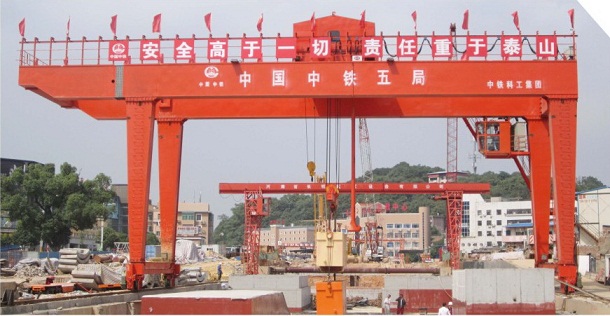
Beyond duty class, you must accurately specify the lifting capacity, span (distance between the rail centers), lifting height, and whether your application requires single or double cantilevers. Supplying detailed site drawings to the manufacturer early in the quoting process prevents costly redesigns later.
Need help verifying a crane manufacturer's technical capabilities and engineering standards?
Talk to our teamManufacturing Tolerances and Quality Control
The structural integrity of a portal crane relies entirely on the quality of its steel and welding. Top-tier manufacturers utilize Q345B or Q355B high-strength manganese steel for main structural components, whereas budget suppliers might default to standard Q235B carbon steel.
Welding flaws in the main girder or support legs can lead to catastrophic failure. It is highly recommended to conduct rigorous Factory Audits before placing an order to verify the supplier's welding certifications and in-house testing equipment.
During production, third-party Quality Control & Inspection is essential. Inspectors should verify the following before the crane is disassembled for shipping:
Critical Pre-Shipment Inspection Points
- Non-Destructive Testing (NDT) reports for all critical load-bearing welds (Ultrasonic or Radiographic testing).
- Verification of electrical components (ensure specified international brands like Siemens, Schneider, or Yaskawa are used).
- Pre-assembly dimensional checks of the main girder and legs to guarantee alignment.
- Functional testing of all safety devices, including overload limiters, wind speed sensors, and limit switches.
- Measurement of paint thickness and verification of epoxy zinc-rich primer for outdoor anti-corrosion protection.
Logistics, Lead Times, and Pricing Dynamics
Portal cranes are massive, complex pieces of machinery. The MOQ is universally one unit, but the total landed cost is heavily influenced by international logistics. Main girders and legs frequently exceed standard container dimensions, requiring Out of Gauge (OOG) shipping, open-top containers, or breakbulk vessels.
Coordinating this requires specialized Shipping & Freight expertise to navigate oversized cargo handling, port fees, and heavy-lift transport to your final site.
Optimize your oversized freight and heavy machinery procurement strategy today.
Get a free consultationFrequently Asked Questions
Sourcing a portal crane is a major infrastructure investment where the initial purchase price is just one factor in the total cost of ownership. Long-term operational reliability hinges entirely on selecting the right factory, enforcing strict quality control during fabrication, and managing complex logistics flawlessly.
Get Sourcing Help for Portal Cranes
Tell us your requirements and our experts will connect you with verified manufacturers.