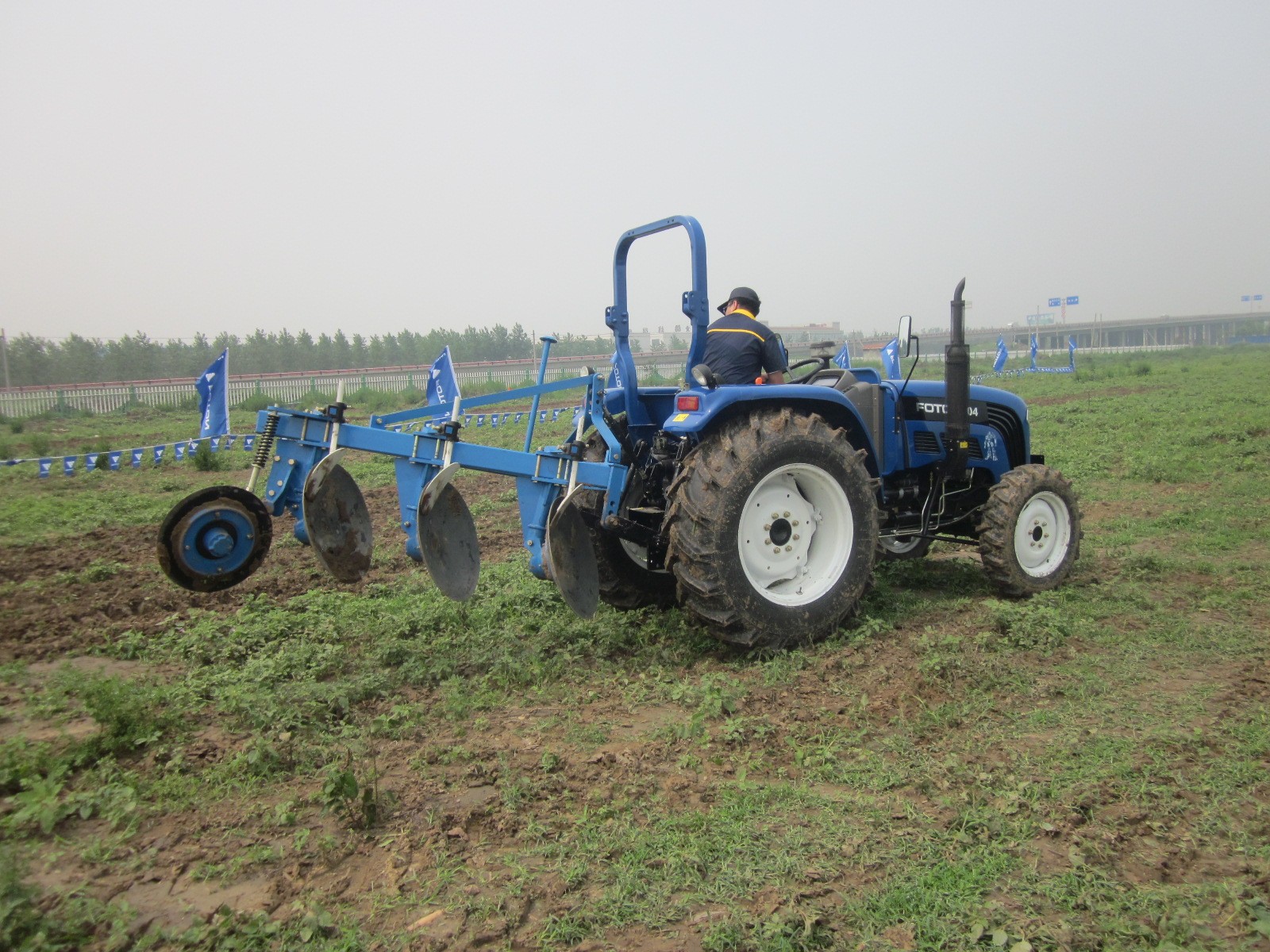
Ploughs
Source commercial-grade ploughs directly from vetted manufacturers and suppliers in China and across Asia. Designed for agricultural equipment importers, machinery distributors, and brands seeking reliable OEM production in bulk. Secure competitive wholesale pricing with comprehensive quality assurance and end-to-end logistics support.
Sourcing heavy agricultural machinery like tractor-mounted ploughs requires balancing structural integrity with cost-efficient manufacturing. Because these implements face immense torsional stress, abrasive wear, and shock loads from rocky soils, specifying the right metallurgy and verifying the factory's fabrication capabilities are paramount. A minor defect in a weld or improper heat treatment on a mouldboard can lead to catastrophic failure in the field.
Metallurgy and Component Specifications
The durability of a plough is dictated by the steel grades used in its construction. Buyers must clearly define material requirements for different zones of the implement, as factories will default to cheaper carbon steels if left unspecified.
| Component | Standard Specification | Premium/Heavy-Duty Specification |
|---|---|---|
| Ploughshare & Point | 65Mn Spring Steel | Boron Steel (Heat Treated) |
| Mouldboard | Q235 Carbon Steel | Triplex Steel or Boron Steel |
| Main Frame | Q235 / Q275 Square Tube | Q345 / Q355 High-Strength Steel |
| Shear Bolts | Grade 4.8 | Grade 8.8 or 10.9 |
When utilizing OEM/ODM Services to develop custom implements, ensure your technical drawings explicitly state the required hardness (HRC) for all ground-engaging parts. Boron steel, when properly heat-treated, can achieve an HRC of 48 to 52, offering significantly better wear resistance than standard 65Mn steel.
Manufacturing Vulnerabilities and Quality Control
The difference between a plough that lasts decades and one that warps in its first season lies on the factory floor. Heavy machinery factories in hubs like Shandong province range from highly automated facilities with robotic welding to smaller workshops relying entirely on manual labor.
Because structural failures are costly to resolve post-import, conducting thorough Factory Audits prior to placing an order is standard practice for serious importers.
Critical Factory Verification Points
- Welding standards: Check for continuous, uniform welds without porosity or undercut, ideally performed by robotic arms for main frames.
- Heat treatment facilities: Verify the factory has in-house quenching and tempering furnaces with precise temperature controls.
- Surface treatment: Ensure parts undergo shot blasting prior to powder coating or painting to prevent premature rust.
- Hydraulic sourcing: For reversible models, confirm the origin and pressure ratings of hydraulic cylinders and hoses.
Need to verify a machinery manufacturer's capabilities? Let's discuss your technical requirements and factory vetting strategy.
Talk to our teamWholesale Pricing, MOQs, and Logistics
Heavy agricultural equipment has distinct purchasing dynamics compared to lighter consumer goods. Pricing is heavily indexed to global steel costs, meaning quotes are typically valid for short windows of 15 to 30 days.
Shipping and Assembly Formats
To keep freight costs viable, ploughs are rarely shipped fully assembled. Manufacturers will pack the equipment in a Semi-Knocked Down (SKD) or Completely Knocked Down (CKD) state. The main frames are often bundled together, while mouldboards, shares, and hydraulic components are crated.
Before the final container is loaded, rigorous Quality Control & Inspection is necessary to ensure no small components (like specific shear bolts or hydraulic fittings) are missing from the crates, as sourcing proprietary replacement parts locally can delay your distribution schedule. Coordinating the loading of heavy, irregular steel components requires experienced Shipping & Freight management to maximize container space without risking transit damage.
Planning a bulk machinery order? Get expert guidance on production timelines, quality assurance, and shipping logistics.
Get a free consultationFrequently Asked Questions
Sourcing heavy agricultural machinery is an exercise in risk management. By enforcing strict metallurgical standards, verifying factory fabrication capabilities, and managing the complexities of SKD shipping, importers can secure highly competitive equipment that performs reliably in the field. Establishing these controls early ensures your supply chain remains resilient and profitable.
Get Sourcing Help for Ploughs
Tell us your requirements and our experts will connect you with verified manufacturers.