Pipe Belling Machines
Source industrial pipe belling machines directly from vetted manufacturers and wholesale suppliers. Designed for importers, machinery distributors, and pipe production facilities looking for reliable bulk sourcing, custom machinery builds, and OEM manufacturing solutions. Discover automated and semi-automated forming equipment for PVC, PE, and PP pipe lines.
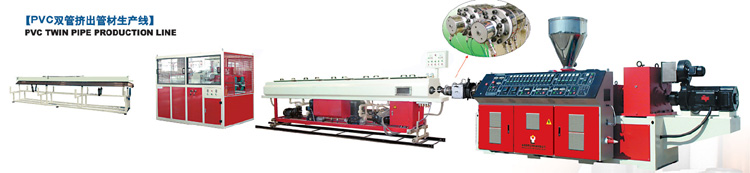
Sourcing pipe belling machines requires balancing cycle times with strict forming precision. Whether you are integrating a fully automated belling unit into a high-speed PVC extrusion line or sourcing standalone semi-auto machines for offline processing, the primary challenge remains consistent: achieving uniform wall thickness in the socket without compromising production speed. A poorly specified machine leads to weak joints, failed pressure tests, and costly line downtime.
Core Specifications and Belling Methods
When negotiating with machinery manufacturers, the technical specifications must align perfectly with your target pipe diameter range, material (typically PVC, PE, or PP), and required throughput. The belling method dictates the mold design and the complexity of the core-pulling mechanism.
| Belling Type | Typical Application | Forming Characteristic |
|---|---|---|
| R-Type (Socket with Gasket) | Pressure pipes, water supply, sewage | Forms a groove for an elastomeric rubber ring. Requires high precision to prevent leaks. |
| U-Type (Solvent Cement Joint) | Conduit, low-pressure drainage | Smooth, straight socket designed for solvent welding. Simpler mold structure. |
| Rectangular / Square | Specialty telecommunications conduit | Requires specialized heating profiles to prevent corner thinning during expansion. |
The heating system is the most critical subsystem. Standard machines use hot air convection, but for thick-walled pressure pipes, short-wave infrared heating is often necessary to penetrate the polymer evenly without scorching the surface.
Need help verifying technical specifications and matching them to a capable manufacturer?
Talk to our machinery teamManufacturing Quality and Factory Acceptance
The reliability of a belling machine is won or lost in the factory's machining tolerances and component selection. High-tier Chinese manufacturers utilize imported PLCs (Siemens, Omron), servomotors, and pneumatic/hydraulic valves (Rexroth, SMC) to guarantee stable, repeatable movements over millions of cycles. Lower-cost suppliers often substitute these with domestic equivalents, which can lead to drift in heating times and forming pressures.
Before committing to a heavy machinery supplier, conducting thorough factory audits is essential to verify their in-house CNC machining capabilities for the molds and mandrels.
Factory Acceptance Test (FAT) Priorities
- Heating uniformity: Verify temperature delta across all oven zones is under 2 degrees Celsius.
- Wall thickness retention: Measure the formed socket wall; it should retain at least 90 percent of the original pipe wall thickness.
- Cycle time synchronization: Ensure the belling cycle completes comfortably within the extrusion line's output speed.
- Hydraulic stability: Check for pressure drops during the core-pulling phase on maximum-diameter pipes.
Implementing strict quality control during the FAT ensures that any programming bugs or mechanical misalignments are corrected on the factory floor, long before the machine is crated for export.
Buying Mechanics: Pricing, Lead Times, and Logistics
Industrial machinery sourcing operates on project-based timelines. Custom mold fabrication and PLC programming mean these machines are rarely held in stock.
Pricing is heavily dependent on the maximum pipe diameter the machine can handle. A machine designed for 16mm to 63mm PVC conduit represents a fraction of the cost and footprint of a heavy-duty unit built for 800mm pressure pipes.
Logistics also play a major role in your landed cost. Large belling machines often exceed standard container dimensions, requiring Open Top (OT) or Flat Rack containers. Coordinating shipping and freight for out-of-gauge (OOG) industrial equipment requires specialized rigging, moisture-barrier vacuum packing, and precise customs documentation to avoid port delays.
Streamline your heavy machinery import, from factory floor to final installation.
Get a logistics consultationFrequently Asked Questions
Procuring industrial belling equipment is a capital-intensive process where precision cannot be compromised. Success requires defining exact tolerances upfront, specifying acceptable component brands, and executing rigorous testing before the equipment leaves the manufacturer's facility.
Get Sourcing Help for Pipe Belling Machines
Tell us your requirements and our experts will connect you with verified manufacturers.