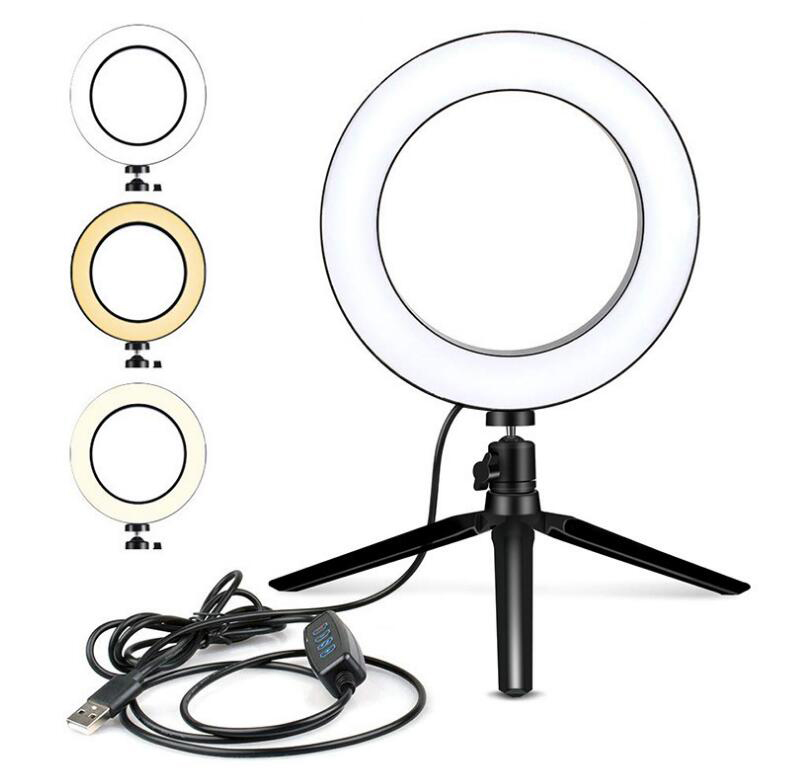
Photographic Lighting
Source professional-grade photographic lighting directly from vetted Chinese manufacturers. Designed for importers, wholesale distributors, and brands requiring reliable OEM and private-label production, our factory network delivers bulk orders with strict color accuracy and thermal management standards.
Sourcing photographic lighting in volume is no longer just about metal fabrication and basic electronics; it is an exercise in precision semiconductor procurement and thermal engineering. With the industry's wholesale shift to high-output LEDs, professional users demand absolute color fidelity, flicker-free performance at high frame rates, and silent operation. Failing to specify exact component tolerances at the factory level results in color shifting, premature diode failure, and unsellable inventory.
Critical Specifications for Professional Output
When negotiating with manufacturers, vague requirements lead to substituted components. To ensure professional-grade performance, bulk buyers must define strict parameters for the LED chips, drivers, and power delivery systems.
- Color Accuracy Metrics: Standard Color Rendering Index (CRI) is no longer sufficient for professional video and photography. Specifications must include TLCI (Television Lighting Consistency Index) and SSI (Spectral Similarity Index) targets. Professional fixtures should consistently hit a CRI and TLCI of 95 or higher.
- Flicker-Free Dimming: High-speed cameras will capture banding if the light's Pulse Width Modulation (PWM) frequency is too low. Specify high-frequency drivers capable of flicker-free performance up to at least 100,000 frames per second.
- Power Draw vs. Output: Specify both the true wattage draw and the lux output at 1 meter and 3 meters (with and without standard reflectors).
Component Architecture and Thermal Management
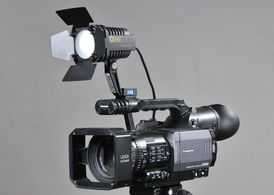
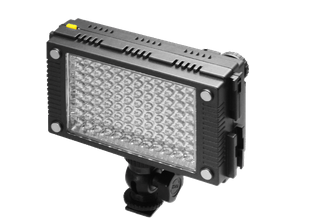
The core architecture of the light dictates its thermal demands and manufacturing complexity. The two dominant LED technologies—COB (Chip on Board) and SMD (Surface Mount Device)—require entirely different approaches to heat dissipation.
| Architecture | Typical Application | Thermal Demand | Output Characteristic |
|---|---|---|---|
| COB (Chip on Board) | High-power key lights, monolights | Very High (requires active cooling) | Single hard shadow, high punch |
| SMD (Surface Mount) | Flexible panels, tube lights | Moderate (often passive cooling) | Soft, diffused wash |
Heat is the enemy of LED longevity and color stability. A high-output COB light running hot will experience a "color shift" (often turning green or magenta) over a long shoot. When evaluating a manufacturer's design, inspect the thermal pathway. Professional units utilize copper heat pipes, massive aluminum fin arrays, and ultra-quiet maglev fans. If the factory cuts corners on the heatsink mass to save shipping weight, the product will fail in the field.
Struggling to find a manufacturer that meets strict thermal and color accuracy tolerances? Let us match you with a vetted facility.
Talk to our technical teamQuality Control and Factory Verification
Not all assembly plants have the testing infrastructure required for professional photographic lighting. Before committing to an order, you must verify the supplier's in-house capabilities. Relying on third-party Factory Audits ensures the facility isn't just assembling parts, but actively managing quality.
A capable factory floor must include specific testing stations.
Essential Factory Testing Infrastructure
- Integrating Sphere: For measuring total luminous flux, color temperature, and CRI/TLCI.
- Thermal Testing Chamber: To test continuous operation at elevated ambient temperatures.
- High-Speed Oscilloscopes: To verify PWM frequencies and ensure flicker-free driver performance.
- Aging Room: Where 100 percent of units undergo a 12-to-24 hour burn-in test to catch early component failure.
- Acoustic Chamber: To measure cooling fan decibel levels under full load.
Executing robust Quality Control & Inspection prior to shipment is vital. Inspection protocols should verify that the color temperature across a single batch does not deviate by more than 100 Kelvin from the target specification.
Production Economics, MOQs, and Lead Times
Pricing in photographic lighting scales directly with the quality of the LED binning, the sophistication of the driver, and the materials used in the housing (aviation-grade aluminum versus polycarbonate).
- White-Label / Private Label: Purchasing existing factory designs with your branding typically requires Minimum Order Quantities (MOQs) of 300 to 500 units. Lead times generally run 30 to 45 days.
- OEM / Custom Development: If you are designing a proprietary fixture from scratch—requiring new tooling for the housing and custom PCB layouts for the drivers—MOQs often start at 1,000 units. Tooling costs can range from a few thousand dollars for simple extrusions to tens of thousands for complex injection-molded and die-cast chassis. Engaging specialized OEM/ODM Services is highly recommended to manage the prototyping and tooling validation phases.
Planning a custom lighting fixture? We can manage the OEM process from tooling design through to final assembly.
Get a sourcing consultationRegulatory Compliance
Photographic lighting requires strict adherence to international electrical standards, especially concerning the power supply units (PSUs) and internal batteries.
For the US market, FCC certification (for electromagnetic interference) and UL or ETL listing (for the power supply) are standard requirements. For the EU, CE (LVD and EMC directives) and RoHS compliance are mandatory. If the lights contain lithium-ion batteries, UN38.3 certification is required for safe transport. Navigating Compliance & Testing early in the sourcing process prevents costly customs seizures.
Sourcing photographic lighting requires balancing high-end electronic performance with rugged mechanical design. Success depends entirely on partnering with manufacturers who understand professional-grade tolerances and possess the testing infrastructure to guarantee them across every batch.
Get Sourcing Help for Photographic Lighting
Tell us your requirements and our experts will connect you with verified manufacturers.