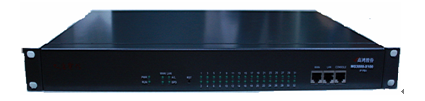
PBX Systems
Source high-performance PBX systems from vetted Chinese manufacturers and suppliers. Designed for importers, telecom distributors, and brands seeking reliable wholesale or OEM/ODM production, our factory-direct network delivers scalable IP and hybrid PBX hardware tailored to your enterprise voice requirements.
Sourcing enterprise-grade Private Branch Exchange (PBX) hardware requires balancing processing power with rock-solid network reliability. Whether you are importing compact IP-PBX appliances for SMBs or high-density hybrid rackmount systems for enterprise distribution, success hinges on rigorous component selection, thermal management, and strict factory-level quality control.
Critical Hardware Specifications
Modern PBX systems are essentially specialized network servers. When evaluating manufacturers, the focus should be on the core processing architecture, digital signal processing (DSP) capabilities, and physical port configurations.
Buyers must specify the exact mix of FXS (Foreign Exchange Station) and FXO (Foreign Exchange Office) ports, as well as digital interfaces like PRI/E1/T1 for hybrid environments. The processor dictates the ceiling for concurrent calls and simultaneous SIP registrations.
| System Class | Typical Architecture | Physical Interfaces | Concurrent Calls |
|---|---|---|---|
| Entry-Level IP-PBX | ARM Cortex (Dual-Core) | 2-4 FXO/FXS, 1x GbE | Up to 50 |
| Mid-Range Hybrid | ARM Quad-Core / Intel Atom | 8-16 FXO/FXS, 2x GbE | 100 to 300 |
| Enterprise Rackmount | Intel Celeron / Core i3/i5 | Up to 32+ analog, E1/T1, SFP | 500 to 2000+ |
Need help validating a supplier's technical capabilities and engineering resources?
Talk to our teamManufacturing Quality & Vulnerability Points
The difference between a reliable PBX system and one plagued by field failures often comes down to printed circuit board assembly (PCBA) quality and environmental protections. Telecommunications equipment is highly susceptible to electrical anomalies, making port isolation a critical factor.
When conducting factory audits, pay close attention to how the manufacturer handles surge testing and thermal stress.
Key Factory QC Checkpoints for PBX Hardware
- Surge Protection: Verify ITU-T K.20/K.21 compliance testing on all FXO ports to prevent lightning damage.
- Thermal Management: Inspect heat sink placement and airflow design in 1U/2U rackmount chassis during burn-in testing.
- EMI Shielding: Ensure adequate electromagnetic interference shielding around DSP modules to prevent audio artifacting.
- Component Traceability: Confirm the origin of critical components like Broadcom or Realtek network chips and memory modules.
Navigating telecom regulations is also mandatory. Depending on your target market, the hardware will require specific certifications (FCC Part 15/68, CE, RoHS). Partnering with a sourcing team that manages compliance testing directly with accredited labs prevents costly customs delays.
OEM & White-Label Customization
Most B2B buyers require some level of customization, ranging from simple logo placement to complete firmware overhauls. Chinese PBX manufacturers are highly accustomed to providing OEM/ODM services, typically utilizing open-source telephony engines (like Asterisk or FreePBX) as the base software.
White-Label GUI vs. Custom Firmware Development
Advantages
- White-Label GUI: Faster time-to-market, utilizes manufacturer's stable codebase, lower MOQ requirements.
- Custom Firmware: Total control over feature sets, seamless integration with proprietary cloud management platforms, stronger brand lock-in.
Disadvantages
- White-Label GUI: Limited differentiation from competitors sourcing from the same factory, reliant on supplier for security patches.
- Custom Firmware: Requires high initial NRE (Non-Recurring Engineering) costs, extended testing phases, and ongoing in-house software maintenance.
Pricing Drivers, MOQs, and Lead Times
PBX hardware pricing is volatile and heavily dependent on global semiconductor availability. High-density port configurations and advanced hardware echo cancellation modules will significantly drive up unit costs.
Consolidating shipments of telecom hardware requires careful handling to prevent static and impact damage. Engaging professional product sourcing partners ensures that packaging specifications are met and logistics are optimized for volumetric weight.
Streamline your PBX sourcing, from factory vetting to final delivery.
Get a free consultationFrequently Asked Questions
Successfully importing PBX systems requires moving beyond basic spec sheets to thoroughly validate a supplier's engineering depth and quality control infrastructure. By securing robust hardware and managing the compliance lifecycle diligently, you can deploy telecom solutions that deliver uninterrupted service for your end-users.
Get Sourcing Help for PBX Systems
Tell us your requirements and our experts will connect you with verified manufacturers.