Patch Panels
Source high-quality patch panels in bulk directly from vetted manufacturers. Designed for importers, wholesalers, distributors, and brands seeking reliable OEM and private-label production, our supplier network delivers enterprise-grade networking accessories built to exact specifications and strict performance standards.
Sourcing patch panels at scale requires balancing unit costs with strict network performance standards. A single failing port, a weak IDC block, or a flexing chassis can compromise an entire enterprise rack installation. For distributors and brands, securing reliable supply means understanding the underlying materials, PCB design, and testing protocols used on the factory floor before committing to a purchase order.
Core Specifications & Material Standards
When evaluating manufacturers, the bill of materials (BOM) tells the true story of product quality. Suppliers often compete on price by quietly downgrading unseen components.
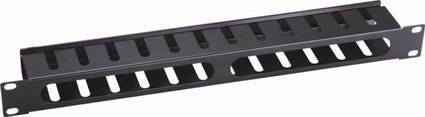
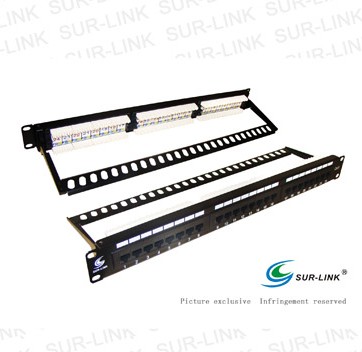
- Chassis Construction: Enterprise-grade 1U and 2U panels should be stamped from SPCC cold-rolled steel with a thickness of 1.2mm to 1.5mm. Anything thinner will flex or warp under the physical pressure of punch-down tools during installation.
- Contact Plating: The RJ45 jack contacts must feature 50 micro-inches (50u") of gold plating over nickel. This is the industry standard to guarantee 750 mating cycles and prevent oxidation. Budget suppliers frequently reduce this to 3u" or 6u", which inevitably leads to packet loss and intermittent connections over time.
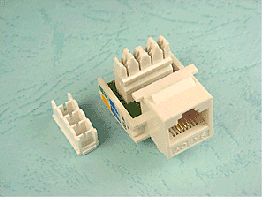
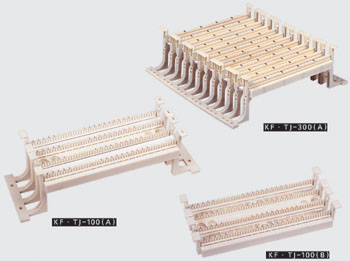
- IDC Blocks: Insulation Displacement Contacts (IDC) should be constructed from phosphor bronze with tin plating, designed to accept 22-26 AWG solid copper wire. They must be compatible with standard 110 or Krone impact tools.
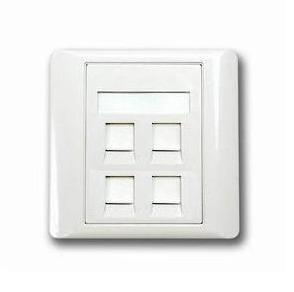
- Plastics: Bezels and keystone housings require high-impact, flame-retardant plastics (such as PC/ABS UL94V-0) rather than standard ABS, which becomes brittle over time.
| Architecture | Loaded (Punch-Down) | Unloaded (Blank/Keystone) |
|---|---|---|
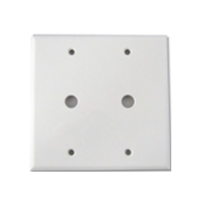
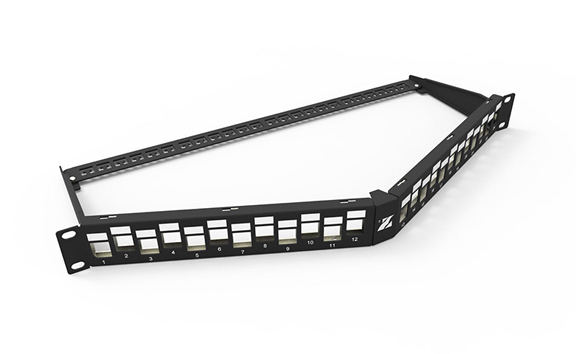
| Flexibility | Fixed category (e.g., all Cat6) | Mix copper, fiber, audio, and video |
| Installation Speed | Faster bulk termination | Slower, requires individual jack snapping |
| Maintenance | Must replace entire block if a port fails | Can swap individual damaged jacks |
| Cost (at scale) | Lower overall unit cost | Higher combined cost (panel + jacks) |
Manufacturing Quality & Factory Evaluation
The most critical failures in patch panel manufacturing happen at the PCB level. For Cat6, Cat6a, and Cat8 panels, the internal printed circuit board is responsible for mitigating Near-End Crosstalk (NEXT) and Return Loss (RL). Poor trace routing or cheap PCB substrate will cause the panel to fail Fluke permanent link or channel testing, rendering the product useless for commercial installations.
Because these defects are invisible to the naked eye, comprehensive factory audits are essential. You must verify that the supplier actually owns and calibrates their testing equipment, rather than relying on outdated or borrowed Fluke testers.
Critical Pre-Shipment QC Checks
- Fluke Network Testing: Verify passing results for NEXT, RL, and Insertion Loss on a statistical sample.
- Physical Tolerance: Ensure standard 19-inch rack mounting hole alignment is exact.
- Plating Verification: Request testing reports confirming 50u inch gold thickness on RJ45 pins.
- Insertion/Extraction Force: Test the mechanical retention of both the RJ45 ports and IDC blocks.
- Visual Inspection: Check for uniform powder coating, clean silk-screening, and absence of sharp metal burrs.
Need to secure reliable, Fluke-passing network accessories? Let us vet suppliers and manage your production quality.
Talk to our teamSourcing Realities: Pricing, MOQs, and Lead Times
Patch panel pricing is heavily influenced by raw material costs—specifically copper, gold, and cold-rolled steel. Customization also plays a significant role. Most buyers utilize OEM/ODM services to apply custom branding, specific port numbering, and color-coded bezels.
While blank, unloaded panels can often be sourced with lower minimums, fully loaded and custom-branded panels require higher volumes to justify the silk-screening and PCB assembly setup.
Implementing robust quality control & inspection during production ensures that your bulk order matches the golden sample, particularly regarding PCB performance and plating thickness.
Optimize your supply chain with negotiated pricing, strict QC, and reliable freight management.
Get a free consultationFrequently Asked Questions
Consistently sourcing reliable networking hardware means looking past the surface finish and verifying the engineering beneath. By enforcing strict material standards and demanding verified testing data, you can protect your brand's reputation and ensure flawless installations for your end-users.
Get Sourcing Help for Patch Panels
Tell us your requirements and our experts will connect you with verified manufacturers.