Paper Production Machinery
Source industrial-grade paper production machinery directly from vetted manufacturers and wholesale suppliers. Built for importers, distributors, and facility managers, our network delivers reliable, high-capacity equipment for tissue, kraft, and corrugated paper manufacturing with complete procurement support.
Sourcing paper production machinery is a high-stakes procurement exercise. These are capital-intensive, multi-stage continuous processing lines where a single misaligned roll or substandard pressure vessel can cause catastrophic downtime. Whether you are outfitting a new mill or upgrading a specific section of an existing line, success requires aligning your exact capacity and basis-weight requirements with a manufacturer that possesses genuine heavy-engineering capabilities.
Defining Your Core Specifications
Before evaluating suppliers, your baseline technical requirements must be locked in. Paper machines are highly customized, and manufacturers will design the line based on a few critical inputs:
- Raw Material: Virgin pulp, recycled OCC (Old Corrugated Containers), or agricultural waste. This dictates the design of the stock preparation section.
- Target Output: The specific paper grade (e.g., fluting, testliner, tissue, cultural paper).
- Basis Weight (GSM): The grammage range the machine must handle (e.g., 12 to 40 g/m2 for tissue; 80 to 200 g/m2 for kraft).
- Net Paper Width: The trimmed width of the paper at the reel.
- Working Speed & Capacity: Determines the sizing of the headbox, the length of the wire section, and the number of dryer cylinders required.
Assessing Manufacturer Engineering Capability
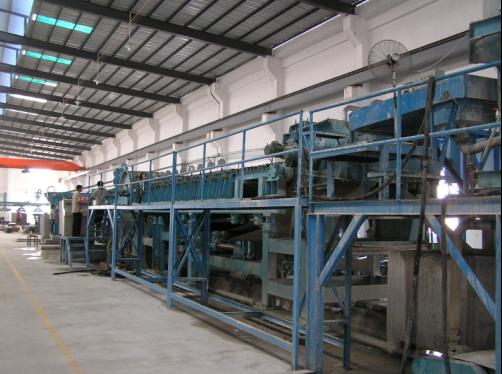
Many trading companies market themselves as paper machinery manufacturers, but they merely assemble components or outsource the heavy casting. True manufacturers have in-house foundries or direct control over heavy CNC machining, boring mills, and dynamic balancing equipment.
Because of the massive scale of these components, conducting thorough Factory Audits is essential to verify the supplier's production infrastructure, quality management systems, and engineering team.
Need to verify a machinery manufacturer's true production capabilities? Let our engineers evaluate their facilities before you commit capital.
Talk to our teamCritical Components to Evaluate
- The Headbox: The heart of the machine. Look for precision welding and high-grade stainless steel (304 or 316L) to ensure uniform pulp distribution. Advanced lines utilize hydraulic headboxes with PLC-controlled slice lips.
- Press Section: Press rolls must be perfectly cambered to apply uniform pressure across the web. Inferior machining here leads to uneven moisture profiles and frequent web breaks.
- Dryer Cylinders: These are pressure vessels operating under high-temperature steam. They must be cast from high-grade alloy cast iron. Ensure the factory can provide legitimate pressure vessel certifications (such as ASME boiler and pressure vessel code compliance or CE PED) for your destination market.
Quality Control and Factory Acceptance Testing (FAT)
You cannot afford to discover a defect during installation. Rigorous Quality Control & Inspection must be executed at the factory level before the equipment is disassembled for shipping.
Essential FAT Checkpoints for Paper Machinery
- Dynamic balancing reports for all guide rolls, press rolls, and dryer cylinders at maximum design speed.
- Hydrostatic pressure testing certificates for all dryer cans.
- Dry run of the mechanical drive systems to check for abnormal vibration and bearing temperatures.
- Verification of PLC and DCS automation systems (ensure international brands like Siemens, ABB, or Yaskawa are used as specified).
- Dimensional inspection of the base frames against the foundation drawings.
Logistics, Lead Times, and Pricing Realities
Paper production lines are massive. A 100-ton-per-day kraft paper machine can easily require 20 to 40 standard shipping containers, plus specialized flat racks or break-bulk shipping for oversized dryer cylinders and framing.
Coordinating this requires expert Shipping & Freight management to ensure components arrive in sequence for installation, without incurring massive demurrage charges at the port.
- Lead Times: Engineering, casting, machining, and assembly of a complete line typically takes 4 to 8 months. Customizations or high-capacity lines (over 300 tons per day) can push lead times to 10 to 12 months.
- Pricing: Costs range from a few hundred thousand dollars for small, localized tissue machines to tens of millions for high-speed, wide-web packaging paper lines. Price drivers include the degree of automation, the origin of the bearings and control systems, and the quality of the stainless steel used in the wet end.
- Payment Terms: Standard capital equipment terms apply. Expect a 30 percent T/T deposit with the order, progress payments during manufacturing, and the final balance paid only after a successful FAT, prior to shipment.
Planning a complex machinery import? We manage the end-to-end procurement, FAT, and out-of-gauge logistics.
Get a free consultationFrequently Asked Questions
Procuring paper production machinery requires a deep understanding of heavy engineering, stringent quality validation, and complex international logistics. By thoroughly vetting your manufacturing partners and enforcing strict factory acceptance protocols, you can secure high-performance equipment that delivers decades of reliable production.
Get Sourcing Help for Paper Production Machinery
Tell us your requirements and our experts will connect you with verified manufacturers.