Pad Printers
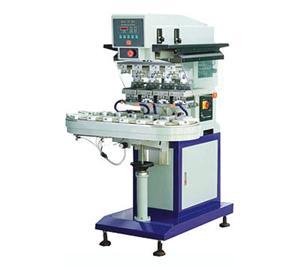
Source commercial-grade pad printers from vetted manufacturers and suppliers in China and across Asia. Designed for importers, distributors, and brands seeking reliable bulk procurement or OEM production, our network delivers precision machinery for industrial and promotional printing applications.
Sourcing industrial pad printers requires balancing mechanical precision with long-term reliability. Whether procuring compact single-color tabletop units for promotional goods or fully automated multi-color systems for automotive and medical parts, the primary challenge lies in verifying a manufacturer's component quality and assembly standards. A machine that looks identical on a spec sheet can perform vastly differently on the production floor if the factory cuts corners on pneumatic cylinders or programmable logic controllers (PLCs).
Core Specifications for Pad Printing Machinery
When negotiating with suppliers, defining the exact technical specifications is critical to avoid receiving a machine built with substandard, generic components. You must dictate the core architecture of the printer based on the end-user's application.
Drive Systems: Pneumatic vs. Servo
The drive mechanism dictates the printer's speed, precision, and maintenance requirements.
| System Feature | Pneumatic Drive | Servo / Electric Drive |
|---|---|---|
| Operation | Requires external compressed air | Fully electric motor control |
| Precision | Standard accuracy (good for basic prints) | High accuracy (ideal for micro-printing) |
| Cycle Speed | Moderate | High (often 20 to 30 percent faster) |
| Cost Profile | Lower upfront cost | Higher upfront cost, lower maintenance |
Ink Delivery: Closed Cup vs. Open Inkwell
Modern industrial pad printers almost exclusively use sealed ink cups rather than traditional open inkwells. Closed cups prevent solvent evaporation, maintain consistent ink viscosity over long shifts, and drastically reduce VOC emissions. When specifying closed cup systems, define the cup diameter (typically ranging from 60mm to 150mm or larger) and the ring material (ceramic rings offer superior lifespan and cleaner doctoring over steel).
Quality Control and Factory Assembly Standards
The most common failure in imported pad printers isn't the heavy cast-aluminum frame; it is the premature failure of moving parts and electronics. Many lower-tier factories substitute premium branded components for cheaper domestic equivalents after the initial sample is approved.
Critical Component Verifications
- Pneumatics: Specify internationally recognized brands (e.g., SMC, Festo) in the contract.
- PLCs & Touchscreens: Ensure controllers are from reliable brands (e.g., Omron, Siemens, Panasonic) with English interfaces.
- Machining Tolerances: Guide rails and linear bearings must be hardened steel to prevent micro-vibrations during the print stroke.
- Safety Compliance: Machines must feature emergency stops and safety guards compliant with the EU Machinery Directive (CE) or OSHA standards.
Executing a rigorous Quality Control & Inspection protocol before shipment is essential. Inspectors should verify the brand of every internal component against the bill of materials, test the machine for continuous dry-cycling (often for 24 hours), and measure print registration accuracy across multiple cycles.
Need help verifying a manufacturer's technical capabilities and component supply chain?
Talk to our teamPricing, MOQs, and Lead Times
Machinery sourcing differs significantly from consumer goods in terms of volume and production timelines. While unit costs are higher, the financial risk of importing defective equipment demands thorough upfront vetting.
Cost Drivers
The FOB price of a pad printer is heavily influenced by the number of colors (single-color vs. multi-color carousel/shuttle systems), the integration of servo motors, and automated features such as programmable pad cleaning or integrated UV curing stations. Engaging a partner for comprehensive Product Sourcing ensures you are comparing apples-to-apples quotes where the component brands and build quality are standardized across all bids.
Looking to scale your machinery imports without the supply chain headaches?
Get a free consultationFrequently Asked Questions
When importing commercial pad printers, the initial unit cost is only a fraction of the total cost of ownership. Unplanned downtime, poor print registration, and safety compliance failures can quickly erase any savings gained from a cheap supplier. Conducting thorough Factory Audits prior to placing an order is the most effective way to ensure your chosen manufacturer has the engineering depth and quality management systems required to deliver reliable industrial machinery.
Get Sourcing Help for Pad Printers
Tell us your requirements and our experts will connect you with verified manufacturers.