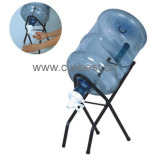
Other Storage Racks & Shelving Units
Source other storage racks and shelving units in bulk from vetted manufacturers and suppliers. This category is tailored for importers, wholesalers, distributors, and brands seeking reliable OEM and private-label production for specialty, niche, and mixed-material storage solutions built to exact specifications.
Sourcing non-standard or specialty storage racks requires careful attention to structural integrity, material finish, and packaging efficiency. When standard wire shelving or heavy-duty industrial racks do not fit your product brief, you need manufacturing partners capable of handling mixed materials, unique form factors, and custom dimensions without compromising load capacity or assembly tolerances.
Critical Specifications for Specialty Shelving
For specialty shelving units—whether modular cube systems, over-the-toilet space savers, or mixed-material utility racks—the core engineering principles remain the same. Buyers must clearly define the parameters that dictate both safety and unit cost.
- Material Gauge: For steel components, thickness is the primary driver of cost and rigidity. Commercial-grade specialty racks typically utilize SPCC (cold-rolled steel) ranging from 0.8mm to 1.2mm. Specifying a "lightweight" rack without defining the exact gauge often results in factories using 0.5mm steel, leading to structural failure under load.
- Surface Treatment: Powder coating is standard for metal racks, but application quality varies. Specify a coating thickness of 60 to 80 microns. For environments with high moisture (like bathrooms or garages), mandate an electrophoretic deposition (E-coating) primer beneath the powder coat to prevent rust.
- Assembly Mechanisms: Knock-down (KD) designs are essential for shipping efficiency. Whether utilizing boltless rivet-lock systems, snap-fit plastic connectors, or standard screw-in hardware, the tolerances must be tight. Loose tolerances lead to wobbly units, while overly tight tolerances cause assembly damage.
| Material Type | Typical Application | Cost Driver | Key Specification |
|---|---|---|---|
| Cold-Rolled Steel (SPCC) | Utility & modular racks | Steel gauge (thickness) | 0.8mm - 1.2mm |
| Engineered Wood (MDF/PB) | Decorative & mixed-material | Density & veneer quality | E0/E1 formaldehyde emission |
| High-Density Plastics | Lightweight utility shelving | Virgin vs. recycled resin ratio | PP or ABS grade |
Need help qualifying manufacturers for a custom shelving design? Our sourcing team can match your specifications with the right fabrication capabilities.
Discuss your specsManufacturing Processes and Quality Control
The durability of a storage rack is determined on the factory floor. When evaluating potential suppliers, it is critical to look beyond the showroom sample and examine their production lines. Conducting thorough factory audits helps verify that a supplier has the in-house machinery required for consistent mass production, rather than outsourcing critical fabrication steps.
Where Quality is Won or Lost
- Stamping and Laser Cutting: Precision is paramount for KD furniture. Automated laser cutting and CNC punching ensure that bolt holes and rivet slots align perfectly across thousands of units. Manual stamping often leads to burrs and misalignment.
- Welding Integrity: For pre-assembled frames or load-bearing joints, check if the factory uses robotic welding or manual spot welding. Inconsistent manual welds can create weak points that fail under dynamic loads.
- Coating and Curing: If the curing oven temperature is too low or the conveyor speed too high, the powder coat will not cross-link properly, resulting in a finish that flakes off during assembly or transit.
Pre-Shipment Inspection Focus Areas
- Static load test: Apply 1.5x the rated capacity for 24 hours to check for deflection.
- Coating adhesion test: Perform a cross-hatch cutter test on painted metal components.
- Assembly check: Assemble one full unit per batch to verify hardware counts and hole alignment.
- Moisture check: For wood components, verify moisture content is under 12 percent.
- Packaging drop test: Ensure heavy metal components do not pierce the master carton.
Implementing rigorous quality control and inspection protocols before shipment is the only way to catch missing hardware, incorrect coating thickness, or packaging flaws that lead to high return rates.
Sourcing Realities: Pricing, MOQs, and Lead Times
Because "other" shelving units often involve unique designs or mixed materials, production parameters can vary significantly from standard commodity racks.
When utilizing OEM/ODM services to develop a proprietary storage solution, expect to invest in custom tooling. Tooling costs are usually amortized over your first few bulk orders, but they require upfront capital.
Pricing is highly sensitive to raw material fluctuations (particularly steel and resin) and packaging volume. Because shelves ship flat-packed, optimizing the carton dimensions to maximize container space can often yield higher margin improvements than negotiating raw unit costs with the factory.
Ready to optimize your shelving supply chain? Talk to our experts about managing your next bulk order from factory floor to final delivery.
Get a sourcing assessmentFrequently Asked Questions
Successfully sourcing specialty storage racks requires balancing innovative design with strict adherence to structural engineering and packaging efficiency. By controlling the material specifications and enforcing rigorous pre-shipment inspections, buyers can secure reliable, high-margin storage solutions that perform safely in the end user's environment.
Get Sourcing Help for Other Storage Racks & Shelving Units
Tell us your requirements and our experts will connect you with verified manufacturers.