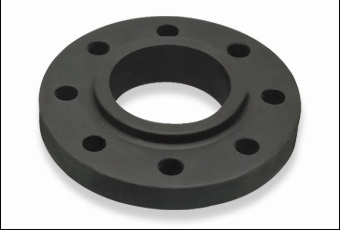
Other Steel Products
Source miscellaneous and custom carbon steel products from vetted suppliers and manufacturers across Asia. Designed for importers, industrial distributors, and procurement managers buying bulk steel components, our network provides reliable OEM and wholesale production to meet strict dimensional and metallurgical standards.
Sourcing "other" or miscellaneous carbon steel products—components, custom fabrications, and specialized hardware that fall outside standard coils, plates, or pipes—requires matching your exact technical requirements with the right secondary processing facility. Because primary steel mills rarely handle custom fabrication, buyers must navigate a fragmented landscape of stamping plants, foundries, and CNC machine shops. The core sourcing challenge is ensuring the factory has the specific equipment for your required tolerances and the metallurgical knowledge to maintain structural integrity during processing.
Specifying Material Grades and Surface Treatments
When dealing with non-standard carbon steel products, specifying the exact chemical composition and mechanical properties is critical. A common mistake in overseas procurement is relying on vague domestic standards without confirming the exact local equivalent (for example, assuming a factory will perfectly match ASTM A36 without verifying their Q235B material test reports).
Furthermore, because carbon steel is highly susceptible to oxidation, the surface treatment specification is just as important as the base metal. You must define the coating thickness, application method, and required performance in environmental testing.
| Material Grade | Carbon Content & Properties | Typical Applications |
|---|---|---|
| Q235B / ASTM A36 | Low carbon (under 0.22 percent), high ductility, excellent weldability. | Brackets, stamped hardware, structural fittings. |
| AISI 1045 / S45C | Medium carbon (approx. 0.45 percent), high tensile strength, heat-treatable. | Shafts, gears, wear-resistant forged components. |
| Q345 / ASTM A572 | Low alloy, high strength, good low-temperature impact toughness. | Heavy-duty load-bearing components, machinery parts. |
Struggling to find a factory capable of your specific carbon steel fabrication? Let us match you with a vetted manufacturer.
Talk to our teamManufacturing Processes and Supplier Capabilities
Miscellaneous steel products require diverse manufacturing methods. The factory you select must specialize in the primary process your product demands. A facility excellent at high-volume cold stamping will likely fail at producing high-tolerance forged components.
- Stamping and Deep Drawing: Ideal for thin-gauge carbon steel. Requires significant upfront tooling investment. Check the factory's press tonnage capabilities to ensure they can handle your material thickness without excessive wear on the dies.
- Forging (Hot and Cold): Used for high-strength requirements. Hot forging alters the grain structure for maximum durability. Validating the factory's temperature control systems is essential.
- Casting (Sand and Investment): Suitable for complex geometries. Surface finish is often a secondary challenge, requiring additional machining.
Before committing to tooling costs, running comprehensive factory audits is the most effective way to verify that a supplier actually owns the machinery they claim, rather than subcontracting your critical components to unverified tier-two workshops.
Quality Control for Carbon Steel Components
Defects in carbon steel manufacturing often occur at the microscopic level or during the finishing stages. Implementing rigorous quality control protocols prevents compromised batches from leaving the facility.
Critical Inspection Points for Custom Steel Products
- Material Test Reports (MTRs): Verify chemical composition (carbon, manganese, phosphorus, sulfur limits) via optical emission spectrometry.
- Dimensional Tolerances: Conduct CMM (Coordinate Measuring Machine) checks against CAD files, especially after heat treatment which can cause warping.
- Weld Integrity: If the product involves welded assemblies, require ultrasonic or magnetic particle inspection for micro-cracks.
- Coating Adhesion & Thickness: Use a coating thickness gauge for galvanization or powder coating, and mandate standard salt-spray testing (e.g., 72 to 120 hours) for corrosion resistance.
Pricing Drivers, MOQs, and Lead Times
Pricing for manufactured carbon steel products is a combination of the raw material spot price (tied to global iron ore and coking coal indices) and the processing costs. Because "other steel products" often involve custom tooling, MOQs and lead times vary significantly based on the manufacturing method.
Factories will generally amortize tooling costs over large orders or charge them upfront for smaller runs. When negotiating, clarify who owns the molds or dies after production. If you plan to scale, securing a reliable partner through dedicated product sourcing ensures your intellectual property and tooling remain under your control.
Need transparent pricing and reliable lead times for your custom steel orders? We handle the negotiation and supply chain logistics.
Get a free consultationFrequently Asked Questions
Successfully importing miscellaneous carbon steel products requires tight control over both the metallurgical inputs and the mechanical processes. By treating factory verification and in-line inspection as non-negotiable steps, you can secure high-quality components at competitive wholesale volumes.
Get Sourcing Help for Other Steel Products
Tell us your requirements and our experts will connect you with verified manufacturers.