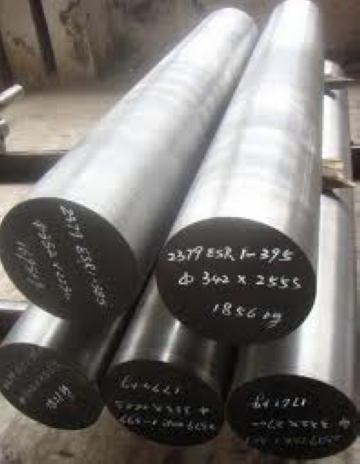
Other Special Steel Products
Source Other Special Steel Products from vetted manufacturers and suppliers in China and Asia. Designed for importers, wholesalers, distributors, and industrial brands looking for bulk procurement or custom OEM production. Ensure exact chemical composition and mechanical performance for your specialized alloy requirements.
Sourcing specialized alloy steels that fall outside standard classifications requires strict oversight of chemical composition and metallurgical structure. Whether you are procuring custom heat-resistant alloys, high-strength wear plates, proprietary tooling materials, or niche maraging steels, success depends on locking down the exact specifications before smelting or rolling begins. A minor deviation in trace elements or heat treatment can drastically alter the mechanical properties of the final product.
Specifying Custom and Special Steels
When dealing with non-standard or proprietary steel grades, the margin for error is virtually zero. Buyers must define tolerances far beyond standard structural grades. Relying solely on a supplier's internal grade designation is risky; you must define the metallurgical reality.
Critical Specifications for Special Steel Procurement
- Chemical Composition Limits: Exact minimum and maximum percentages for primary elements (C, Cr, Ni, Mo) and trace elements (V, Ti, Nb).
- Delivery Condition: Specify the exact thermal state (e.g., Hot Rolled, Forged, Spheroidized Annealed, Quenched and Tempered).
- Cleanliness and Inclusions: Maximum acceptable limits for non-metallic inclusions (sulfides, aluminates, silicates) per ASTM E45 or equivalent.
- Dimensional Tolerances: Acceptable variance in thickness, width, and length, including flatness and straightness requirements.
- Surface Condition: Specify acceptable levels of decarburization, scale, and surface roughness.
Manufacturing Process and Quality Risks
The integrity of special steel is determined in the melt shop and the heat treatment facility. High-performance alloys typically require Electric Arc Furnace (EAF) smelting followed by Ladle Refining (LF) and Vacuum Degassing (VD) to remove hydrogen and oxygen, ensuring internal cleanliness.
Substandard manufacturers may skip vacuum degassing to save costs, leading to hydrogen embrittlement or excessive inclusions that cause the steel to fail under stress. Furthermore, inconsistent temperature control during quenching and tempering can result in hard spots, warping, or failure to meet the required yield strength.
Navigating custom steel metallurgy requires on-the-ground expertise. Let us help you verify supplier capabilities and secure your supply chain.
Talk to our teamTo mitigate these risks, thorough Factory Audits are essential before placing an order. You must verify that the mill actually possesses the necessary refining equipment and advanced heat-treatment furnaces, rather than outsourcing these critical steps to unverified third parties.
Quality Control and Material Verification
In the special steel trade, material substitution—intentional or accidental—is a primary risk. Mill Test Certificates (MTCs) are mandatory, but they should not be taken at face value. A standard EN 10204 3.1 MTC is issued by the manufacturer, whereas a 3.2 certificate requires independent third-party validation.
For critical applications, implementing independent Quality Control & Inspection is non-negotiable.
Standard MTC vs. Independent Lab Testing
Advantages
- MTC: Provided free by the mill with every batch.
- MTC: Covers standard chemical and mechanical data.
- Lab Testing: Verifies the MTC is accurate and not falsified.
- Lab Testing: Can include advanced checks like micro-structure analysis.
Disadvantages
- MTC: Susceptible to falsification or generic batch reporting.
- MTC: Does not guarantee the specific shipped plates/coils match the certificate.
- Lab Testing: Adds lead time to the shipping schedule.
- Lab Testing: Requires cutting samples from the actual production run.
Always insist on independent Compliance & Testing using a certified metallurgical laboratory. Spectrographic chemical analysis, tensile testing, Charpy V-notch impact testing, and Ultrasonic Testing (UT) for internal flaws should be conducted on samples cut directly from your finished goods before container loading.
Typical Pricing, MOQs, and Lead Times
Because special steels often require specific chemical recipes, they are frequently produced to order rather than pulled from existing inventory. This heavily impacts both Minimum Order Quantities (MOQs) and lead times.
Pricing is highly volatile and directly tied to the global commodity prices of alloying elements like nickel, molybdenum, and vanadium. Contracts for long-term supply often include material surcharge clauses to account for this volatility.
Need to lock in pricing and negotiate favorable terms for specialized alloys? Our sourcing experts can structure a secure purchasing agreement.
Get a free consultationFrequently Asked Questions
Procuring specialized alloy steel in bulk is an exercise in strict metallurgical discipline and continuous verification. By defining your specifications down to the trace elements, auditing the mill's refining capabilities, and enforcing independent lab testing, you can secure high-performance materials consistently. Engaging experienced professionals to manage this oversight ensures your technical requirements translate perfectly to the factory floor.
Get Sourcing Help for Other Special Steel Products
Tell us your requirements and our experts will connect you with verified manufacturers.