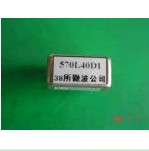
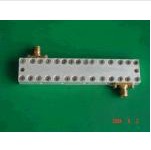
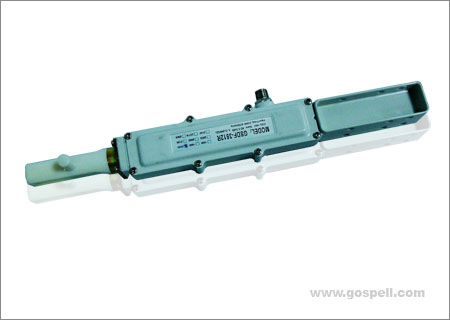
Other RF ICs and Modules
Source wholesale Other RF ICs and Modules directly from vetted Asian manufacturers and suppliers. Built for telecom hardware developers, electronics distributors, and OEM brands requiring specialized radio frequency components, custom front-end modules, and specialized transceivers in high-volume, production-ready tape and reel formats.
Sourcing specialized RF ICs and custom radio frequency modules in volume requires strict oversight of fabless designers and assembly facilities. For hardware manufacturers and telecom distributors, the challenge rarely lies in finding a supplier, but rather in securing consistent RF performance—managing insertion loss, linearity, and thermal stability—across continuous production batches while avoiding gray-market silicon.
Defining Specifications for Specialized RF Components
When dealing with "other" or niche RF integrated circuits—such as specialized digital step attenuators, custom phase shifters, or integrated front-end modules (FEMs) for specific sub-GHz or proprietary IoT bands—standardized spec sheets often lack the nuance needed for high-reliability applications. Procurement teams must establish strict baseline tolerances with the factory before tape-out or module assembly.
Critical RF IC Procurement Specifications
- Frequency Range & Bandwidth: Specify exact operational bands; broadband components require strict flatness tolerances.
- Linearity & Power Handling: Define P1dB (1dB compression point) and OIP3 (Output Third-Order Intercept Point) to ensure signal integrity under load.
- Insertion Loss & Isolation: Establish maximum acceptable loss (in dB) and minimum port-to-port isolation.
- Package Type & Thermal Pad: QFN, BGA, or LGA. Ensure the thermal ground pad dimensions match your PCB footprint exactly.
- Supply Voltage (Vdd) & Current Consumption: Crucial for battery-operated IoT modules.
Struggling to verify factory datasheets for custom RF modules? Let our engineers help you validate supplier capabilities.
Talk to our teamNavigating the RF Semiconductor Supply Chain
The majority of RF IC suppliers in major hubs like Shenzhen, Shanghai, and Wuxi operate on a fabless model. They design the silicon but rely on major foundries for wafer fabrication and OSAT (Outsourced Semiconductor Assembly and Test) partners for packaging.
Because you are essentially buying a packaged semiconductor, quality control cannot be done visually. It requires rigorous automated testing. Without proper Quality Control & Inspection at the OSAT level, you risk receiving batches with bonding wire failures, poor thermal dissipation, or out-of-spec S-parameters.
Standard ICs vs. Custom SiP (System in Package) Modules
Advantages
- Custom SiPs integrate multiple RF dies (switches, amps, filters) into one footprint, saving PCB space.
- Pre-matched impedance internally reduces design time for your engineering team.
- Simplifies procurement by replacing a complex BOM with a single module.
Disadvantages
- Higher NRE (Non-Recurring Engineering) costs and extended development timelines.
- Yield issues in one internal component can scrap the entire integrated module.
- Requires strict supplier lock-in; second-sourcing is difficult.
If you are developing a proprietary hardware device, partnering with a capable factory for OEM/ODM Services allows you to create custom RF modules tailored to your exact footprint and frequency requirements, though it requires meticulous validation to ensure regulatory pass rates.
Regulatory Compliance and Testing
RF components are heavily regulated. While the final product must pass FCC (US), CE (Europe), or SRRC (China) certifications, the underlying RF ICs and modules must be inherently designed to meet spurious emission limits.
Ensure your supplier conducts comprehensive S-parameter testing, noise figure measurements, and EVM (Error Vector Magnitude) testing using calibrated vector network analyzers (VNAs). Integrating Compliance & Testing early in the sourcing process prevents costly redesigns after the first prototype run fails emissions testing.
Typical MOQs, Pricing Drivers, and Lead Times
The semiconductor supply chain operates on volume and packaging constraints. Pricing is highly volatile and tied to global wafer capacity, while MOQs are strictly dictated by automated assembly equipment.
| Component Type | Volume Driver | NRE / Setup Costs | Typical Lead Time |
|---|---|---|---|
| Standard RF ICs (Attenuators, Switches) | High (10k+) | Zero (Off-the-shelf) | 4 - 8 Weeks |
| Custom RF Modules (SiP) | Medium (5k+) | High (Custom tooling/testing) | 12 - 20 Weeks |
| Bare Die / Wafers | Very High (Wafer lots) | Medium | 16 - 24 Weeks |
Need to secure stable pricing and reliable lead times for your RF component supply chain? Speak with our procurement specialists.
Get a free consultationFrequently Asked Questions
Successfully sourcing specialized RF ICs and modules requires more than just finding a low price per piece; it demands deep technical alignment with the manufacturer's testing capabilities and a secure supply chain to prevent counterfeits. Professional oversight ensures your components meet strict RF tolerances, batch after batch.
Get Sourcing Help for Other RF ICs and Modules
Tell us your requirements and our experts will connect you with verified manufacturers.