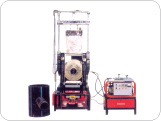
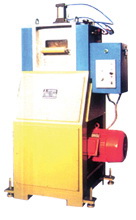
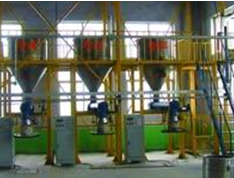
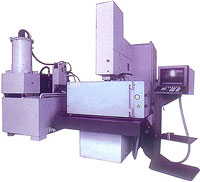
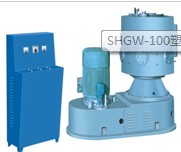
Other Plastic & Rubber Machinery
Source specialized and auxiliary Other Plastic & Rubber Machinery from vetted manufacturers and suppliers. Designed for importers, distributors, and industrial buyers seeking custom OEM/ODM production, our network delivers reliable equipment for niche polymer processing and production line integration at competitive wholesale volumes.
Sourcing auxiliary or specialized plastic and rubber processing machinery—whether you are integrating industrial granulators, temperature control units, specialized mixers, or custom vulcanizing presses—requires precise alignment with existing production lines. Because this category encompasses equipment outside standard injection or extrusion molds, the primary sourcing challenge is verifying that a supplier possesses the specific engineering capability for your niche, rather than simply acting as a broad-spectrum trading company.
When buying industrial machinery in bulk or specifying custom builds for your distribution network, component quality, electrical compliance, and after-sales support dictate the long-term viability of the procurement.
Critical Specifications for Auxiliary Machinery
Integrating new equipment into an established polymer or rubber processing line means matching throughput capacities and control systems. Overlooking localized electrical standards or PLC compatibility can result in costly retrofitting upon arrival.
Pre-Sourcing Specification Checklist
- Electrical Standards: Specify voltage, frequency (e.g., 3-phase 480V/60Hz vs. 380V/50Hz), and required certifications (CE, UL, CSA).
- Throughput Capacity: Define required output in kg/hr or tons/hr, accounting for material density and viscosity.
- Control Systems: Require internationally recognized PLC brands (e.g., Siemens, Allen-Bradley, Omron) for easier local servicing.
- Metallurgy and Wear Parts: Specify hardened alloys (e.g., SKD11 or D2 steel) for cutting blades, screws, or high-friction contact points.
- Footprint and Layout: Confirm exact machine dimensions, clearance requirements, and integration points for conveyors or piping.
Struggling to verify technical specifications with overseas machinery suppliers? Let our engineering team handle the vetting and technical communication.
Get a free consultationComponent Quality and Manufacturing Standards
The lifespan of plastic and rubber machinery is largely determined by the quality of its internal components. Many lower-tier manufacturers cut costs by using domestic-market motors, unbranded bearings, and subpar hydraulic systems.
For high-uptime environments, specify that key components must be sourced from globally recognized brands. Motors should be high-efficiency (IE3 or IE4). Bearings from SKF, NSK, or Timken ensure reliability under heavy loads, while hydraulic valves from Rexroth or Yuken prevent pressure inconsistencies in presses and molding equipment.
Executing rigorous Quality Control & Inspection is non-negotiable for industrial machinery. This should include in-process checks on frame welding and metallurgy, followed by a comprehensive Factory Acceptance Test (FAT) before the equipment is crated. The FAT must simulate your actual production load using your specific raw materials if possible.
Navigating the Supply Base: Manufacturers vs. Assemblers
The machinery sector in industrial hubs like Guangdong, Jiangsu, and Zhejiang is dense with both genuine manufacturers and assembly workshops.
| Attribute | Genuine Manufacturer | Assembly Workshop / Trading Co. |
|---|---|---|
| Engineering Depth | In-house R&D, custom CAD/CAM capabilities | Relies on outsourced blueprints, limited customization |
| Component Sourcing | Direct relationships with global component brands | Buys components on the spot market, inconsistent quality |
| After-Sales Support | Dedicated technical team, documented spare parts list | Poor response times, high turnover of technical staff |
To mitigate the risk of partnering with an undercapitalized assembler, conducting thorough Factory Audits is essential. Audits should verify the supplier's CNC machining capabilities, quality management systems (ISO 9001), and their history of exporting to your specific regulatory market.
Typical Pricing, MOQs, and Lead Times
Machinery procurement operates on different financial and temporal scales compared to consumer goods.
Pricing is highly volatile and correlates directly with the brand of internal components and the current cost of raw steel. Always request an itemized Bill of Materials (BOM) in your quotation to understand exactly what is driving the cost.
Need to negotiate better terms or ensure your machinery clears export customs smoothly? We manage the entire procurement and logistics process.
Talk to our teamBecause these are heavy, oversized items, standard freight forwarding is rarely sufficient. Coordinating specialized Shipping & Freight solutions—such as flat-rack containers or breakbulk shipping, along with precise customs classification (HS codes)—is critical to avoiding port delays and unexpected demurrage fees.
Successfully importing specialized plastic and rubber machinery requires looking past the outer casing to scrutinize the internal components, engineering tolerances, and the factory's true capabilities. By enforcing strict FAT protocols and specifying globally supported components, you protect your production line from costly downtime.
Get Sourcing Help for Other Plastic & Rubber Machinery
Tell us your requirements and our experts will connect you with verified manufacturers.