Other Plastic Products
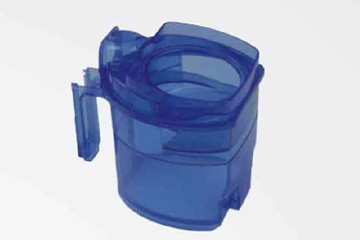
Source high-quality, custom, and specialized plastic products from vetted manufacturers and suppliers. Designed for importers, wholesalers, and brands requiring OEM or private-label production, this category covers miscellaneous plastic manufacturing where precision tooling, material compliance, and scalable bulk production are critical.
Sourcing specialized or custom plastic components requires strict control over tooling, resin selection, and process parameters. When a product falls outside standard off-the-shelf categories, the burden of specification falls entirely on the buyer. Success depends on aligning the right manufacturing process—typically injection molding, extrusion, or thermoforming—with a factory equipped to handle your specific material tolerances and volume requirements.
Specifying Resins and Tooling Standards
The foundation of any custom plastic product is the mold and the raw material. Relying on a factory's default resin choice often leads to inconsistencies in tensile strength, UV resistance, or thermal stability. You must specify the exact polymer (e.g., ABS, PC, POM, PP) and the required Melt Flow Index (MFI) to ensure consistent flow during injection.
Tooling is the most significant upfront investment. The lifespan and precision of your product are directly tied to the steel grade used for the mold cavity and core.
If you are developing proprietary components, establishing clear terms for mold ownership and maintenance is critical. Leveraging professional OEM/ODM Services ensures that your tooling designs are protected and that the factory maintains the molds according to agreed-upon schedules.
Need help securing mold ownership and finding the right injection molding partner?
Talk to our teamControlling Manufacturing Defects
In plastic manufacturing, temperature fluctuations, incorrect injection pressure, or poor mold cooling lead to immediate dimensional and cosmetic failures. Factories running older hydraulic machines or cutting corners on cycle times are prone to producing high defect rates.
When setting up your Quality Control & Inspection protocols, mandate checks for the following common injection defects:
Critical Inspection Points for Plastic Parts
- Flash: Excess material on parting lines indicating poor mold clamping or excessive injection pressure.
- Sink Marks: Depressions on thick sections caused by insufficient cooling time or low holding pressure.
- Warping: Dimensional distortion due to uneven cooling or premature ejection from the mold.
- Short Shots: Incomplete filling of the mold cavity, often due to low melt temperature or trapped air.
- Color Inconsistency: Streaking or poor dispersion of masterbatch pigments.
Conducting thorough Factory Audits prior to tooling investment is the most effective way to verify a supplier's machinery age, maintenance logs, and in-house quality management systems.
MOQs, Lead Times, and Pricing Dynamics
Pricing for custom or miscellaneous plastic products is split into two phases: tooling and unit production. Factories will rarely amortize tooling costs into the unit price unless the order volume is exceptionally high.
- Tooling Costs: A simple single-cavity P20 mold may cost $2,000 to $4,000, while complex, multi-cavity H13 molds with hot runners can easily exceed $15,000.
- Minimum Order Quantities (MOQs): Because setting up an injection molding machine requires purging old resin and calibrating temperatures, factories typically require MOQs of 5,000 to 10,000 units per production run.
- Lead Times: Tooling design and fabrication (T1 samples) usually take 30 to 45 days. Once samples are approved, mass production takes an additional 15 to 30 days depending on machine availability and order size.
Unit pricing is highly sensitive to raw material costs, which fluctuate with global petroleum markets. Be wary of quotes that are significantly below market average; this is a strong indicator that the factory plans to mix a high percentage of regrind (recycled scrap) with virgin resin, which severely degrades the structural integrity of the final product.
Struggling to negotiate fair tooling costs and production MOQs?
Get a free consultationFrequently Asked Questions
Successful procurement of specialized plastic products requires separating the tooling investment from the unit cost and maintaining strict oversight of the factory's process parameters. Establishing clear tolerances and defect limits upfront prevents costly rework and ensures a stable supply chain for your custom components.
Get Sourcing Help for Other Plastic Products
Tell us your requirements and our experts will connect you with verified manufacturers.