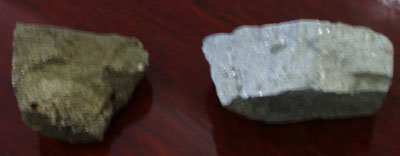
Other Non-Metallic Mineral Deposits
Source high-purity Other Non-Metallic Mineral Deposits from vetted suppliers and manufacturers. Designed for industrial importers, chemical distributors, and wholesalers, this category connects you with reliable partners capable of delivering bulk specialty minerals with strict consistency and export compliance.
Sourcing specialty non-metallic minerals in bulk requires strict attention to chemical purity, particle size distribution, and batch-to-batch consistency. Because this category encompasses a wide range of niche industrial minerals used in chemical synthesis, refractory materials, fillers, and advanced manufacturing, securing a reliable supply chain means thoroughly vetting the supplier's extraction sources, milling capabilities, and export logistics.
Critical Specifications for Niche Mineral Deposits
When procuring specialized non-metallic minerals, the physical and chemical specifications dictate the material's suitability for your end application. Failing to define these parameters clearly with your manufacturer often leads to unusable batches.
Essential Specification Parameters
- Chemical Purity: Exact percentages of the primary mineral and acceptable limits for trace elements (e.g., SiO2, Fe2O3, Al2O3).
- Particle Size Distribution (PSD): Specified in mesh or microns (e.g., D50 or D90 values) to ensure uniform milling.
- Moisture Content: Typically required to be under 1 percent to prevent clumping during transit and storage.
- Whiteness and Brightness: Critical for minerals used as fillers in paints, plastics, or paper coatings.
- Bulk Density and Specific Gravity: Necessary for calculating packaging limits and freight volume.
Struggling to find a supplier that can meet tight particle size or purity tolerances? Let us match you with a vetted mineral processor.
Talk to our teamProcessing Capabilities and Quality Control
The raw extraction of mineral deposits is only the first step. The true value—and the primary source of defects—lies in the processing phase. Crushing, grinding, classification, and sometimes calcination or flotation determine the final grade of the mineral.
A common issue in mineral sourcing is contamination during the milling process. For example, using standard steel grinding media can introduce trace iron into the mineral, which ruins the batch for high-end chemical or ceramic applications. Suppliers producing premium grades must use alumina or ceramic-lined mills.
Before committing to a high-volume contract, conducting thorough factory audits is essential to verify the supplier's processing equipment, dust control measures, and environmental compliance. Furthermore, implementing strict compliance and testing protocols ensures that heavy metal limits and crystalline silica levels meet your local regulatory standards.
Heavy Metal Contamination
Always require independent lab testing for heavy metals (Lead, Arsenic, Cadmium) before shipment, especially if the minerals are destined for agricultural, cosmetic, or food-contact applications. Do not rely solely on the factory's internal Certificate of Analysis (CoA).
Freight, Packaging, and Landed Costs
Non-metallic minerals are typically low-margin, high-weight commodities. This means that shipping and freight often make up a disproportionately large percentage of your total landed cost. Optimizing your packaging and container loading is just as important as negotiating the raw material price.
| Packaging Type | Typical Use Case | Handling & Logistics |
|---|---|---|
| 1MT - 1.5MT Jumbo Bags (FIBC) | Standard bulk industrial use | Requires forklifts; optimal for maximizing 20ft FCL payload (approx. 20-25MT). |
| 25kg Woven PP / Paper Bags | Smaller batch processing, easy manual handling | Often palletized and shrink-wrapped; slightly reduces total container capacity due to pallet volume. |
| Bulk Vessel / Break Bulk | Massive volume procurement (thousands of tons) | Requires specialized port facilities and immediate silo storage upon arrival. |
Typical Minimum Order Quantities (MOQs) for processed mineral deposits start at one 20-foot Full Container Load (FCL), which usually holds between 20 to 27 metric tons depending on the material's bulk density and local road weight limits. Lead times vary from 15 to 30 days for standard milling, but can extend if specific calcination or custom mesh sizes are required.
Need to optimize your bulk freight and consolidate shipments? Contact us to streamline your mineral supply chain from mine to warehouse.
Get a free consultationFrequently Asked Questions
Successfully sourcing specialized non-metallic mineral deposits requires balancing precise technical specifications with hyper-efficient logistics. By partnering with processors who maintain strict quality management and optimizing your freight strategy, you can secure reliable, high-purity materials while keeping landed costs competitive.
Get Sourcing Help for Other Non-Metallic Mineral Deposits
Tell us your requirements and our experts will connect you with verified manufacturers.