Other Laser Equipment
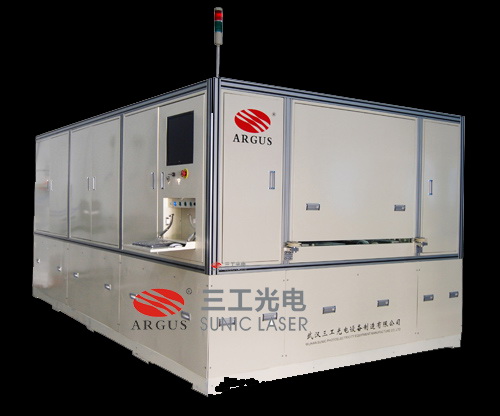
Source specialized and custom Other Laser Equipment from vetted manufacturers and suppliers in Asia. Designed for importers, distributors, and brands seeking OEM or private-label production, our network delivers industrial-grade laser machinery—from cleaning and cladding systems to micro-machining units—built to precise technical specifications.
Beyond standard cutting and marking systems, specialized laser equipment encompasses high-growth industrial applications such as laser cleaning, laser cladding, surface texturing, and micro-machining. Sourcing these specialized machines requires strict attention to the core architecture: the laser generator, the optical delivery system, and the thermal management unit. Because these machines are often deployed in heavy industrial or highly precise environments, buyers must tightly control the bill of materials (BOM) to ensure reliability and safety compliance.
Critical Specifications and Component Selection
The performance and lifespan of specialized laser machinery are entirely dependent on the quality of its internal components. Manufacturers typically offer a tiered approach to these parts, meaning buyers must explicitly specify their requirements to avoid substandard substitutions that look identical on a spec sheet but fail under continuous industrial operation.
| Component | Standard / Domestic Build | Premium / Export Build |
|---|---|---|
| Laser Source | Domestic brands (Raycus, MAX) | Imported or top-tier domestic (IPG, JPT, nLIGHT) |
| Scanning Head / Optics | Standard Sino-Galvo, basic quartz lenses | High-speed digital galvos, imported fused silica optics |
| Thermal Management | Basic air cooling or domestic water chillers | Dual-temperature industrial chillers (S&A or equivalent) |
| Control Systems | Proprietary closed-source boards | Open-architecture CNC or PLC with industrial protocols |
When defining your product, you must specify the exact wavelength, beam quality (M2 factor), and pulse width (nanosecond, picosecond, or femtosecond) required for your end-users' applications. A misaligned specification here can render a machine useless for its intended material interaction.
Navigating specialized laser specifications and component tiers requires technical precision. Let our engineers help you match your application to the right manufacturing partner.
Talk to our teamManufacturing Quality and Factory Vetting
A factory's ability to assemble specialized laser equipment is dictated by their cleanroom facilities and testing protocols. Dust contamination during optical assembly will destroy a galvanometer or focusing lens when subjected to high-power laser energy.
Before committing to a supplier, thorough Factory Audits are essential to verify that the manufacturer actually possesses the dust-free environments required for optical path integration, rather than simply assembling pre-bought modules in an open warehouse.
Essential Quality Control Checks
During production and before shipment, robust Quality Control & Inspection must go beyond basic power-on tests.
Pre-Shipment Inspection Requirements for Laser Equipment
- Beam Profile Analysis: Verify the energy distribution (e.g., Gaussian or top-hat) matches specifications.
- Power Stability Testing: Run the machine at 90 percent power for 24 hours to check for output degradation.
- Optical Path Alignment: Ensure zero deviation in the delivery fiber and focusing lenses.
- Thermal Cycling: Validate that the chiller maintains stable temperatures under continuous load.
- Safety Interlock Verification: Test all E-stops, door switches, and emission warning systems.
Compliance and Safety Standards
Laser equipment faces some of the strictest import regulations of any industrial machinery. Most specialized laser systems fall under Class 4, meaning they pose severe eye and skin hazards.
If you are importing into the US, the equipment must comply with FDA/CDRH regulations, requiring an Accession Number before the goods even reach the port. For Europe, CE marking under the Machinery Directive and EN 60825-1 (Safety of laser products) is mandatory. Failing to secure the correct documentation will result in customs seizures. Engaging experts for Compliance & Testing early in the sourcing process is the only way to mitigate this risk.
Procurement Mechanics: MOQs, Lead Times, and Pricing
The pricing of specialized laser equipment is heavily skewed by the choice of the laser source, which can account for up to 60 percent of the total machine cost. Opting for an IPG photonics source will significantly increase the price compared to a domestic equivalent, though it may be necessary for specific high-reflection material processing.
Avoid costly compliance failures and component substitutions. Partner with Merhein to secure your laser equipment supply chain from factory floor to final delivery.
Get a free consultationFrequently Asked Questions
Sourcing specialized laser equipment is an exercise in risk management. The upfront cost of the machine is only one factor; the true cost of ownership is dictated by component reliability, optical precision, and strict regulatory compliance. Securing a reliable supply chain means looking past the spec sheet and rigorously verifying the factory's engineering capabilities and quality control infrastructure.
Get Sourcing Help for Other Laser Equipment
Tell us your requirements and our experts will connect you with verified manufacturers.