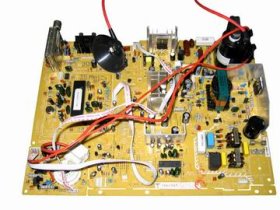
Other ICs
Source specialized and legacy Other ICs from vetted manufacturers and wholesale suppliers. Designed for electronics distributors, procurement managers, and hardware brands securing high-volume, reliable component supply chains for custom, mixed-signal, and application-specific integrated circuits.
Sourcing specialized, application-specific, or legacy integrated circuits (ICs) requires strict attention to component authenticity, yield reliability, and packaging standards. When dealing with specialized chipsets outside standard memory or logic categories, securing a traceable, high-quality supply chain is critical to avoid costly manufacturing line-down situations and field failures.
Critical Specifications for Specialized ICs
When procuring niche or mixed-signal ICs in bulk, procurement teams must align precise technical specifications with the fabrication capabilities of the manufacturer. Beyond basic electrical parameters (voltage, current, logic levels), environmental tolerances and physical packaging dictate the component's viability for your assembly line.
Temperature Grades and Environmental Tolerance
Operating temperature ranges must match the end-use environment. Specifying the wrong grade can lead to thermal runaway or premature failure in the field.
| Grade | Operating Range | Typical Application |
|---|---|---|
| Commercial | 0 to 70C | Consumer electronics, indoor IoT |
| Industrial | -40 to 85C | Factory automation, outdoor telecom |
| Automotive (AEC-Q100) | -40 to 125C | Vehicle systems, harsh environments |
Package Types and Assembly Compatibility
The physical footprint of the IC determines how it will be placed during PCB assembly (PCBA). Surface Mount Technology (SMT) packages like QFN (Quad Flat No-leads), BGA (Ball Grid Array), and SOIC (Small Outline Integrated Circuit) require specific reflow profiles. Ensure the supplier provides accurate moisture sensitivity level (MSL) ratings so your assembly partner can bake the components if necessary before reflow.
Mitigating Counterfeits and Ensuring Quality
The market for unclassified or legacy ICs is particularly vulnerable to counterfeiting, including remarked chips, cloned dies, and recycled components pulled from e-waste. Rigorous Quality Control & Inspection is non-negotiable when dealing with non-franchised or independent suppliers.
IC Quality and Authenticity Verification
- Visual Inspection: Check for blacktopping, remarking, or inconsistent laser etching on the package surface.
- Pin/Lead Inspection: Ensure leads are perfectly aligned, unoxidized, and show no signs of prior soldering.
- X-Ray Imaging: Verify the internal wire bonding and die size match the manufacturer's original specifications.
- Decapsulation (Destructive): Expose the silicon die to verify the manufacturer's logo and topography.
- Electrical Testing: Perform curve tracing and functional tests at extreme temperature ranges.
Need help establishing rigorous testing protocols for your IC supply chain? Speak with our component sourcing experts.
Discuss your QC requirementsPackaging Formats for High-Volume Assembly
How the ICs are packaged for shipment directly impacts your contract manufacturer's efficiency. Components must be supplied in formats compatible with automated pick-and-place machinery.
Tape and Reel vs. Tray Packaging
Advantages
- Tape and Reel: Ideal for high-speed automated SMT assembly; protects components from mechanical damage.
- Tape and Reel: Standardized leader and trailer lengths ensure minimal component waste during machine setup.
- Trays (Waffle Packs): Better suited for larger, fragile packages like high-pin-count BGAs.
- Trays: Easier to handle for low-volume prototyping or manual placement.
Disadvantages
- Tape and Reel: Requires purchasing in full reel quantities, which can drive up initial inventory costs.
- Trays: Slower for automated pick-and-place machines; higher risk of components shifting during transit if not properly banded.
Before committing to a high-volume order, conducting thorough Factory Audits ensures the supplier maintains cleanroom standards, proper ESD (electrostatic discharge) protections, and accurate lot traceability systems.
MOQs, Lead Times, and Pricing Dynamics
The semiconductor market is notorious for cyclical fluctuations in pricing and availability. For specialized ICs, pricing is heavily dependent on die size, wafer node, and packaging complexity.
When navigating allocation markets or managing obsolescence, professional Product Sourcing teams can identify reliable secondary sources, negotiate favorable terms for buffer stock, and verify the pedigree of the components.
Struggling with high MOQs or long lead times on specialized ICs? Let our team map out a more resilient supply strategy.
Get a sourcing consultationFrequently Asked Questions
Securing a reliable pipeline for specialized integrated circuits goes beyond simply finding a matched part number. It requires deep technical validation, rigorous quality assurance to prevent counterfeits, and strategic inventory planning to buffer against market volatility. Focus on integrating these critical components into your broader manufacturing strategy, and rely on experienced partners to manage the complexities of the semiconductor supply chain.
Get Sourcing Help for Other ICs
Tell us your requirements and our experts will connect you with verified manufacturers.