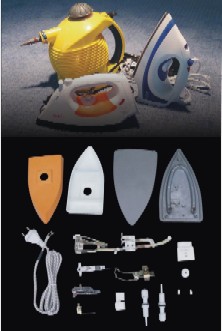
Other Home Appliance Parts
Source high-quality Other Home Appliance Parts from vetted manufacturers and wholesale suppliers. Built for importers, distributors, and brands requiring reliable OEM and private-label production, our network delivers precision components, custom tooling, and bulk hardware to keep your assembly lines running smoothly.
Sourcing specialized or non-standard home appliance parts requires strict attention to material properties and dimensional tolerances. Whether you are procuring custom dampeners, specialized brackets, thermal seals, or proprietary structural housings, the success of the final appliance relies heavily on the precision of these secondary components.
Tooling and Material Specifications for Custom Components
Because "other" parts often involve proprietary designs, you are usually dealing with custom injection molding, metal stamping, or rubber extrusion. The critical variable here is material selection matched to the appliance's operating environment.
| Component Type | Common Materials | Critical Specs to Define |
|---|---|---|
| Structural & Housings | ABS, Polycarbonate (PC), PP | Impact strength, flame retardancy (UL94 V-0) |
| Seals & Dampeners | Silicone, EPDM, NBR | Shore hardness, thermal resistance (up to 250C) |
| Internal Brackets | Galvanized Steel, SUS304 | Tensile strength, corrosion resistance (salt spray hours) |
When developing custom parts, tooling ownership and mold life are primary concerns. A cheap mold might degrade after 50,000 shots, leading to flash or dimensional drift. Ensure your factory agreement explicitly states mold ownership and guaranteed shot counts. If you are developing a proprietary component, utilizing professional OEM/ODM Services ensures your intellectual property and tooling rights are protected from the start.
Navigating custom tooling and material selection? Let our engineering team review your CAD files and match you with the right manufacturing partner.
Discuss your custom requirementsQuality Control and Compliance Standards
Secondary appliance components are frequent points of failure if quality control is lax. A misaligned bracket or a degrading silicone seal can lead to costly warranty claims on the finished appliance.
Critical Inspection Points for Specialized Parts
- Dimensional Accuracy: Verify tolerances using CMM (Coordinate Measuring Machine) against your CAD drawings.
- Material Verification: Request FTIR spectroscopy reports to confirm the factory is not mixing regrind plastic beyond your specified limits.
- Thermal & Stress Testing: Ensure plastics and elastomers withstand operating temperatures without warping or off-gassing.
- Surface Finish: Check for sink marks, flash, or flow lines on visible cosmetic parts.
For parts used in kitchen appliances, food-grade certifications (FDA, LFGB) are non-negotiable for any component contacting food or steam. Additionally, all electrical-adjacent plastics must meet RoHS and REACH directives. Implementing robust Quality Control & Inspection before the parts leave the factory prevents unusable components from reaching your assembly facility.
Sourcing Mechanics: MOQs, Pricing, and Lead Times
The economics of specialized appliance parts depend heavily on whether you are buying off-the-shelf components or commissioning custom tooling.
Pricing fluctuates based on raw material indexes (especially for petroleum-based plastics and steel). When negotiating, ask suppliers to separate the tooling cost from the unit cost. Factories may offer to amortize the mold cost over your first few orders, but paying for the mold upfront gives you leverage to move production if quality drops.
Before committing to a large run of critical components, verifying the manufacturer's actual production capacity and quality management system (like ISO 9001) is essential. Conducting thorough Factory Audits separates genuine manufacturers from trading companies acting as middlemen.
Need reliable pricing and vetted suppliers for your appliance components? We can handle the negotiation and supplier verification for you.
Talk to our teamFrequently Asked Questions
Sourcing the specialized parts of a home appliance often requires more rigorous supplier management than buying standard off-the-shelf motors. Success comes down to locking in precise material specs, controlling your tooling, and maintaining strict dimensional tolerances batch after batch. When your supply chain is built on verified capabilities rather than lowest-bidder promises, your assembly lines run without interruption.
Get Sourcing Help for Other Home Appliance Parts
Tell us your requirements and our experts will connect you with verified manufacturers.