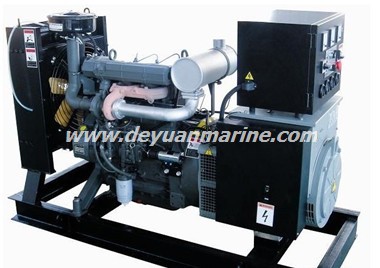
Other General Machinery
Source specialized and custom Other General Machinery from vetted manufacturers and suppliers in China and across Asia. Designed for importers, industrial distributors, and brands requiring OEM or private-label production, our wholesale network delivers reliable, high-performance equipment built to your exact specifications.
Sourcing specialized or non-standard general machinery requires a rigorous approach to component specification and systems integration. When equipment falls outside standard categories, the burden of defining performance parameters, power requirements, and safety compliance falls heavily on the buyer. Success depends on translating your exact operational requirements into an airtight manufacturing agreement that leaves no room for factory-level substitutions.
Defining Specifications for Non-Standard Machinery
The most common failure point when importing specialized industrial equipment is vague component specifications. Factories producing niche machinery often rely on a network of sub-suppliers for motors, pneumatics, and control systems. If you do not specify the brand and series of these internal components, the factory will default to the most cost-effective domestic options.
Key parameters to lock down in your purchase order include:
- Electrical Standards: Specify voltage, phase, and frequency (e.g., 480V/3-phase/60Hz for US industrial, 400V/3-phase/50Hz for EU). Ensure all internal wiring, breakers, and contactors are rated accordingly.
- Drive and Motor Systems: Define the required motor efficiency classes (IE2, IE3) and specify if Variable Frequency Drives (VFDs) are required for load management.
- Control Architecture: For automated units, dictate the acceptable PLC and HMI brands (e.g., Siemens, Allen-Bradley, Mitsubishi, or reliable domestic equivalents like Delta).
- Material Grades: For parts in contact with products or harsh environments, specify exact alloy grades (like SUS304 or SUS316L) and require material test reports (MTRs).
| Component Area | Standard Domestic Tier | Premium Export Tier |
|---|---|---|
| Motors & Drives | Local Chinese brands, IE1/IE2 | ABB, Siemens, WEG, IE3/IE4 |
| PLC & Automation | Kinco, Xinjie, basic relay logic | Siemens S7, Allen-Bradley, Delta |
| Pneumatics | Airtac or unbranded equivalents | SMC, Festo |
| Frame & Housing | Painted carbon steel, thinner gauge | Powder-coated, heavy-gauge or 304 SS |
Need help standardizing specs across multiple specialized equipment suppliers? Let our engineers review your technical requirements.
Talk to our teamManufacturing Tolerances and Factory Validation
Because specialized general machinery often involves custom engineering, evaluating the manufacturer's true capability is critical. Many suppliers are essentially assembly workshops rather than full-scale manufacturers. While this is normal in the machinery sector, it requires you to verify their sub-tier supply chain and assembly tolerances.
Before committing to a high-value order, conducting comprehensive Factory Audits is essential to verify their machining equipment (CNC capabilities, laser cutting), engineering team size, and ISO 9001 compliance.
The Factory Acceptance Test (FAT)
Never allow specialized machinery to ship without a documented FAT. This is where you catch integration issues before the equipment leaves the factory floor.
Critical FAT Requirements
- Continuous run-test under simulated load for a minimum of 4 to 8 hours.
- Verification of all emergency stop (E-stop) and safety interlock functions.
- Thermal imaging or temperature checks on motors and bearings during operation.
- Verification of PLC logic, alarm triggers, and HMI language localization.
- Dimensional inspection against approved CAD drawings.
To execute this effectively without traveling, utilize professional Quality Control & Inspection teams who specialize in industrial machinery to oversee the FAT on your behalf.
Buying Mechanics: Pricing, MOQs, and Lead Times
Unlike consumer goods, specialized general machinery is highly sensitive to raw material fluctuations and component lead times.
Pricing is driven primarily by the origin of the critical components. Upgrading a machine from domestic pneumatics and PLCs to top-tier international brands (like Festo and Siemens) can increase the unit cost by 20% to 40%. When negotiating, always ask for an itemized Bill of Materials (BOM) so you can see exactly where your money is going. If you are developing proprietary equipment, engaging structured OEM/ODM Services ensures your intellectual property is protected while navigating these component choices.
Protect your margins and intellectual property. Speak with our sourcing experts about structuring your next OEM machinery order.
Get a free consultationFrequently Asked Questions
Successfully importing specialized machinery requires treating the purchase not as a simple transaction, but as a systems integration project. By controlling the component BOM and enforcing strict pre-shipment testing protocols, you can secure high-performance industrial equipment that delivers long-term reliability.
Get Sourcing Help for Other General Machinery
Tell us your requirements and our experts will connect you with verified manufacturers.