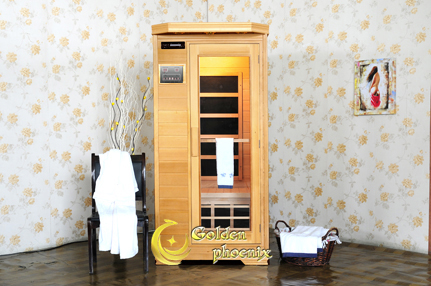
Other Furniture Accessories
Source miscellaneous and specialty furniture accessories from vetted manufacturers and wholesale suppliers. Designed for importers, distributors, and furniture brands looking for reliable bulk production and custom OEM capabilities. We connect you with verified factories for high-volume procurement.
Sourcing specialized, non-standard furniture accessories—whether bespoke structural brackets, concealed mounting hardware, or unique decorative trims—presents a distinct procurement challenge. Because these components often fall outside standard catalog offerings, finding a factory with the right tooling capabilities, consistent material grading, and finishing standards is critical to preventing assembly line delays or product failures down the line.
Defining Specifications for Specialty Hardware
When dealing with miscellaneous furniture accessories, the burden of specification falls heavily on the buyer. Factories producing "other" or non-standard hardware often default to the cheapest available raw materials unless strictly guided.
For structural components, load-bearing capacity and tensile strength must be defined. For visible trims or decorative pieces, the finish quality and corrosion resistance are paramount.
| Material | Primary Application | Manufacturing Method | Cost Profile |
|---|---|---|---|
| Zinc Alloy (Zamak) | Complex decorative shapes, handles | Die-casting | Moderate to High |
| Cold Rolled Steel (CRS) | Concealed structural brackets, plates | Stamping, Bending | Low |
| Aluminum Alloy | Modern trims, lightweight frames | Extrusion, CNC | Moderate |
| Nylon / POM | Glides, inserts, friction components | Injection Molding | Low |
The RFQ Checklist for Non-Standard Accessories
To get accurate pricing and avoid bait-and-switch tactics on material density, your Request for Quotation (RFQ) must include:
- Exact Material Grade: (e.g., Zamak 3 for zinc, Q235 for steel).
- Dimensional Tolerances: Critical for components that must mate with automated assembly machinery (typically +/- 0.1mm to 0.5mm).
- Surface Treatment: Specify the plating method (e.g., electroplating, PVD, powder coating) and required thickness in microns.
- Testing Requirements: Required salt spray testing hours (e.g., 24, 48, or 96 hours) and load-bearing certifications.
Struggling to find a capable supplier for a non-standard furniture component? Let us match your technical requirements with a verified manufacturer.
Talk to our teamManufacturing Processes and Quality Control
The production of specialty furniture accessories usually involves die-casting, stamping, or plastic injection molding. Each process introduces specific risks that must be managed on the factory floor.
For die-cast zinc or aluminum parts, the most common defect is internal porosity—microscopic air bubbles trapped inside the metal during casting. While often invisible on the raw part, porosity causes the surface to blister after electroplating, leading to high rejection rates. For stamped steel components, poorly maintained tooling results in sharp burrs and dimensional drift over long production runs.
Implementing rigorous quality control & inspection during the first production run is essential. Inspectors should check for tooling wear, verify plating adhesion using cross-hatch testing, and ensure that thread tapping on mounting holes is clean and precise.
Tooling and OEM Customization
Because many items in this category are proprietary to a specific furniture design, buyers frequently require custom tooling. Developing bespoke hardware requires a clear understanding of mold ownership and lifecycle.
Design for Manufacturing (DFM)
Adapting your CAD files to ensure the part can be cleanly ejected from the mold or stamped without tearing the metal.
Tooling Creation
Cutting the mold or stamping die. Single-cavity molds are cheaper but slower; multi-cavity molds cost more upfront but reduce unit costs for high-volume orders.
T1 Sampling
The first off-tool samples. These are rarely perfect and usually require minor tooling adjustments for flash removal or dimension correction.
Pilot Run
A small-batch production run to verify that the finish and tolerances hold up at scale before mass production begins.
If you are developing proprietary components, leveraging dedicated OEM/ODM services ensures that your intellectual property is protected and that tooling contracts explicitly state that you own the molds upon completion of payment.
Buying Mechanics: MOQs, Pricing, and Lead Times
The economics of sourcing specialty furniture accessories are driven by production speed and setup times.
- Minimum Order Quantities (MOQs): Because these are often small, low-cost components, MOQs are typically high to justify the machine setup time. Expect MOQs of 10,000 to 50,000 pieces for custom stamped or injection-molded parts. Standardized (but niche) parts might be negotiable down to 3,000 to 5,000 pieces.
- Pricing Drivers: The cost is heavily influenced by raw material spot prices (especially for steel and zinc) and the complexity of the surface finish. Multi-stage electroplating (e.g., brushed brass or antique bronze finishes) can sometimes cost more than the raw metal itself.
- Lead Times: Mass production usually takes 25 to 35 days. If new tooling is required, add 15 to 30 days for mold creation and T1 sampling.
Need to consolidate your specialty hardware sourcing? We negotiate volume pricing and manage tooling lifecycles directly with the factory.
Get a free consultationFAQ
Sourcing miscellaneous furniture accessories requires a meticulous approach to material specifications and quality assurance. Relying on a fragmented base of unverified suppliers often leads to inconsistent finishes and assembly bottlenecks. By thoroughly vetting your supply chain and executing structured product sourcing, you can secure reliable, high-quality components that integrate seamlessly into your production lines.
Get Sourcing Help for Other Furniture Accessories
Tell us your requirements and our experts will connect you with verified manufacturers.