Other Bicycle Parts
Source miscellaneous and specialized Other Bicycle Parts directly from vetted manufacturers and wholesale suppliers. Designed for importers, distributors, and cycling brands seeking reliable OEM and private-label production, our network delivers precision-engineered components with consistent quality control at scale.
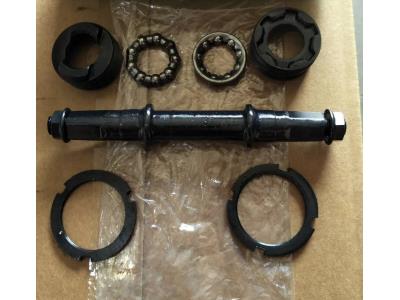
Sourcing miscellaneous bicycle components—from specialized cable guides and custom derailleur hangers to proprietary mounting brackets and spacers—presents a unique supply chain challenge. Unlike standard drivetrains or frames, these parts require coordinating across multiple manufacturing disciplines, including CNC machining, cold forging, and injection molding. Securing reliable production for these specialized components means matching the exact material grade and manufacturing process to the specific functional requirement of the part.
Manufacturing Processes and Material Selection
The "other" category encompasses a massive variety of production techniques. A factory excelling in nylon injection molding will rarely have the capability to produce high-tolerance cold-forged steel fasteners. When developing custom components, selecting the right process dictates your tooling costs, unit economics, and structural integrity.
| Manufacturing Process | Common Materials | Tooling Investment | Ideal Application |
|---|---|---|---|
| CNC Machining | AL6061-T6, AL7075-T6, Titanium | Low to None | Low-volume custom brackets, spacers, hangers |
| Injection Molding | POM, Nylon 66, ABS, TPU | High | High-volume cable guides, plugs, elastomers |
| Cold Forging | Carbon Steel, Alloy Steel | Very High | High-stress fasteners, specialized bolts |
| Stamping | Stainless Steel, Aluminum | Medium | Washers, simple mounting plates |
For structural alloy components, verifying the heat treatment (such as T6 for aluminum) is critical. Without proper thermal processing, even high-grade 7075 aluminum will fail under cyclic loading. When sourcing custom OEM/ODM Services, ensure your technical drawings specify not just the alloy, but the required temper and post-machining treatments.
Quality Control and Critical Tolerances
Miscellaneous parts often act as the interface between major components. If a custom adapter or bracket is out of tolerance, it can cause creaking, misalignment, or failure in much more expensive parts of the bicycle.
Critical Inspection Points for Specialized Components
- Dimensional Tolerances: Verify critical interfaces hold strict tolerances (often ± 0.05mm or tighter for bearing seats and threaded sections).
- Thread Integrity: Check for clean, burr-free threads on custom fasteners using Go/No-Go gauges.
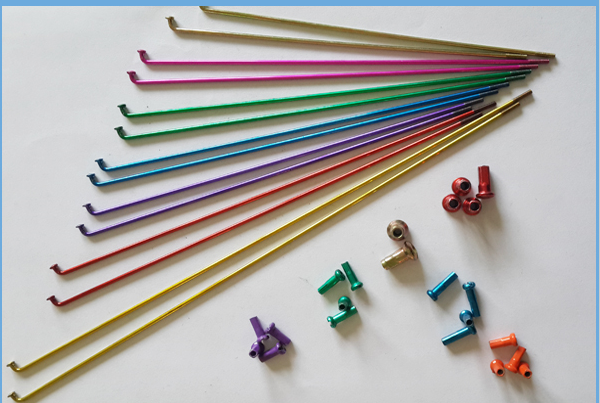
- Surface Finish & Anodizing: Ensure uniform anodizing thickness (typically 10-15 microns) and color consistency across batches.
- Corrosion Resistance: Require salt spray testing reports (e.g., 48 to 96 hours) for steel components and fasteners.
- Material Verification: Request raw material certificates (MTCs) to prevent the substitution of lower-grade alloys.
Because these parts are often small and produced in high volumes, defect rates can spike if the factory's tooling begins to wear. Implementing robust Quality Control & Inspection protocols, including strict AQL (Acceptable Quality Limit) sampling before shipment, is the only way to catch dimensional drift before parts reach your assembly line.
Struggling with inconsistent tolerances across multiple small-part suppliers? Let us consolidate your supply chain and enforce strict quality standards.
Talk to our teamSupplier Vetting for Fragmented Categories
The biggest trap in sourcing miscellaneous bicycle parts is supplier misrepresentation. Many trading companies list hundreds of disparate parts—from titanium bolts to rubber grips—implying they manufacture all of them. In reality, they are sub-contracting to dozens of unvetted micro-factories.
To maintain quality, you must trace the production back to the actual machine shop or molding facility. Conducting comprehensive Factory Audits ensures the supplier actually owns the CNC centers or injection machines required for your parts, and that their internal quality management systems (like ISO 9001) are actively practiced, not just framed on a wall.
MOQs, Lead Times, and Pricing Dynamics
Pricing and minimum order quantities in this category are heavily dictated by the manufacturing method and whether the part is an off-the-shelf standard or a custom design requiring new tooling.
Tooling Ownership
When paying for custom injection molds or forging dies, explicitly state in your manufacturing agreement that you own the tooling and hold the right to move it to another facility. Without this, factories may hold your custom designs hostage if you attempt to switch suppliers.
Need to develop a custom bicycle component? We manage the entire process from tooling negotiation to final production.
Get a free consultationFrequently Asked Questions
Sourcing specialized and miscellaneous bicycle parts requires meticulous attention to manufacturing processes and material science. By vetting specialized factories for their specific capabilities and enforcing strict dimensional tolerances, you can prevent small components from causing major assembly headaches.
Get Sourcing Help for Other Bicycle Parts
Tell us your requirements and our experts will connect you with verified manufacturers.