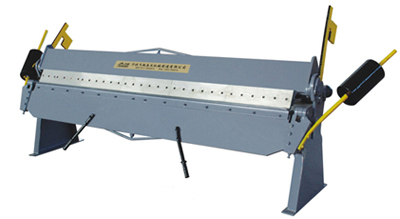
Other Bending Machines
Source specialized industrial bending machinery directly from vetted manufacturers and wholesale suppliers. Whether you are an importer, distributor, or procurement manager outfitting fabrication facilities, our network provides reliable OEM and custom bending solutions. Secure competitive bulk pricing and verified quality for your next equipment investment.
Sourcing specialized bending equipment—such as profile benders, busbar bending machines, or multi-axis wire benders—requires matching exact fabrication tolerances with reliable factory output. Because these machines handle non-standard applications outside typical press brake or tube bending operations, evaluating supplier capability goes beyond checking a simple spec sheet. The primary challenge lies in verifying frame rigidity, control system stability, and tooling durability before committing to a high-value industrial purchase.
Critical Specifications for Specialty Bending Equipment
When configuring non-standard bending machinery with a manufacturer, precision and repeatability are dictated by the drive system and control architecture. Buyers must clearly define the required bending capacities (maximum thickness, width, and material tensile strength) and the acceptable variance.
| Control Type | Typical Application | Precision & Repeatability | Cost Impact |
|---|---|---|---|
| CNC (Servo/Electric) | Complex multi-axis (wire, complex profiles) | High (up to 0.01mm variance) | Premium |
| NC (Hydraulic/Pneumatic) | Single-axis or repetitive batch work | Moderate (up to 0.1mm variance) | Standard |
| Manual/Motorized | Low-volume custom fabrication | Operator dependent | Entry-level |
Specifying the correct control system upfront prevents over-engineering the machine for simple tasks or under-speccing for high-tolerance aerospace or automotive applications.
Navigating technical specifications with overseas machinery manufacturers can lead to costly misunderstandings. Let our engineering-focused sourcing team align your requirements with verified factories.
Discuss your equipment specsAssessing Factory Capability and Machine Quality
Not all machinery assemblers manufacture their own frames or machine their own tooling. A reliable supplier should demonstrate in-house machining capabilities for the main chassis to ensure structural integrity under maximum tonnage. Relying on comprehensive Factory Audits is critical to separate true manufacturers from trading companies acting as middlemen.
Key Manufacturing Quality Indicators
- Frame Construction: Welded steel plates must be stress-relieved via annealing to prevent deformation under heavy bending loads.
- Core Components: Verify the origin of critical parts (e.g., hydraulic valves, servo motors, PLC controllers). Tier 1 international brands drastically reduce maintenance downtime.
- Tooling Hardness: Dies and rollers should be forged from high-carbon alloy steel and heat-treated to at least HRC 50.
- Safety Standards: The machine must feature proper guarding, light curtains, and emergency stops compliant with your local market regulations.
MOQs, Lead Times, and Pricing Dynamics
Industrial machinery sourcing operates on different economies of scale compared to consumer goods. Because these machines are often built-to-order or heavily customized, production timelines and pricing structures reflect the engineering involved.
Heavy machinery also requires specialized heavy-lift or out-of-gauge transport. Coordinating Shipping & Freight early in the procurement cycle is essential. Factoring in flat-rack containers or specialized LCL handling upfront prevents unexpected logistics costs from destroying your margin.
Procuring industrial equipment requires rigorous supplier vetting and logistics planning. We handle the end-to-end process so you can focus on your operations.
Get a sourcing consultationBuyer FAQ
Successfully sourcing specialized bending machinery comes down to bridging the gap between your strict engineering requirements and the factory's production reality. Rigorous vetting, clear technical communication, and on-site verification are your best defenses against subpar equipment.
Get Sourcing Help for Other Bending Machines
Tell us your requirements and our experts will connect you with verified manufacturers.