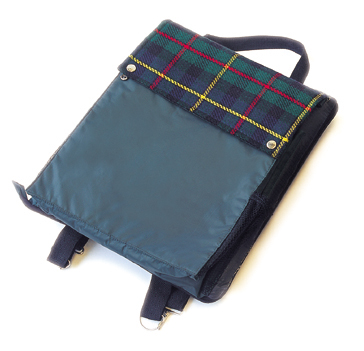
Other Backpacks
Source wholesale "other backpacks" and specialty bags directly from vetted manufacturers and factories. Designed for importers, wholesalers, distributors, and brands requiring reliable OEM/private-label production for non-standard, highly specific backpack designs. Secure competitive pricing, strict quality control, and scalable manufacturing capabilities for your specialized luggage supply chain.
Sourcing specialty or non-standard backpacks means navigating highly specific use cases—whether your product requires extreme load-bearing reinforcement, specialized thermal insulation, technical compartmentalization, or unique form factors. When a design falls outside standard templates, the margin for error in material selection and structural integrity shrinks. Producing these technical bags at scale requires moving beyond off-the-shelf catalog sourcing and implementing tight oversight on the factory floor.
Core Material and Component Specifications
The performance of a specialized backpack is dictated entirely by its bill of materials (BOM). Factories in key hubs like Quanzhou, Guangzhou, and Baigou offer varying tiers of material quality. Specifying the exact technical parameters is non-negotiable to prevent unauthorized factory substitutions.
Critical Specifications for Specialty Backpacks
- Base Fabric & Denier: Specify exact weight and weave (e.g., 500D Cordura, 1000D Nylon, or 600D Polyester) based on abrasion resistance requirements.
- Waterproofing & Backing: Define the coating type and thickness. Polyurethane (PU) is standard, while Thermoplastic Polyurethane (TPU) offers superior durability and water resistance for technical applications.
- Thread Composition: Mandate bonded nylon thread for load-bearing seams rather than standard polyester, which degrades faster under tension.
- Hardware & Fasteners: Specify buckle material (POM for high-impact resistance vs. standard ABS) and zipper gauge (e.g., #8 or #10 reverse coil for main compartments).
Manufacturing Tolerances and Structural Integrity
Where standard daypacks might survive with basic single-needle stitching, specialty backpacks fail quickly if construction methods are inadequate. The most common defects in non-standard bags stem from poor tension distribution and inadequate seam allowances.
Standard vs. Technical Construction
Advantages
- Bar-tacking at all high-stress points (shoulder strap attachments, haul handles).
- Double-stitched or bound internal seams to prevent fabric fraying under load.
- Laser-cut fabric panels for exact dimensional accuracy in complex compartments.
Disadvantages
- Single-stitched stress points that tear under dynamic loads.
- Inconsistent seam allowances causing structural warping.
- Use of untreated edge binding that unravels after minimal abrasion.
Catching these construction shortcuts requires rigorous Quality Control & Inspection during the in-line production phase, before the bags are fully assembled and errors become hidden behind interior linings.
Developing a custom backpack requires strict quality tolerances. Merhein ensures your structural requirements are met on the production line, preventing costly defects.
Discuss your specsThe OEM/ODM Prototyping Process
For backpacks that don't fit standard categories, you will likely be utilizing OEM/ODM Services to develop a unique product. The translation from a tech pack to a mass-production-ready bag is a multi-step process that requires careful validation.
Tech Pack Review
The factory engineers evaluate your design for manufacturability, identifying potential fail points in complex seam intersections.
Paper Patterning
Translating 3D designs into 2D cut pieces. Accuracy here dictates the final shape and volume of the bag.
First Prototype (Golden Sample)
Produced using available (often non-final) materials to verify dimensions, fit, and compartment functionality.
Pre-Production Sample (PPS)
The final sample using exact bulk materials, hardware, and dyes. This serves as the binding standard for bulk production.
Production Economics: MOQs, Lead Times, and Pricing
Specialty backpacks often require custom tooling for hardware or unique fabric dye lots, which directly impacts production economics. Understanding realistic baselines helps in negotiating terms and planning inventory cycles.
Pricing for non-standard backpacks is primarily driven by labor complexity. A bag with 50 unique cut panels and multiple specialized compartments requires significantly more time on the sewing line than a standard 15-panel daypack, regardless of the material costs.
Navigating MOQs, tooling costs, and factory capabilities for specialty bags can be complex. We help structure orders that balance unit economics with your supply chain needs.
Talk to our teamBuyer FAQ
Successfully sourcing specialized backpacks requires matching your specific technical requirements with a factory that has the exact machinery and engineering experience to execute them. By controlling the BOM and enforcing strict in-line inspections, you can ensure your non-standard bags perform flawlessly in the field.
Get Sourcing Help for Other Backpacks
Tell us your requirements and our experts will connect you with verified manufacturers.