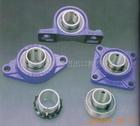
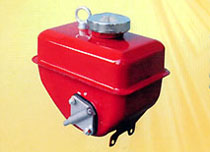
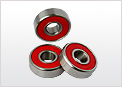
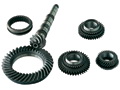
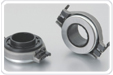
Other Auto Parts
Source specialized and miscellaneous Other Auto Parts directly from vetted manufacturers and suppliers in Asia. Designed for automotive importers, wholesale distributors, and brands requiring reliable OEM and private-label production, ensuring exact specifications and high-volume scalability for custom or niche components.
Sourcing components that fall outside standard automotive categories—such as specialized brackets, custom housings, niche interior hardware, or proprietary aftermarket modifications—presents a unique procurement challenge. Because these parts are rarely off-the-shelf commodities, success depends on identifying manufacturers with flexible engineering capabilities, rigorous automotive quality systems, and the right machinery for your specific material requirements.
Whether you are developing new aftermarket accessories or sourcing replacement hardware, securing a reliable supply chain requires strict control over tooling, material specifications, and production tolerances.
Defining Specs for Custom and Niche Auto Parts
When dealing with non-standard automotive components, your technical drawing and Bill of Materials (BOM) are your primary defense against quality fade. Suppliers in major manufacturing hubs like Zhejiang and Jiangsu specialize in different fabrication methods; matching your part's requirements to the factory's core competency is critical.
| Manufacturing Process | Typical MOQ | Tooling Investment | Best Application |
|---|---|---|---|
| CNC Machining | 100 - 500 pcs | Zero to Low | Complex geometries, low volume, prototypes |
| Die Casting (Alloy) | 1,000 - 3,000 pcs | High | Structural components, heat sinks, brackets |
| Injection Molding | 3,000 - 5,000+ pcs | Medium to High | Plastic housings, clips, interior trims |
| Metal Stamping | 5,000 - 10,000+ pcs | Medium | Flat brackets, shields, structural plates |
Material Selection and Verification
Do not accept generic material descriptions like "aluminum" or "nylon." Specify the exact grade and temper, such as 6061-T6 Aluminum, ADC12 for die casting, or PA66+GF30 (glass-filled nylon) for high-heat plastic components. Require SGS or TUV material test reports, or utilize third-party Compliance & Testing to verify chemical composition and mechanical properties before mass production begins.
Developing a custom automotive component? Let us help you identify the right manufacturing process and vet capable facilities.
Talk to our teamQuality Management and Automotive Standards
The automotive industry operates on strict quality frameworks. When evaluating a factory for custom or miscellaneous parts, their quality management system is often more important than their current product catalog.
Look for facilities holding an active IATF 16949 certification. While ISO 9001 is a baseline, IATF 16949 demonstrates that the factory understands automotive-specific requirements like defect prevention, variation reduction, and continuous improvement in the supply chain. Verifying these credentials should be a standard part of your Factory Audits before any tooling deposits are paid.
The PPAP Requirement
For serious OEM and aftermarket brands, require a Production Part Approval Process (PPAP) package before authorizing mass production.
Key Elements of a Level 3 PPAP
- Design Records: Fully dimensioned technical drawings.
- DFMEA / PFMEA: Failure mode and effects analysis for design and process.
- Control Plan: Step-by-step quality checks during production.
- Dimensional Results: CMM (Coordinate Measuring Machine) reports proving tolerances are met.
- Material / Performance Test Results: Lab reports validating material grades and durability.
Executing comprehensive Quality Control & Inspection during the initial production run ensures that the control plan is actually being followed on the factory floor, preventing costly fitment issues upon arrival.
Tooling, MOQs, and Lead Times
Because "other" auto parts often involve OEM/ODM Services, you will likely need to invest in custom tooling (molds, dies, or jigs).
- Tooling Costs: Depending on the complexity and material, injection molds can range from a few thousand dollars to tens of thousands. Die casting molds are typically on the higher end due to the hardened steel required to withstand molten metal.
- Tooling Ownership: Always ensure your manufacturing contract explicitly states that you own the tooling, molds, and CAD files, and that they cannot be used to produce parts for other clients.
- Lead Times: Expect 30 to 45 days for tooling creation and initial sample (T1) submission. Once the sample is approved, mass production typically requires an additional 25 to 40 days, depending on raw material availability and order volume.
Need to negotiate tooling ownership and production timelines? We manage the complexities of custom auto part sourcing from end to end.
Get a free consultationFrequently Asked Questions
Sourcing non-standard automotive parts requires a rigorous approach to engineering validation and supplier capability. By focusing on detailed specifications, IATF 16949 compliance, and strict tooling agreements, you can build a resilient supply chain for even the most specialized components.
Get Sourcing Help for Other Auto Parts
Tell us your requirements and our experts will connect you with verified manufacturers.