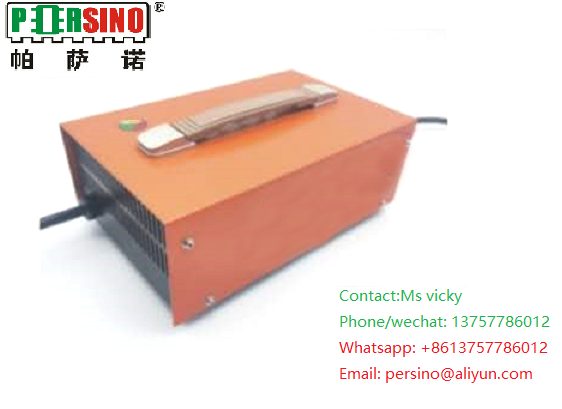
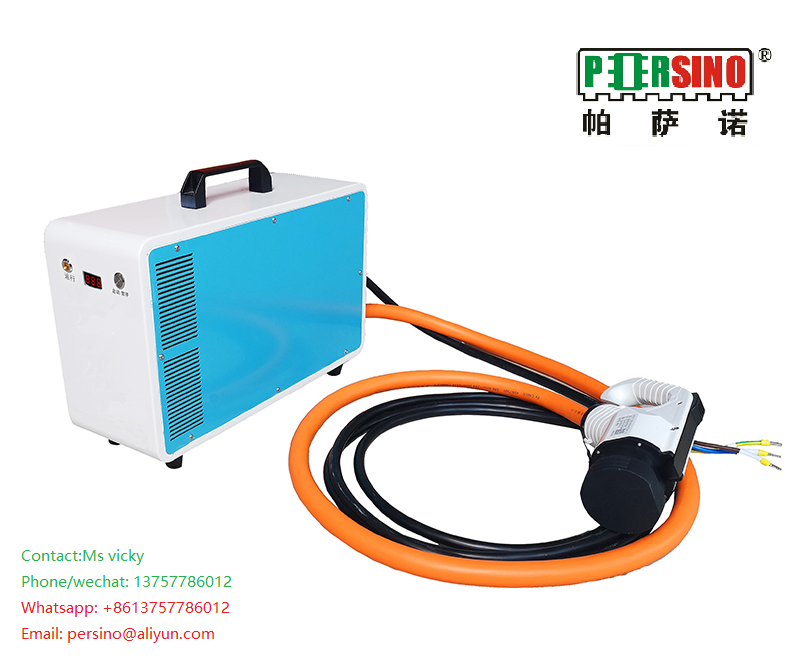
On-Board Chargers
Source reliable On-Board Chargers from vetted suppliers and manufacturers. Designed for automotive importers, Tier-2 distributors, and EV brands seeking OEM production, this selection provides access to scalable, high-efficiency power conversion components for new energy vehicles.
Sourcing on-board chargers (OBCs) for new energy vehicles requires balancing power density, thermal management, and strict automotive compliance. The gap between consumer-grade power supplies and true automotive-grade OBCs is vast, and identifying a manufacturer capable of consistent, defect-free production at scale is the primary challenge for procurement teams.
Defining Your OBC Specifications
When engaging with an OBC manufacturer, vague specifications lead to costly redesigns or premature field failures. You must clearly define the electrical, thermal, and communication parameters upfront.
Core Electrical Parameters
- Power Output: Standard tiers include 3.3kW, 6.6kW, 11kW, and 22kW. Higher power units often require three-phase AC input.
- Efficiency: Expect peak efficiencies of 94 percent or higher. The shift toward Silicon Carbide (SiC) MOSFETs allows manufacturers to push efficiencies over 96 percent, reducing thermal load.
- Input/Output Voltage Range: Wide input voltage ranges (e.g., 85V to 265V AC) are necessary for global market compatibility. Output must match the vehicle's battery pack architecture (typically 200V-450V for standard EVs, or up to 800V for high-performance platforms).
| Power Tier | Input Requirement | Cooling Type | Typical Application |
|---|---|---|---|
| 3.3kW | Single-Phase AC | Air or Liquid | PHEVs, Low-Speed EVs |
| 6.6kW | Single-Phase AC | Liquid | Standard Passenger BEVs |
| 11kW - 22kW | Three-Phase AC | Liquid | Premium BEVs, Commercial |
Communication & Integration
OBCs must integrate seamlessly with the Vehicle Control Unit (VCU) and Battery Management System (BMS). Specify the required CAN bus protocol (e.g., CAN 2.0B) and ensure the manufacturer can supply the appropriate DBC files for software integration.
Need a manufacturer capable of custom CAN integration and specific thermal profiles? Let us match your technical requirements with a vetted factory.
Talk to our teamManufacturing Tolerances and Quality Control
The reliability of an on-board charger is heavily dependent on the factory's assembly environment and potting processes. Because OBCs are subjected to continuous vibration, moisture, and thermal cycling, standard electronics manufacturing is insufficient.
Where Quality is Won or Lost
- Component Sourcing: The supply chain for DSPs (Digital Signal Processors) and automotive-grade MOSFETs is volatile. Reliable factories maintain strategic reserves or direct relationships with tier-1 semiconductor foundries.
- Thermal Interface and Potting: To achieve IP67 rating and manage heat, the internal components are often potted in a thermally conductive resin. If the factory's vacuum potting process leaves air bubbles, it creates localized hotspots that will destroy the charger.
- SMT Precision: Automotive-grade Surface Mount Technology lines must include 3D Automated Optical Inspection (AOI) and X-ray inspection for BGA components.
To mitigate these risks, implementing rigorous Quality Control & Inspection during the production run—specifically checking potting consistency and thermal interface material (TIM) application—is essential.
Critical Factory Verification Points
- IATF 16949 certification (mandatory for automotive supply chains).
- In-house end-of-line (EOL) testing including full-load burn-in.
- Traceability systems linking every unit to its specific batch of semiconductors.
- Vacuum potting chambers to eliminate voids in the resin.
Compliance and Testing Requirements
Automotive electronics face the strictest regulatory environments. Ensure your supplier's designs have passed or can pass the necessary homologation tests for your target market. Relying on a partner experienced in Compliance & Testing helps navigate regional standards like ECE R10 for electromagnetic compatibility (EMC) in Europe, or UL 2202 for North America.
Additionally, safety standards such as ISO 26262 (Functional Safety for Road Vehicles) are increasingly required, dictating the ASIL (Automotive Safety Integrity Level) rating of the charger's control logic.
Buying Mechanics: MOQs, Pricing, and Lead Times
Procuring OBCs involves significant capital and planning. Off-the-shelf designs offer lower barriers to entry, while custom OEM/ODM projects require substantial upfront investment in tooling and software development.
Pricing is driven primarily by the power rating, the use of SiC vs. traditional silicon components, and the complexity of the liquid cooling plate. When evaluating suppliers, conducting thorough Factory Audits is crucial to ensure their quoted lead times align with their actual production capacity and semiconductor inventory.
Avoid costly delays and compliance failures. We can manage the sourcing, auditing, and quality control of your automotive power electronics.
Get a free consultationFrequently Asked Questions
Successful procurement of on-board chargers requires more than just negotiating a unit price; it demands deep validation of a factory's engineering capabilities, supply chain resilience, and quality management systems. Leveraging professional Product Sourcing expertise ensures you partner with manufacturers capable of meeting strict automotive standards at scale.
Get Sourcing Help for On-Board Chargers
Tell us your requirements and our experts will connect you with verified manufacturers.