Oil Pans
Source high-quality oil pans directly from vetted manufacturers and suppliers. Designed for automotive parts importers, wholesale distributors, and brands requiring reliable OEM and aftermarket production at volume. Secure competitive bulk pricing and consistent engine system performance.
Sourcing oil pans at scale requires navigating a strict set of dimensional tolerances and material requirements. Because the oil pan serves as the lower structural boundary of the engine block and the primary reservoir for lubrication, a single manufacturing defect—whether it is a warped flange, micro-porosity in a casting, or a failing weld on an internal baffle—results in catastrophic oil leaks and high warranty claim rates. The primary challenge for volume buyers is identifying manufacturing partners capable of maintaining strict quality control across high-volume production runs while keeping tooling and unit costs competitive.
Material Selection and Manufacturing Processes
The material and production method dictate the factory profile you need. Suppliers typically specialize in either metal stamping, die casting, or injection molding; rarely does one facility excel at all three.
| Material Type | Manufacturing Process | Primary Sourcing Challenge |
|---|---|---|
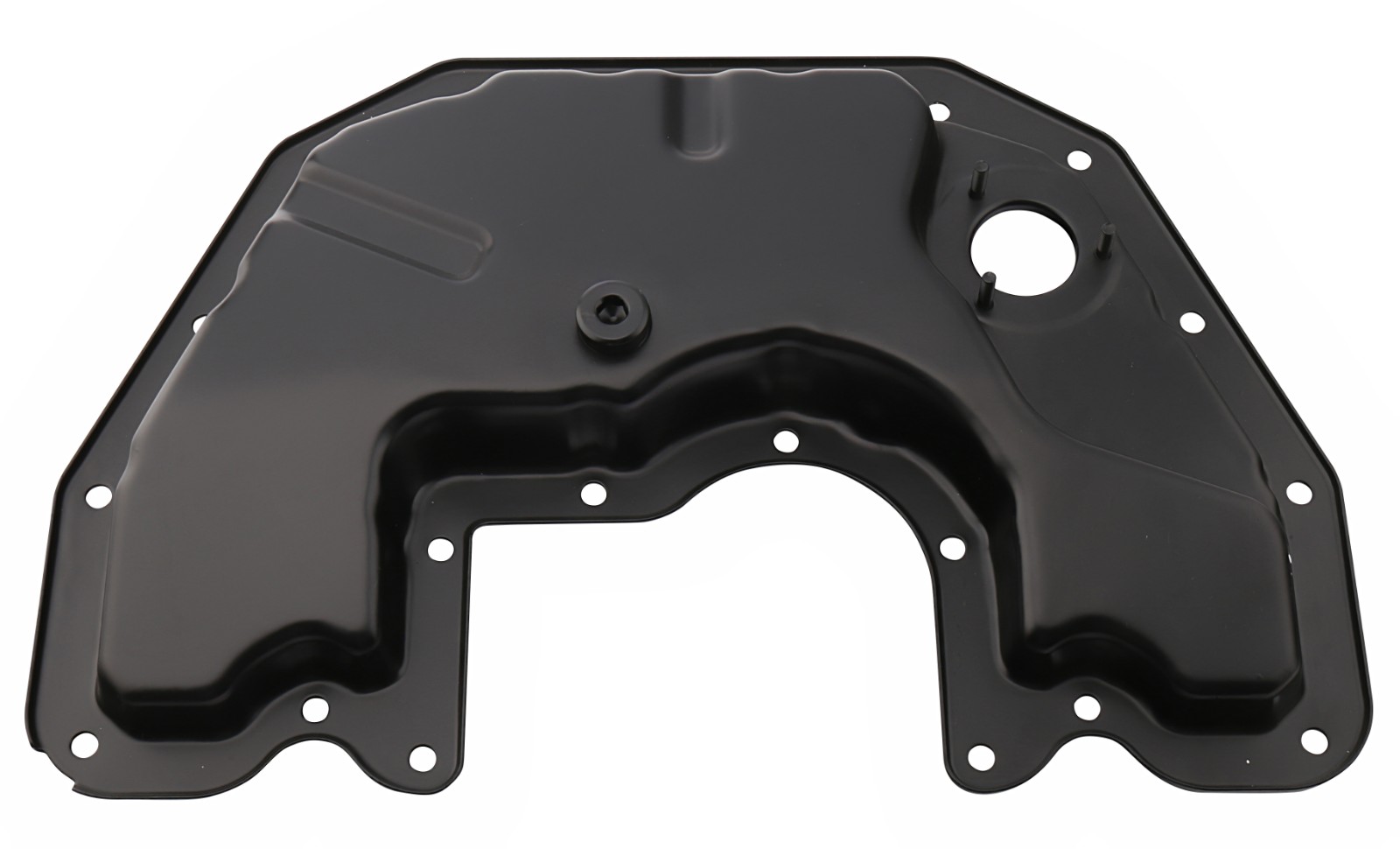
| Stamped Steel | Deep draw stamping (high-tonnage presses) | Managing springback and ensuring uniform e-coating thickness to prevent corrosion. |
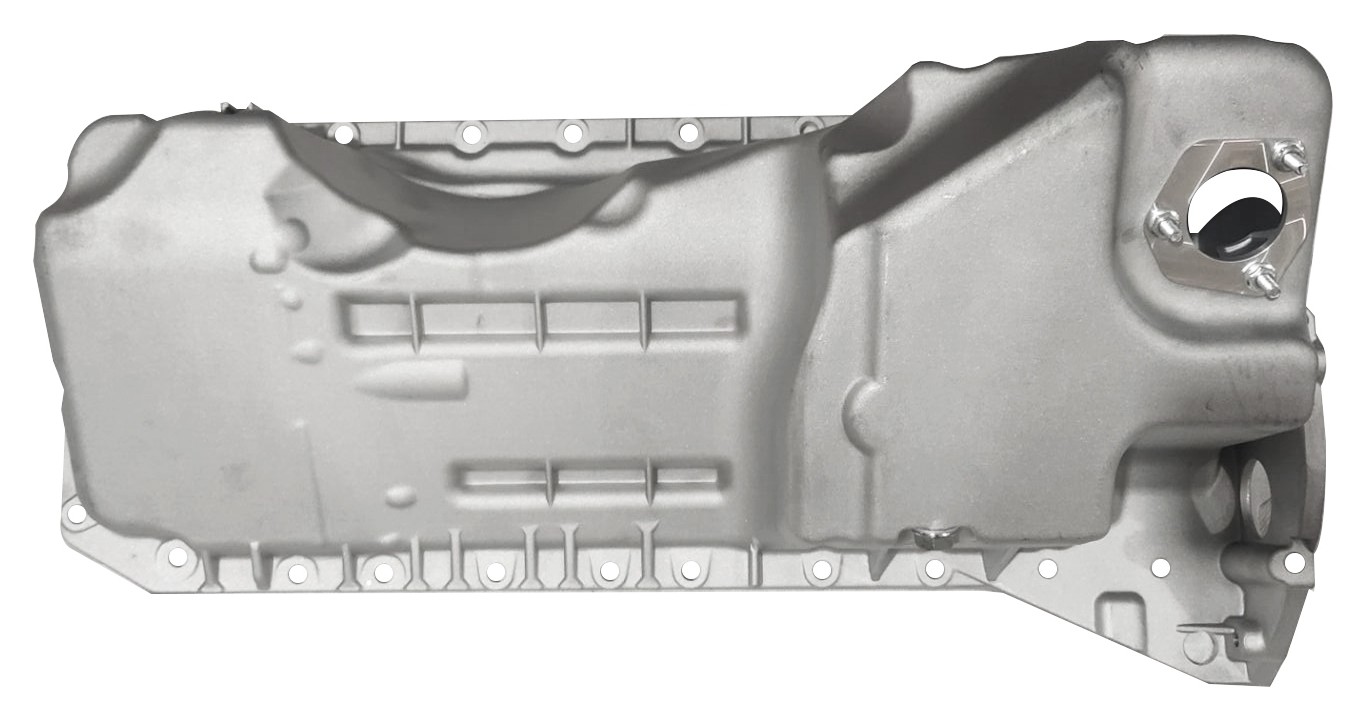
| Cast Aluminum | High-pressure die casting (HPDC) | Controlling cooling rates to prevent micro-porosity and ensuring precise CNC machining of the mating flange. |
| Composite / Polymer | Injection molding (glass-filled polyamides) | Maintaining dimensional stability under extreme thermal cycling and managing complex mold tooling. |
When sourcing stamped steel variants, the factory's tooling design capabilities are critical. Deep drawing steel often leads to material thinning at the corners. Suppliers must demonstrate their ability to maintain minimum wall thickness requirements to prevent fatigue failures from road debris impacts or engine vibration.
Struggling with inconsistent flange flatness or casting defects? Let us match you with a vetted, automotive-grade manufacturer.
Talk to our teamQuality Control and Defect Prevention
A reliable supplier does not just inspect the final product; they control the process. When evaluating a factory's quality management system, focus heavily on their machining and testing stations.
Flange Flatness and Machining
For cast aluminum pans, the mating flange must be CNC machined to exact tolerances to ensure a proper seal with the engine block, especially when using liquid gasket (RTV) instead of a pre-formed rubber gasket. Warpage is the leading cause of leaks. Standard tolerances for flange flatness should strictly remain under 0.15mm across the entire mating surface.
Leak Testing Protocols
Visual inspection is insufficient for oil pans. Professional manufacturers implement automated leak testing on the production line.
Critical Factory Inspections
- Automated air-decay leak testing (pneumatic testing) on 100 percent of units.
- Coordinate Measuring Machine (CMM) verification of bolt hole alignments and flange flatness.
- Cross-hatch adhesion testing for e-coated or powder-coated steel pans to verify corrosion resistance.
- X-ray or ultrasonic inspection of cast aluminum pans to detect internal porosity.
Implementing rigorous quality control and inspection protocols before the container is loaded is the only way to prevent defective batches from reaching your distribution network.
Tooling, MOQs, and Lead Times
Whether you are developing a custom high-capacity pan for the performance aftermarket or sourcing standard replacement parts, understanding the cost structures is vital. If you are pursuing custom designs, partnering with a factory experienced in OEM/ODM services ensures your engineering drawings translate correctly into production tooling.
Tooling costs vary drastically by material. Stamping dies for steel pans are generally less expensive upfront but require high-volume runs to amortize. High-pressure die casting molds for aluminum are capital-intensive, often ranging from $8,000 to over $25,000 depending on the complexity of internal baffling and integrated oil pickup tube mounts. Before transferring funds for tooling, conducting comprehensive factory audits is essential to verify the supplier actually owns the necessary equipment and isn't subcontracting your molds to a lower-tier facility.
Need to streamline your automotive parts supply chain? We handle supplier vetting, tooling negotiation, and pre-shipment inspections.
Get a free consultationFrequently Asked Questions
Successfully sourcing oil pans requires balancing tooling investments with uncompromising dimensional accuracy. By partnering with suppliers who maintain strict in-house machining and automated leak-testing capabilities, you protect your brand from the high costs of defective engine components. If you need experienced eyes on the factory floor to manage tolerances, tooling, and final inspections, our team is ready to assist.
Get Sourcing Help for Oil Pans
Tell us your requirements and our experts will connect you with verified manufacturers.