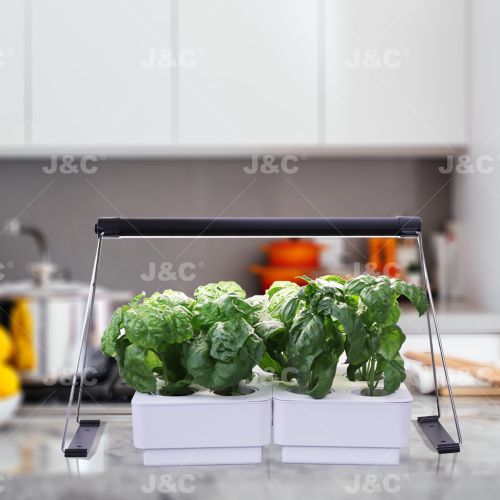
Nursery Trays & Lids
Source bulk nursery trays and lids directly from vetted manufacturers and wholesale suppliers. Built for importers, agricultural distributors, and garden supply brands requiring high-volume OEM/ODM production, our supplier network delivers consistent quality, precise cell dimensions, and reliable UV resistance for professional propagation.
Sourcing nursery trays and humidity domes in commercial volumes requires balancing unit cost with mechanical reliability. For professional growers and agricultural distributors, a tray is not just a container; it is a component in an automated seeding and transplanting line. If cell dimensions warp or drainage holes are inconsistently punched, the resulting jams can halt automated production. Securing a reliable supply chain means specifying exact material grades, verifying tooling tolerances, and ensuring strict quality oversight at the factory level.
Specifying Nursery Trays and Lids
The primary manufacturing method for standard nursery trays and clear lids is thermoforming, though heavy-duty reusable propagation trays are often injection-molded. The choice of polymer dictates the product's lifespan, rigidity, and price point.
When negotiating with manufacturers, you must define the material thickness (typically ranging from 0.5mm to 1.5mm) and the specific resin blend. A tray marketed as "heavy-duty" by one factory might merely be standard thickness at another.
| Material | Primary Application | Key Characteristics |
|---|---|---|
| Polystyrene (PS) | Standard single-use propagation trays | Economical, rigid, prone to cracking if flexed heavily. Dominates the low-cost market. |
| Polypropylene (PP) | Reusable nursery trays and carrying flats | Highly durable, flexible, excellent chemical resistance. Ideal for multi-season use. |
| PET / PVC | Humidity domes and clear lids | High transparency for light transmission. PET is increasingly preferred over PVC for environmental compliance. |
Struggling to find a manufacturer that meets your exact material specifications and tolerances? Let us connect you with vetted factory partners.
Talk to our teamManufacturing Tolerances and Quality Control
Thermoforming relies on heating plastic sheets and vacuum-pulling them over molds. If the heating is uneven or the cooling cycle is rushed, the plastic distributes poorly, leading to thin, weak spots in the tray walls or corners.
Effective Quality Control & Inspection must occur before the trays are nested and packed. Once thousands of trays are stacked on a pallet, identifying structural defects becomes highly labor-intensive.
Critical Factory QC Checks for Nursery Trays
- Wall Thickness Uniformity: Checking corners and cell bottoms for webbing or thinning caused by improper vacuum forming.
- Drainage Hole Precision: Ensuring the mechanical punch clears the plastic completely without leaving burrs that block water flow.
- Lid Fit and Retention: Testing the snap-fit of PET domes onto the corresponding PP/PS trays to ensure they hold humidity without cracking.
- Nesting and De-nesting: Verifying that stacked trays do not lock together, which is critical for automated dispensing machinery.
- UV Additive Dispersion: For reusable outdoor trays, confirming the correct percentage of UV stabilizers has been compounded into the resin.
Custom Tooling and OEM Production
Brands and large-scale agricultural operations often require proprietary cell configurations, specific overall dimensions to fit custom racking systems, or embossed company logos. Developing these products requires partnering with factories capable of robust OEM/ODM Services.
Thermoforming molds are relatively inexpensive compared to injection molding tools. A custom aluminum thermoforming mold for a standard 1020 tray variant can often be milled and ready for sampling within a few weeks. However, precision is paramount; a deviation of just a few millimeters across the length of a tray can render it incompatible with bottom-watering systems or automated seeders.
Pricing, MOQs, and Lead Times
Because nursery trays are high-volume, low-margin commodities, pricing is heavily indexed to global polymer resin costs. Freight efficiency also plays a massive role in landed costs. Trays are designed to nest deeply, allowing hundreds of thousands of units to fit into a single 40HQ container.
Freight Density and Sticking
While tight nesting maximizes container space, over-packing or exposing pallets to high heat during transit can cause PS and PP trays to fuse or warp. Ensure your supplier uses appropriate anti-block additives or physical separators if shipping through high-temperature zones.
Need to optimize your landed costs? We manage the end-to-end process from factory negotiation to container consolidation.
Get a free consultationFrequently Asked Questions
Navigating the sourcing landscape for nursery trays requires strict attention to material properties, tooling precision, and freight optimization. By establishing clear specifications and maintaining rigorous oversight on the factory floor, you can secure a reliable supply of high-performance propagation equipment. If you need dedicated support executing your Product Sourcing strategy, our team is ready to assist.
Get Sourcing Help for Nursery Trays & Lids
Tell us your requirements and our experts will connect you with verified manufacturers.