Nonmetal Mining Engineering
Source reliable nonmetal mining engineering services and heavy processing equipment directly from vetted Chinese manufacturers and EPC contractors. Designed for mine operators, industrial procurement managers, and engineering firms, our network provides bulk procurement, custom machinery, and turnkey contracting solutions.
Sourcing nonmetal mining engineering solutions—whether procuring standalone beneficiation equipment or securing turnkey EPC (Engineering, Procurement, and Construction) contracts—requires strict technical oversight. The variance in nonmetallic ore characteristics, from soft gypsum to highly abrasive silica sand, means off-the-shelf machinery rarely achieves optimal recovery rates. Success depends on matching the mechanical design to your specific mineralogy and ensuring the fabrication meets heavy industrial standards.
Specifying Equipment for Nonmetallic Minerals
When procuring equipment for crushing, grinding, or classification, imprecise specifications lead to accelerated wear and operational bottlenecks. Chinese manufacturers offer highly competitive heavy machinery, but you must dictate the exact metallurgical and mechanical requirements.
| Processing Stage | Typical Equipment | Critical Specifications to Define |
|---|---|---|
| Crushing | Jaw / Cone / Impact Crushers | Max feed size, compressive strength, discharge CSS, liner metallurgy |
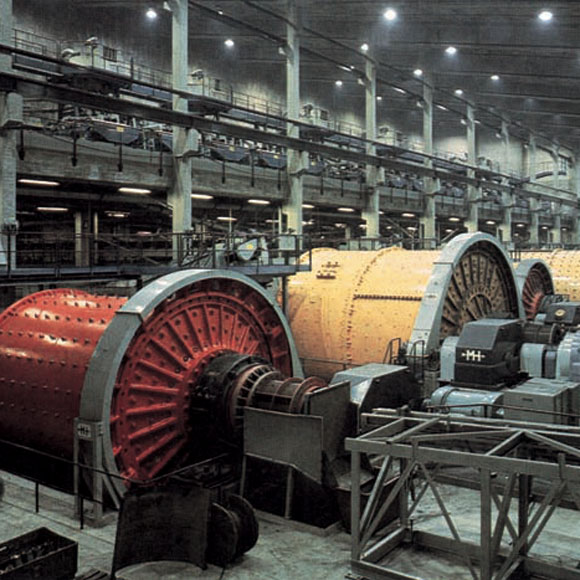
| Grinding | Ball Mills / Raymond Mills / Vertical Roller Mills | Bond work index, target product fineness (mesh/micron), motor kW, liner profile |
| Classification | Hydrocyclones / Air Classifiers | Cut size, slurry density, overflow/underflow ratios, abrasion-resistant lining |
| Beneficiation | Flotation Cells / Magnetic Separators | Magnetic intensity (Gauss), cell volume, impeller speed, reagent compatibility |
For highly abrasive materials like quartz or feldspar, stipulate high-chrome alloy or ceramic-lined wear parts. Relying on standard manganese steel for these applications will result in unacceptable downtime.
Validating Contractors and Fabricators
The Chinese market includes both dedicated heavy machinery fabricators and trading companies acting as EPC contractors. For multi-million dollar plant installations, you must verify the supplier's in-house engineering capabilities, fabrication capacity, and past project performance.
Critical Verification Points for Mining EPCs
- In-house engineering software capabilities (e.g., 3D plant design, discrete element modeling).
- Fabrication facility capacity (overhead crane tonnage, heavy boring and milling machines).
- Traceability of raw materials (steel plate mill certificates, forging ultrasonic test reports).
- Integration capabilities with international PLC and SCADA systems.
Executing comprehensive Factory Audits before awarding a contract is non-negotiable. You need to physically confirm the factory has the heavy tooling required to machine large trunnions, gears, and crusher frames to exact tolerances.
Need to verify a mining equipment manufacturer's true capabilities? Our engineering team can evaluate their facilities and technical track record.
Discuss your projectQuality Assurance During Fabrication
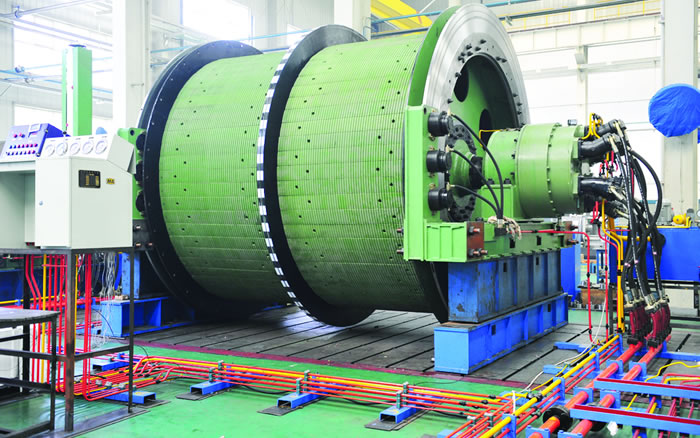
Heavy mining equipment operates under continuous dynamic stress. A failure in a primary mill or crusher halts the entire plant. Quality control cannot be left to a final visual inspection; it must be integrated throughout the fabrication process.
Key inspection milestones should include:
- Non-Destructive Testing (NDT): Ultrasonic and magnetic particle inspection on critical welds, especially on mill shells and crusher mainframes.
- Dynamic Balancing: Essential for high-speed rotors in impact crushers and large fans in air classification circuits.
- Component Verification: Ensuring specified international components (e.g., SKF/Timken bearings, Siemens/ABB motors, Flender gearboxes) are genuine and correctly installed.
- Factory Acceptance Testing (FAT): No-load test runs to monitor bearing temperatures, vibration levels, and motor current draw.
Implementing staged Quality Control & Inspection throughout the manufacturing timeline is the only way to catch casting defects or machining errors before the equipment is shipped.
Project Economics, Lead Times, and Logistics
Mining engineering projects operate on extended timelines. A single custom ball mill may take 3 to 5 months to fabricate, while a complete turnkey beneficiation plant can require 8 to 14 months from design approval to shipment.
Payment terms for large-scale equipment and EPC contracts typically follow a milestone structure:
- 30% Advance: Upon contract signing and preliminary design approval.
- 30% Progress: Upon completion of major castings or structural fabrication.
- 30% Pre-shipment: Following successful Factory Acceptance Testing (FAT).
- 10% Retention: Released after successful site commissioning or a standard warranty period (often 12 months).
Transporting mining equipment involves complex break-bulk and out-of-gauge (OOG) shipping. Large mill shells and crusher frames cannot fit in standard containers and require flat racks or open-top loading. Coordinating this requires specialized Shipping & Freight expertise to manage inland transport permits in China, port handling, and vessel chartering.
Planning a heavy equipment shipment? We manage out-of-gauge freight, customs clearance, and complex project logistics.
Get logistics supportFrequently Asked Questions
Procuring nonmetal mining equipment and engineering services from Asia offers substantial capital expenditure savings, provided you manage the technical risks. Success requires rigorous specification, continuous quality oversight during fabrication, and meticulous logistics planning.
Get Sourcing Help for Nonmetal Mining Engineering
Tell us your requirements and our experts will connect you with verified manufacturers.