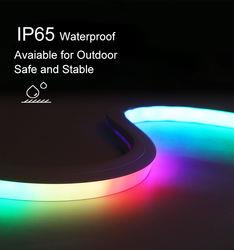
Neon Lights
Source premium LED Neon Lights from vetted manufacturers and suppliers in China. Designed for importers, distributors, and brands seeking reliable wholesale or OEM production, our network delivers high-yield lighting solutions. Secure scalable, compliant manufacturing for your commercial or landscape lighting portfolios.
Modern landscape and architectural lighting relies heavily on LED neon flex, replacing fragile traditional glass neon with durable, low-voltage alternatives. The sourcing challenge lies not in finding a supplier, but in identifying a manufacturer capable of consistent color temperatures, flawless extrusion, and reliable ingress protection for demanding outdoor environments. Inconsistent raw materials or poor sealing processes rapidly lead to water ingress, dead diodes, and severe discoloration.
Specifying LED Neon Flex
When buying in bulk, the bill of materials dictates the lifespan of the product. The most critical decision is the choice of extrusion material, which directly impacts weather resistance, flexibility, and thermal management.
| Material | UV Resistance | Thermal Stability | Lifespan | Cost Profile |
|---|---|---|---|---|
| Food-Grade Silicone | Excellent (Will not yellow) | Remains flexible in freezing temps | Over 50,000 hours | Premium |
| Standard PVC | Poor to Moderate (Prone to yellowing) | Stiffens in cold, softens in heat | 20,000 to 30,000 hours | Economy |
Beyond the jacket material, buyers must specify the bend direction. Top-bend neon flex bends vertically along the luminous surface, ideal for wrapping columns or outlining curved structures. Side-bend flex bends horizontally, making it suitable for flat signage and tracing floor contours. Advanced 3D-bend silicone profiles allow for torsion in multiple axes, though they require highly specialized extrusion processes.
Struggling to find a manufacturer with consistent silicone extrusion capabilities? Let us match you with a vetted supplier.
Talk to our teamManufacturing and Quality Control
The production of high-quality neon lights involves precise synchronization between electronic assembly and chemical extrusion. The major manufacturing hubs for these products are concentrated in Guangdong province, particularly in Shenzhen and Jiangmen.
SMT Assembly
Surface Mount Technology is used to populate flexible printed circuit boards (FPC) with LED chips (typically SMD 2835 or 5050). Copper thickness on the FPC must be at least 2oz to 3oz to handle voltage drop over long runs.
Co-Extrusion
The populated LED strip is fed through an extrusion machine alongside the liquid silicone or PVC. Advanced factories use co-extrusion, applying a reflective white base and a diffused top layer simultaneously.
Curing and Baking
The extruded neon passes through a long baking tunnel. Incorrect temperature profiles here result in bubbles, internal stress, or uneven curing.
End-Cap Sealing
For IP67 and IP68 ratings, ends must be sealed using automated injection molding rather than manual gluing, ensuring a watertight bond between the cable and the extrusion.
Critical Inspection Points
Defects in neon lighting often only appear after installation, making rigorous Quality Control & Inspection at the factory level essential.
Factory QC Checklist for Neon Flex
- Verify IP rating via submersion testing (especially for injection-molded end caps).
- Check color consistency (MacAdam ellipse under 3 steps) across different production batches.
- Test for voltage drop by measuring luminosity at the start and end of a 10-meter run.
- Conduct thermal shock testing to ensure silicone/PVC does not delaminate from the internal FPC.
- Confirm certification validity (UL, CE, RoHS) for the specific components used.
If you are developing custom profiles or specific lumen outputs, working with a factory that offers dedicated OEM/ODM Services is crucial. Ensure they have in-house testing equipment like integrating spheres and goniophotometers.
Buying Mechanics: MOQs, Lead Times, and Pricing
Volume sourcing of neon lights requires navigating variable pricing structures based on raw material costs (copper, silicone) and LED density (LEDs per meter).
Pricing is heavily influenced by the IP rating requirements. An IP65 glued end-cap is significantly cheaper than an IP68 injection-molded end-cap, but the latter is mandatory for submerged or heavy-weather landscape applications. Before placing a high-volume order, conducting Factory Audits is highly recommended to verify the supplier's actual production capacity and quality management systems (ISO 9001).
Need to negotiate better terms or verify a supplier's IP68 testing capabilities? We can manage the sourcing process end-to-end.
Get a free consultationFrequently Asked Questions
Sourcing commercial-grade neon lighting requires strict oversight of raw materials and manufacturing tolerances. By partnering with a team that understands the nuances of extrusion and electronic assembly, you can secure reliable, high-performance lighting that protects your brand's reputation and your bottom line.
Get Sourcing Help for Neon Lights
Tell us your requirements and our experts will connect you with verified manufacturers.