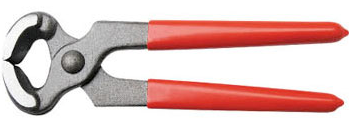
Nail Pullers
Source high-quality nail pullers in bulk directly from vetted manufacturers and wholesale suppliers. Designed for importers, hardware distributors, and tool brands seeking reliable OEM and private-label production. Discover competitive pricing and robust hand tools built for demanding construction environments.
Sourcing nail pullers at scale requires balancing material cost with structural integrity. A tool designed to extract embedded, rusted, or headless nails must withstand immense leverage without bending, chipping, or snapping. For volume buyers, the challenge lies in verifying a manufacturer's metallurgical consistency, forging precision, and heat-treatment processes before committing to a large production run.
Material Selection and Metallurgy
The performance of a nail puller hinges entirely on its steel composition and the hardening process. While visual inspections can confirm finish quality, the true durability of the tool is determined long before the final coating is applied.
Steel Grades
Most reputable manufacturers in major tool-producing hubs (such as Shandong and Zhejiang provinces) utilize drop-forged steel. Cast iron or low-grade cast steel should be strictly avoided, as they lack the tensile strength required for high-leverage prying.
- High-Carbon Steel (45#, 50#, or 65Mn): The industry standard for budget to mid-tier tools. It offers a good balance of strength and affordability.
- Alloy Steel (Cr-V or Cr-Mo): Chrome Vanadium and Chrome Molybdenum offer superior tensile strength, fatigue resistance, and toughness. These are essential for professional-grade tools subjected to daily abuse.
| Material Grade | Typical Application | Durability / Fatigue Resistance | Cost Profile |
|---|---|---|---|
| High-Carbon Steel (45#/50#) | DIY / General Hardware | Moderate | Economical |
| High-Carbon Steel (65Mn) | Mid-Tier Professional | High | Moderate |
| Chrome Vanadium (Cr-V) | Heavy-Duty / Industrial | Excellent | Premium |
Heat Treatment and Hardness (HRC)
A nail puller cannot be uniformly hardened. The body requires a degree of flex to absorb shock and prevent snapping under extreme loads, while the claw ends must be exceptionally hard to resist wear and bite into fasteners.
Manufacturers achieve this through localized induction hardening at the claw tips. The target Rockwell Hardness (HRC) should typically fall between 42 to 48 for the tool body, and 50 to 55 for the working claws. If the claws are hardened beyond HRC 55, they become brittle and are highly susceptible to chipping when striking embedded nails.
Ensure your hand tool production meets strict metallurgical standards with our on-the-ground engineering and sourcing support.
Talk to our teamManufacturing Tolerances and Quality Control
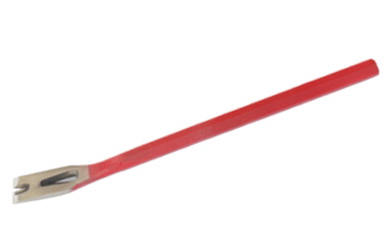
Even with premium steel, a nail puller will fail if the claw geometry is poorly machined. The V-notch must be sharply defined to grip headless nails securely. Furthermore, the bevel of the claw must be thin enough to drive under deeply embedded nail heads, yet thick enough to maintain structural integrity.
When vetting a new supplier, it is critical to implement rigorous Quality Control & Inspection protocols to catch machining defects before shipment.
Critical Factory QC Checks for Nail Pullers
- Verify V-notch symmetry and sharpness (no rounded inner edges).
- Test claw bevel thickness using digital calipers against CAD specifications.
- Conduct destructive load testing to measure the bending yield point.
- Test claw hardness (HRC) to ensure it falls within the 50-55 range.
- Check finish adhesion (cross-cut test for powder coating or e-coating).
OEM Customization and Finishes
For brands looking to establish a distinct market presence, leveraging OEM/ODM Services allows for extensive customization. Beyond stamping or laser-etching your logo, consider the tool's finish and ergonomics.
- Surface Finishes: Powder coating provides excellent rust resistance and allows for brand-specific color matching. Electrophoretic deposition (e-coating) offers a thinner, highly durable black finish that won't flake off in the claw notch. Polished and clear-coated finishes offer a premium aesthetic but require meticulous rust-prevention during shipping.
- Ergonomic Grips: Many modern nail pullers feature TPR (Thermoplastic Rubber) or double-dipped PVC grips to reduce shock transmission and improve grip in wet conditions. Ensure the factory uses strong adhesives so the grips do not slide off under heavy pulling force.
Sourcing Mechanics: Pricing, MOQs, and Lead Times
Purchasing nail pullers in bulk requires understanding standard factory terms. Because drop forging relies on heavy machinery and batch heat treatment, manufacturers enforce minimum order quantities to maintain efficiency.
Before wiring a deposit for a large order, conducting comprehensive Factory Audits is highly recommended. Audits verify that the supplier actually owns the forging presses and heat-treatment facilities they claim, rather than simply assembling components sourced from unverified sub-tier workshops.
Navigate supplier negotiations, verify production capabilities, and secure favorable terms for your hand tool sourcing.
Get a free consultationFrequently Asked Questions
Sourcing reliable nail pullers is ultimately an exercise in metallurgical and dimensional quality control. By partnering with the right factory and enforcing strict testing protocols, you ensure your tools perform flawlessly on the job site, protecting your brand's reputation and bottom line.
Get Sourcing Help for Nail Pullers
Tell us your requirements and our experts will connect you with verified manufacturers.