Multi-Tools
Source high-quality Multi-Tools from vetted manufacturers and wholesale suppliers across Asia. Designed for hardware distributors, importers, and brands seeking reliable OEM/private-label production, this catalog connects you directly with factory partners capable of delivering precision-engineered tools in bulk.
Sourcing multi-tools at scale requires balancing precision mechanics with material durability. A visually appealing tool is useless if the pliers torque out of alignment under load or the blade steel chips during standard use. Managing this balance in bulk production means strictly controlling the manufacturing process from raw steel selection to final assembly, ensuring the factory you choose has the capability to hold tight tolerances across thousands of units.
Metallurgy and Material Specifications
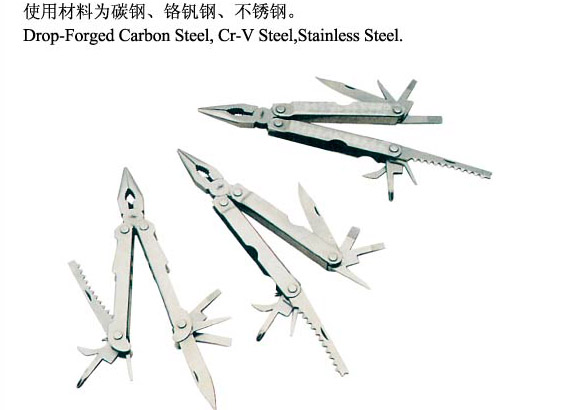
The core of any multi-tool is its steel. Buyers must specify different steel grades for different components based on their function. A plier head requires high toughness to resist twisting, while a main blade requires high hardness for edge retention.
| Component | Economy OEM | Premium OEM |
|---|---|---|
| Main Blade Steel | 3Cr13 / 420J2 | 8Cr13MoV / D2 / 154CM |
| Plier Head | 2Cr13 Cast | 3Cr13 / 5Cr15MoV Forged |
| Handle Material | Stamped 420 Stainless | 6061 Aluminum / Titanium / G10 |
| Target HRC (Blade) | 52-54 HRC | 58-60 HRC |
When defining specifications, pay close attention to the heat treatment process. Poorly heat-treated D2 steel will perform worse than properly treated 420HC. Require your supplier to provide Rockwell Hardness (HRC) testing reports for each production batch.
The Manufacturing Process: Where Quality is Won or Lost
The vast majority of global multi-tool production is centered in Yangjiang, Guangdong. While the region is rich in supply chain infrastructure, factory capabilities vary wildly.
Stamping vs. Fine Blanking
Economy tools use standard stamping, which leaves rough edges requiring heavy tumbling. Premium tools utilize fine blanking or laser cutting for precision, followed by CNC machining for complex locking mechanisms.
Heat Treatment
Vacuum heat treatment and cryogenic quenching are standard in premium facilities to achieve consistent HRC ratings without warping the delicate internal tool components.
Assembly and Tolerances
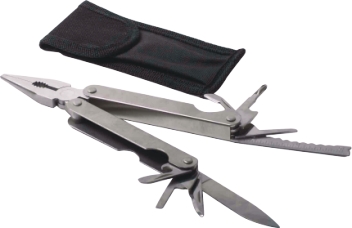
Multi-tools are complex assemblies often containing 30 to 40 individual parts. Washers (phosphor bronze or Teflon) and pivot screws must be dialed in perfectly by skilled assembly line workers to ensure smooth deployment.
Navigating Yangjiang's multi-tool factories requires on-the-ground expertise to separate genuine manufacturers from assemblers who outsource critical machining.
Talk to our teamQuality Control Defect Checkpoints
Because multi-tools rely on friction, spring tension, and tight clearances, minor machining deviations compound into major functional defects. Implementing a rigorous Quality Control & Inspection protocol is non-negotiable before shipment.
Critical QC Checkpoints for Multi-Tools
- Plier anvil alignment: Zero daylight between wire cutter blades when fully closed.
- Lock engagement: Liner or frame locks must engage at 30 to 50 percent of the blade tang, never at 100 percent.
- Spring tension: Slip-joint tools must have consistent 'walk and talk' without gritty deployment.
- Pivot tolerance: Zero lateral blade play when deployed and locked.
- Corrosion resistance: Passivation testing (salt spray) to ensure proper finishing and polishing.
Sourcing Mechanics: MOQs, Lead Times, and Tooling
Pricing and MOQs in the multi-tool category are heavily dependent on whether you are buying off-the-shelf white-label designs or developing custom proprietary tools.
- White-Label (ODM): Using existing factory molds and stamping dies. MOQs typically range from 1,000 to 2,000 units. Customization is limited to handle colors, surface finishes (e.g., black oxide or titanium carbonitride coatings), and laser-engraved logos. Lead times are generally 30 to 45 days.
- Custom Production (OEM): If you are developing a unique toolset or proprietary locking mechanism, you will need extensive Product Development support. Custom stamping dies, injection molds for grips, and CNC programming will incur significant tooling costs (NRE). MOQs for fully custom tools usually start at 3,000 to 5,000 units, with lead times extending to 90 or 120 days for the first production run.
Need to negotiate tooling costs or establish a reliable supply chain for a custom multi-tool design? We can help you structure the agreement.
Get a free consultationFrequently Asked Questions
Successfully sourcing multi-tools means partnering with a factory that views itself as an engineering firm rather than just an assembly house. Before committing to tooling costs or large deposits, conducting thorough Factory Audits to verify their CNC capabilities, heat-treatment facilities, and internal quality management systems is the most effective way to protect your investment.
Get Sourcing Help for Multi-Tools
Tell us your requirements and our experts will connect you with verified manufacturers.