Motorcycle Piston Rings & Connecting Rods
Source premium motorcycle piston rings & connecting rods from vetted manufacturers and suppliers in Asia. Designed for importers, distributors, and aftermarket brands requiring reliable bulk supply or custom OEM production. Partner with factories capable of meeting strict tolerances and high-volume demands.
Sourcing engine internals requires balancing extreme mechanical tolerances with unit economics. Connecting rods and piston rings operate under immense thermal and mechanical stress; a single microscopic defect in forging, heat treatment, or surface coating can lead to catastrophic engine failure. For bulk buyers and aftermarket brands, the core challenge is identifying manufacturing partners who maintain consistent metallurgical standards and machining precision across production runs of tens of thousands of units.
Critical Specifications for Engine Internals
When engaging suppliers for engine components, precise technical documentation is non-negotiable. Connecting rods and piston rings demand distinct manufacturing processes and material specifications.
Connecting Rods
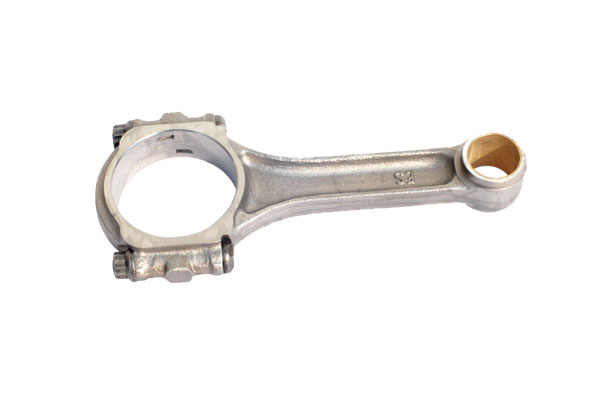
The performance of a connecting rod hinges on its material strength and dimensional accuracy. Key specifications you must define for your supplier include:
- Center-to-Center Length: The exact distance between the big end and small end bores.
- Bore Diameters and Tolerances: Big end and small end bore dimensions, typically requiring tolerances within microns.
- Material and Manufacturing Method: Commuter bikes often utilize cast iron or powdered metal, while performance applications require forged steel (such as 4340 chromoly) or titanium.
- Surface Treatment: Shot peening to relieve surface stress and improve fatigue life.
| Manufacturing Method | Typical Application | Fatigue Resistance |
|---|---|---|
| Casting / Powdered Metal | Low-cc commuter motorcycles | Moderate |
| Forged Steel (e.g., 4340) | Mid-to-high displacement, aftermarket | High |
| Billet / Titanium | Premium racing applications | Maximum |
Piston Rings
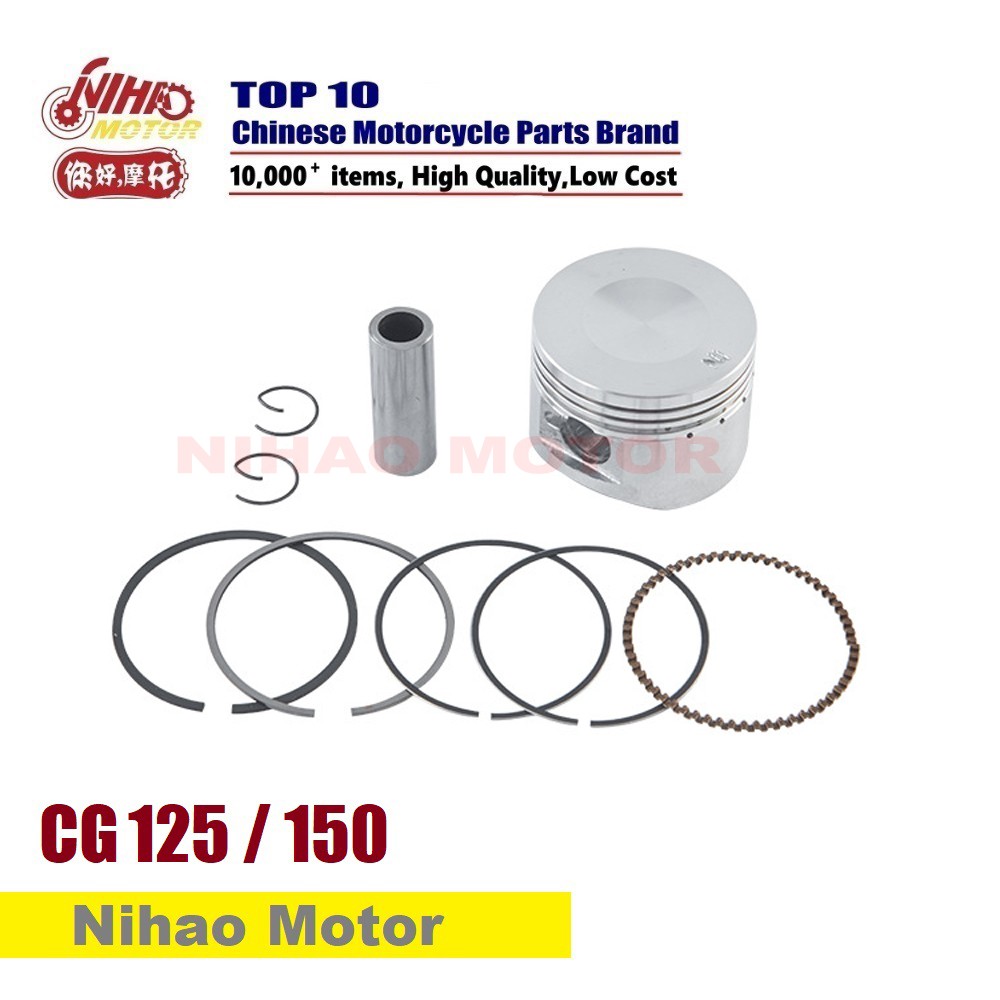
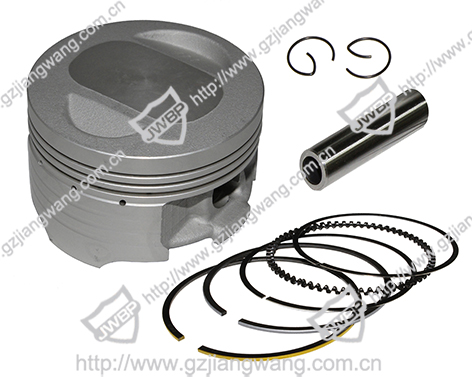
A standard motorcycle piston utilizes a three-ring setup (top compression ring, second compression ring, and oil control ring). The exact material and coating dictate the ring's sealing capability and wear resistance.
- Base Materials: Ductile iron, cast iron, or high-tensile steel.
- Coatings: Gas nitriding, chrome plating, or Physical Vapor Deposition (PVD) coatings are critical for the top ring to withstand combustion temperatures.
- Axial and Radial Thickness: Must be specified to match the piston groove dimensions precisely.
Struggling to find a supplier capable of consistent PVD coatings or precision forging? Let our sourcing engineers evaluate your technical requirements.
Talk to our teamManufacturing Tolerances and Quality Control
The gap between a sample's quality and bulk production consistency is where many sourcing projects fail. Engine components require rigorous in-process inspections. Relying solely on final random inspection is insufficient for parts with such tight tolerances.
To ensure your production run meets specifications, comprehensive Quality Control & Inspection must be implemented at the factory level.
Critical Factory Verification Points
- Verify the presence and calibration of Coordinate Measuring Machines (CMM) for bore and center-to-center measurements.
- Ensure Magnetic Particle Inspection (Magnaflux) or ultrasonic testing is used to detect subsurface cracks in forged rods.
- Check for in-house hardness testing (Rockwell/Brinell) to verify heat treatment consistency.
- Confirm the factory uses dedicated profile projectors to measure piston ring gap and face profiles.
- Audit their material traceability protocols to ensure the steel or iron grade matches your specifications.
If you are developing a new line of aftermarket internals, conducting thorough Factory Audits before placing a deposit is highly recommended to verify the supplier actually owns the necessary forging presses and CNC machinery, rather than outsourcing to unverified sub-tier workshops.
MOQs, Lead Times, and Pricing Dynamics
Pricing for engine internals is heavily dependent on raw material costs, tooling requirements, and production volume. Custom tooling for forged connecting rods or specific ring profiles will require an upfront investment.
If you are leveraging OEM/ODM Services for private-label components, expect tooling development and sample approval to add 30 to 45 days to your initial timeline. Committing to higher volumes (over 5,000 units) significantly reduces the per-unit amortization of tooling costs, especially for complex forged rods.
Need to establish reliable supply chain timelines and accurate landed cost models for your engine components?
Get a free consultationFrequently Asked Questions
Sourcing motorcycle piston rings and connecting rods is an exercise in risk management. Success requires looking past the quoted unit price to deeply evaluate a factory's metallurgical control, machining precision, and defect detection capabilities. Partnering with experienced professionals on the ground ensures your specifications are met from the first sample to the final shipment.
Get Sourcing Help for Motorcycle Piston Rings & Connecting Rods
Tell us your requirements and our experts will connect you with verified manufacturers.