Motorcycle Horns
Source bulk motorcycle horns from vetted suppliers and manufacturers across Asia. Designed for importers, wholesalers, distributors, and brands seeking reliable OEM and private-label production, our network delivers high-performance acoustic components built to international compliance standards.
Sourcing motorcycle horns at scale requires balancing acoustic output, environmental durability, and strict road-safety compliance. For bulk buyers, the challenge lies in identifying manufacturers who maintain consistent coil winding precision and diaphragm tuning across production runs of tens of thousands of units, ensuring every batch meets regulatory decibel requirements without premature failure.
Core Acoustic and Technical Specifications
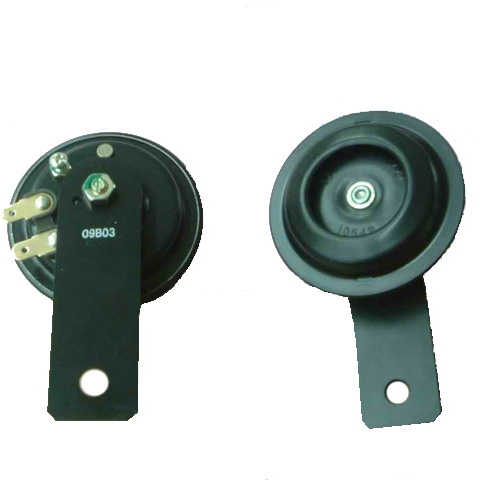
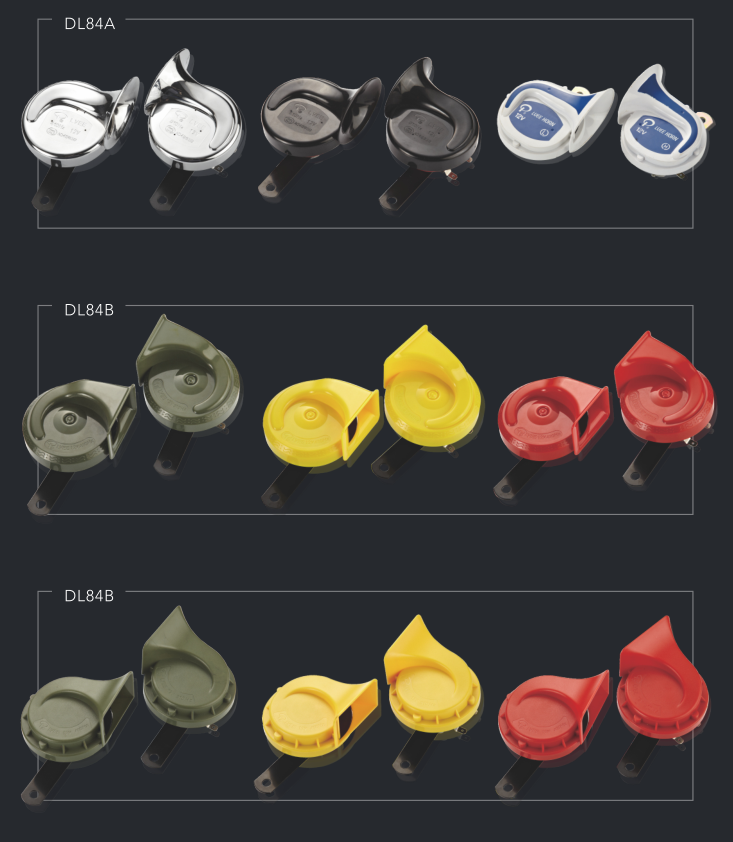
When issuing a Request for Quotation (RFQ) to a factory, specifying the exact physical and electrical parameters prevents costly misunderstandings. The two primary form factors—disc (flat) and snail (trumpet)—serve different acoustic and spatial needs.
| Feature | Disc (Flat) Horns | Snail (Trumpet) Horns |
|---|---|---|
| Acoustic Profile | Sharp, penetrating metallic tone | Deep, resonant, directional sound |
| Frequency Range | Typically 330Hz (Low) to 430Hz (High) | Typically 400Hz (Low) to 500Hz (High) |
| Housing Material | Stamped steel (painted or plated) | ABS plastic shell with steel core |
| Space Requirement | Compact, low profile | Requires more depth and specific orientation |
Beyond the physical shape, buyers must specify the electrical requirements. Most modern motorcycles utilize a 12V system with an operating range of 9V to 15V. Current draw typically ranges from 1.5A to 3.0A per horn. For vintage or smaller displacement markets, 6V variants are still manufactured but require specific tooling requests.
Manufacturing Variables and Cost Drivers
The internal construction of a motorcycle horn dictates its longevity and pricing. The most critical component is the electromagnetic coil.
Coil Material Substitutions
A common cost-cutting measure in lower-tier factories is substituting pure copper wire with Copper-Clad Aluminum (CCA). While CCA functions initially, it has higher electrical resistance, generates more heat, and significantly reduces the horn's lifespan under continuous vibration. Always specify 100% pure copper coils in your OEM agreements.
The diaphragm material is equally vital. High-quality manufacturers use 65Mn (manganese) spring steel, which maintains its acoustic elasticity over hundreds of thousands of cycles. The contact points (tungsten or silver alloy) must be precisely aligned; poor riveting here leads to a "scratchy" sound or total failure after minimal use.
Struggling with inconsistent acoustic performance or premature failures from your current suppliers? Let us audit your supply chain.
Talk to our teamQuality Control and Compliance Standards
Motorcycle horns are safety devices and are heavily regulated. Depending on your target market, horns must pass specific homologation standards. In Europe, E-mark certification (specifically ECE R28) is mandatory, dictating sound pressure levels (typically between 105 dB and 118 dB measured at 2 meters) and endurance.
Ensuring compliance requires rigorous compliance testing before mass production begins. Once in production, strict quality control is necessary to catch assembly defects.
Pre-Shipment Inspection Focus Areas
- Sound Pressure Level (SPL) testing at 2 meters (must meet specified dB range)
- Frequency analysis to ensure high/low tones match specifications
- Continuous cycle testing (sampling units for 100,000+ actuation cycles)
- Salt spray testing for corrosion resistance on terminals and steel housings
- Waterproofing verification (IP65 or IP67 depending on the model design)
Buying Mechanics: MOQs, Pricing, and Lead Times
Sourcing directly from manufacturers requires understanding typical factory constraints. Production runs are dictated by the minimum viable batch of stamped steel housings and ABS injection molding.
If you are developing a private-label line, OEM/ODM services allow for custom ABS housing colors, laser-etched logos on the steel disc, and custom blister or color-box packaging. Packaging customization usually pushes the MOQ toward the 3,000-piece mark to absorb printing setup costs.
Planning a new private-label motorcycle parts line? We manage the entire OEM process from factory selection to final packaging.
Get a free consultationFrequently Asked Questions
Securing a reliable supply of motorcycle horns means looking past the surface finish and verifying the internal engineering. Conducting thorough factory audits to check a manufacturer's coil-winding automation and acoustic testing chambers is the most effective way to guarantee long-term product stability.
Get Sourcing Help for Motorcycle Horns
Tell us your requirements and our experts will connect you with verified manufacturers.