Mops
Source bulk mops directly from vetted suppliers and manufacturers across Asia. Designed for importers, wholesale distributors, and brands seeking reliable private-label and OEM production, our network delivers consistent quality and competitive pricing for commercial and residential cleaning lines.
Sourcing mops in commercial volumes requires moving past superficial catalog choices. Whether you are importing heavy-duty cotton loop mops for janitorial supply or flat microfiber systems for the retail market, profitability hinges on controlling raw material costs and enforcing strict mechanical tolerances. A mop is only as durable as its weakest connection point, meaning buyers must clearly define specifications for handle wall thickness, plastic resin grades, and textile blends before production begins.
Critical Specifications for Bulk Buyers
The difference between a consumer-grade mop and a commercial-grade tool lies entirely in the bill of materials. When negotiating with manufacturers, you must specify the exact parameters for the three main components: the handle, the head, and the connecting hardware (or wringer mechanism).
| Component | Economy / Retail Spec | Commercial / Premium Spec |
|---|---|---|
| Handle Material | 0.3mm powder-coated steel | 0.6mm+ stainless steel or extruded aluminum |
| Plastic Parts | High percentage recycled PP | 100% Virgin Polypropylene (PP) or ABS |
| Microfiber Blend | 100% Polyester (low absorption) | 80% Polyester / 20% Polyamide |
| Handle Threading | Friction-fit or glued plastic | Riveted or standardized threaded metal/nylon |
Handle Wall Thickness and Threading
A frequent point of failure in imported mops is handle snapping. Manufacturers often quote aggressive prices by reducing the metal wall thickness to 0.25mm or 0.3mm. For any mop intended for regular use, specify a minimum wall thickness of 0.4mm for steel, or 0.6mm to 0.8mm for aluminum. Additionally, ensure the thread standard (typically US standard or Italian thread) matches your target market's existing hardware if selling interchangeable heads.
Need help defining technical specifications for your next order? Talk to our sourcing experts.
Discuss your product specsManufacturing Tolerances and Quality Control
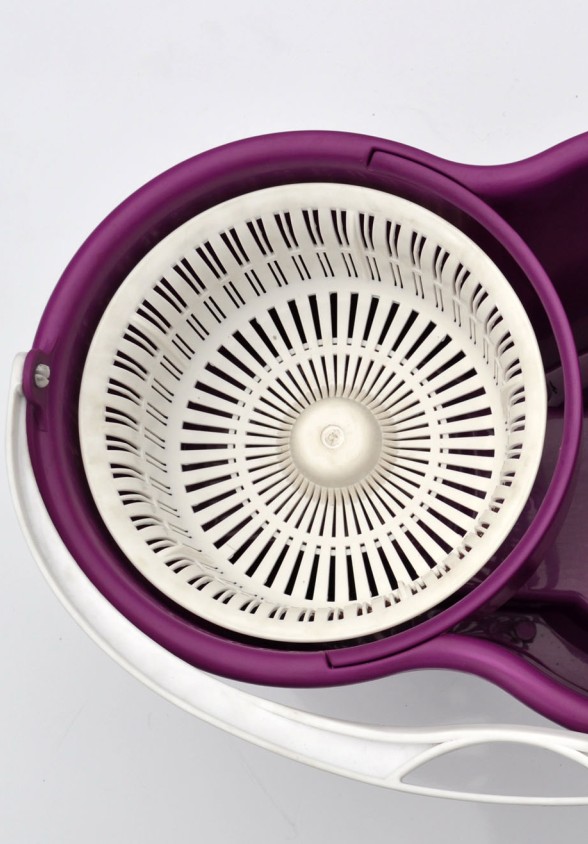
Mop manufacturing involves metal tube extrusion, plastic injection molding, and textile weaving. Inconsistencies in any of these processes lead to high defect rates. Plastics used in spin mop buckets and flat mop frames are particularly vulnerable to cost-cutting; using too much recycled material makes the plastic brittle and prone to cracking under stress.
Implementing rigorous quality control and inspection protocols at the factory level is essential.
Pre-Shipment Inspection Focus Areas
- Handle pull and bend tests to verify wall thickness and rivet strength.
- Drop testing for plastic buckets and wringer assemblies (especially spin mops).
- Yarn pull-out tests to ensure mop head looping is securely stitched or bound.
- Water absorption and retention testing for microfiber and cotton blends.
- Visual inspection for plastic injection flash, short shots, or color inconsistencies.
If you are developing a proprietary design—such as a custom wringer mechanism or a specialized ergonomic handle—partnering with a factory capable of robust OEM/ODM services is critical. You will need to verify their tooling capabilities and ownership rights over the molds before advancing funds.
Typical MOQs, Pricing, and Lead Times
Pricing in the mop category is highly sensitive to raw material indices (steel, aluminum, and petroleum for plastics/synthetic fibers). Production capacity varies wildly, so conducting thorough factory audits is recommended to ensure the supplier can handle your volume requirements without subcontracting to unvetted facilities.
Factories will often lower MOQs if you accept their standard, off-the-shelf colors and packaging. Custom pantone matching for plastics usually requires a minimum of a full 20-foot container per style to justify the resin batching process.
Streamline your supply chain and secure better terms. Talk to our team today.
Get a sourcing assessmentBuyer FAQ
Successfully sourcing mops at scale requires balancing cost against mechanical reliability. By enforcing strict material specifications and verifying factory capabilities upfront, buyers can eliminate the structural failures that plague lower-tier imports.
Get Sourcing Help for Mops
Tell us your requirements and our experts will connect you with verified manufacturers.