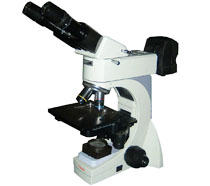
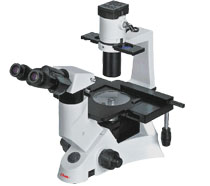
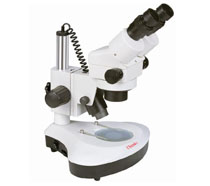
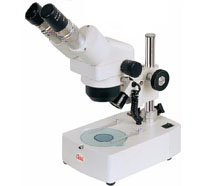
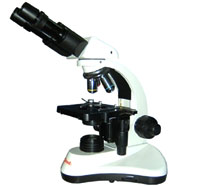
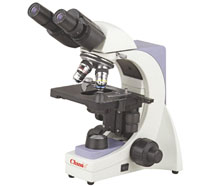
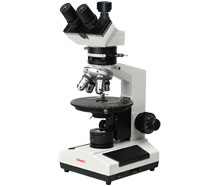
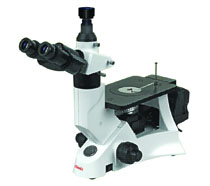
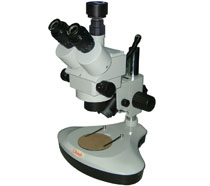
Microscopes
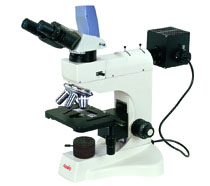
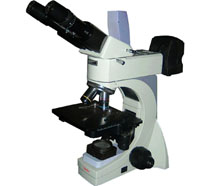
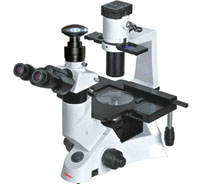
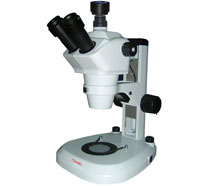
Source high-quality microscopes from vetted suppliers and manufacturers across Asia. Designed for importers, distributors, and brands seeking reliable OEM and private-label production, our network delivers precision optical instruments for educational, clinical, and industrial applications at competitive wholesale volumes.
Sourcing microscopes in bulk requires balancing optical precision with mechanical durability. Whether you are importing student-grade models for educational distribution or infinity-corrected biological microscopes for clinical markets, the core challenge remains the same: ensuring consistent lens quality and structural alignment across high-volume production runs.
Optical Specifications and Component Selection
The cost and capability of a microscope are primarily dictated by its optical train. When specifying requirements to a manufacturer, the objective lenses and illumination system must be explicitly defined to match your target market.
| Objective Type | Optical Correction | Typical Application |
|---|---|---|
| Achromatic | Corrects chromatic aberration for two colors | Educational, entry-level clinical |
| Plan Achromatic | Flat field of view, two-color correction | Standard laboratory, medical diagnostics |
| Infinity Corrected Plan | Infinite optical path, allows intermediate accessories | Advanced research, industrial inspection |
Beyond the objectives, specify the eyepiece field of view (e.g., WF10x/18mm vs. WF10x/22mm) and the numerical aperture (N.A.) of the Abbe condenser. For illumination, modern manufacturing has largely shifted to LED (typically 3W), but the color temperature and dimming circuitry must be specified to avoid flicker at low intensities.
Need to verify a factory's optical assembly capabilities? We evaluate microscope manufacturers on the ground to ensure they meet your exact tolerances.
Talk to our teamManufacturing Tolerances and Assembly
Microscope production is highly segmented. Many factories are essentially assembly plants that purchase die-cast bodies, lenses, and mechanical stages from specialized sub-suppliers. Understanding the production flow is critical for maintaining quality.
Lens Grinding and Coating
Raw glass blanks are ground, polished, and coated with anti-reflective layers. The precision of this stage dictates light transmission and image clarity.
CNC Machining of Mechanical Parts
The rack and pinion gears for coaxial coarse and fine focusing are machined. Tolerances here determine if the focus mechanism will drift over time.
Cleanroom Assembly
Prisms, lenses, and eyepieces must be assembled in dust-free environments to prevent internal contamination.
Optical Alignment
The factory aligns the optical path to ensure parfocality (image stays in focus when switching objectives) and parcentricity (image remains centered).
Quality Control Defect Checklist
Because optical alignment can easily be compromised during assembly or transit, implementing rigorous quality control prior to shipment is non-negotiable.
Pre-Shipment Inspection Focus Areas
- Parfocality and parcentricity validation across all objective lenses
- Mechanical stage drift testing (ensuring the stage does not sink under its own weight)
- Coaxial focus tension adjustment and smoothness (no grinding or catching)
- Internal optical inspection for dust, fungus, or lens delamination
- Electrical safety and illumination consistency (flicker-free LED operation at all dial settings)
Purchasing Mechanics: MOQ, Lead Times, and Pricing
The major manufacturing hubs for optical instruments in China are located in Ningbo, Nanjing, and Guangzhou. Pricing scales heavily based on the optical grade and the degree of customization required for OEM/ODM services.
If you are developing a custom chassis or requiring specialized optical paths (such as phase contrast or fluorescence microscopy), expect MOQs to rise significantly to absorb the engineering and tooling costs.
Sourcing complex optical instruments requires strict oversight. Let us handle the supplier vetting, negotiation, and quality control for your next shipment.
Get a free consultationFrequently Asked Questions
Successfully importing microscopes requires looking past a supplier's catalog specifications and validating their actual production and alignment capabilities. Partnering with experienced sourcing professionals ensures your optical instruments arrive precisely calibrated and ready for the market.
Get Sourcing Help for Microscopes
Tell us your requirements and our experts will connect you with verified manufacturers.