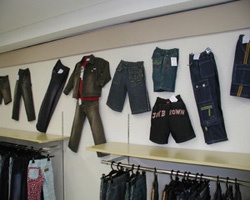
Men's Jeans
Source premium Men's Jeans from vetted suppliers and manufacturers across Asia. Designed for apparel importers, wholesale distributors, and brands seeking reliable OEM and private-label production, our network delivers consistent denim quality, precise wash execution, and reliable capacity at scale.
Sourcing men's jeans in volume requires strict oversight of two notoriously volatile manufacturing phases: fabric weaving and wet processing. Because denim is a living fabric that shrinks, fades, and skews during finishing, achieving batch-to-batch consistency is one of the most demanding challenges in apparel procurement. Success depends on locking down technical specifications early and partnering with factories that possess advanced, calibrated washing facilities.
Core Denim Specifications
When developing technical packs for your manufacturing partners, precision in fabric weight and composition dictates the entire production lifecycle. Denim is measured in ounces per square yard (oz/yd²), which impacts everything from the sewing machinery required to the final drape and durability of the garment.
| Weight Category | Typical Oz/yd² | Best Application |
|---|---|---|
| Lightweight | Under 12oz | Summer collections, high-stretch fits |
| Mid-weight | 12oz to 16oz | Standard year-round denim, everyday fits |
| Heavyweight | Over 16oz | Heritage brands, rigid selvedge, workwear |
Beyond weight, the blend ratio is critical. While traditional rigid denim is 100% cotton, modern men's jeans heavily utilize stretch. A standard stretch specification is 98% Cotton / 2% Elastane, but high-recovery fabrics often incorporate 10% to 15% polyester to prevent "bagging out" at the knees over time. Specifying the exact core-spun yarn structure ensures the elastane doesn't snap during aggressive stone or enzyme washing.
Struggling to achieve consistent fabric recovery and wash finishes across different production batches?
Talk to our teamWash Processing and Dimensional Stability
The wash process is where denim comes to life—and where quality control most frequently fails. Shrinkage is the primary enemy of sizing consistency. Raw denim can shrink up to 10% during its first wash. Factories must perform rigorous shrinkage tests on raw yardage to adjust the cutting patterns accordingly. If a factory cuts before testing the specific dye lot's shrinkage, the final garments will fail your dimensional tolerances.
Modern denim production is also shifting toward low-liquor ratio dyeing and sustainable finishing. When engaging OEM/ODM Services for custom collections, specify whether you require traditional wet processing (like pumice stone washing) or modern alternatives like ozone washing and laser whiskering, which drastically reduce water consumption and manual labor inconsistencies.
Quality Control Checkpoints for Denim
Because of the heavy mechanical stress applied to jeans during manufacturing, standard apparel inspection is insufficient. Your Quality Control & Inspection protocol must include specific physical tests to ensure durability and safety.
Critical Denim Inspection Points
- Hardware Pull Testing: Rivets and shank buttons must withstand at least 90N of pull force to ensure they do not detach.
- Seam Slippage & Burst Strength: Particularly at the crotch and back yoke, reinforced with bartacks or chain stitching.
- Dimensional Stability: Post-wash measurements must fall within a strict tolerance (typically plus or minus 0.5 inches on the waist/inseam).
- Color Fastness: Dry and wet crocking tests to measure indigo transfer onto other surfaces.
- Symmetry of Finishing: Ensuring laser whiskering and hand-sanding align symmetrically across both legs.
Depending on your target market, you may also need to route fabrics through formal Compliance & Testing to verify the absence of restricted substances like azo dyes, formaldehyde, and heavy metals on hardware.
Sourcing Realities: MOQs and Lead Times
Denim production operates on strict minimums driven by the fabric mills. Dyeing indigo yarn requires massive vats, meaning custom fabric runs demand high volumes.
To navigate high fabric MOQs, experienced buyers often purchase a large master roll of greige or raw denim and split it across multiple washes (e.g., raw, mid-wash, light-wash) to build out a collection without over-committing to a single SKU. Before placing volume orders, utilizing comprehensive Factory Audits is essential to verify the supplier's effluent treatment plant (ETP) compliance and automated cutting capabilities.
Need to consolidate your denim supply chain and negotiate better minimums with top-tier Asian mills?
Get a free consultationFrequently Asked Questions
Successfully importing men's jeans at scale comes down to controlling the variables before the fabric is ever cut. By establishing rigorous tolerances for shrinkage, wash execution, and hardware integrity, you protect your brand's fit consistency and bottom line.
Get Sourcing Help for Men's Jeans
Tell us your requirements and our experts will connect you with verified manufacturers.