Medical Ultrasound Instruments
Source medical ultrasound instruments directly from vetted manufacturers and suppliers. This category is designed for medical device importers, healthcare distributors, and brands seeking reliable wholesale or OEM/ODM production. Partner with top-tier factories to secure compliant, high-performance ultrasonic diagnostic equipment at scale.
Sourcing diagnostic ultrasound equipment requires navigating strict regulatory frameworks while balancing hardware performance with software capabilities. Whether you are importing handheld point-of-care (POCUS) devices or full-scale cart-based color Doppler systems, factory selection dictates your product's imaging accuracy, probe durability, and market entry speed. Evaluating a medical device manufacturer goes far beyond basic specifications; it requires deep visibility into their component supply chain, software development lifecycle, and quality management systems.
Critical Specifications and System Architecture
The core of any ultrasound system lies in its transducer technology and signal processing architecture. When evaluating a potential manufacturing partner, you must clarify the hardware baseline rather than just reviewing the surface-level marketing specifications. The number of physical processing channels and the quality of the piezoelectric crystals directly determine the spatial and contrast resolution of the final image.
| Architecture Factor | Entry-Level / Handheld | Advanced Cart-Based |
|---|---|---|
| Processing Channels | 16 to 32 channels | 64 to 128+ channels |
| Transducer Elements | 64 to 128 elements | 128 to 256+ elements |
| Signal Processing | Software-based (Smartphone/Tablet CPU) | Dedicated FPGA / GPU architecture |
| Imaging Modes | B-mode, M-mode, Basic Color | Advanced Color Doppler, CW, Elastography |
When customizing or white-labeling a system, pay close attention to the probe construction. The transducer is the most expensive and fragile component of the system.
Transducer & Probe Quality Checks
- Piezoelectric material quality: Verify the supplier's source for raw crystal or composite materials.
- Acoustic lens durability: Assess the material's resistance to standard medical-grade disinfectants over time.
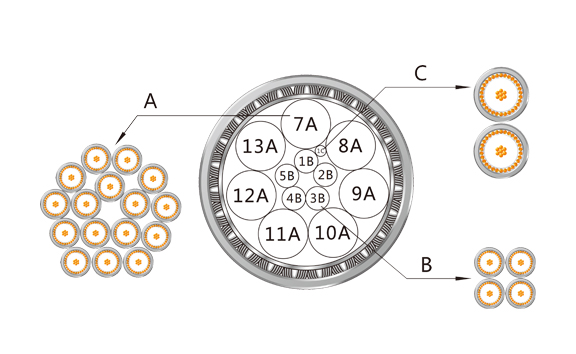
- Cable shielding: Ensure multi-coaxial cables are adequately shielded to prevent electromagnetic interference (EMI) in hospital environments.
- Thermal management: High-frequency probes (e.g., linear arrays over 10MHz) require excellent heat dissipation to remain within safe patient contact temperatures.
Need help verifying a manufacturer's technical capabilities? Our engineers can evaluate factory BOMs and hardware architectures to ensure they meet your performance requirements.
Talk to our teamQuality Control and Regulatory Compliance
Medical devices carry zero margin for error. A supplier's Quality Management System (QMS) must be mature, verifiable, and strictly adhered to on the factory floor. Do not rely solely on provided certificates; you must verify their scope and authenticity. A standard ISO 9001 certification is insufficient; the factory must hold a valid ISO 13485 certification specific to medical device manufacturing.
Executing comprehensive Factory Audits is critical before committing to a production run. Auditors should review the factory's cleanroom standards for transducer assembly, their component traceability systems, and their testing calibration equipment (such as tissue-mimicking phantoms and hydrophones).
Regulatory Nuances
For the European market, ensure the factory is compliant with the Medical Device Regulation (MDR), not just the legacy MDD. For the US, verify if the exact model has an existing FDA 510(k) clearance or if you will need to file as the manufacturer of record.
Navigating these regulatory hurdles often requires third-party Compliance & Testing to validate electrical safety (IEC 60601-1) and electromagnetic compatibility (IEC 60601-1-2) before the devices can clear customs in highly regulated markets.
Production Timelines, MOQs, and Pricing Drivers
Discussing costs in medical ultrasound manufacturing means looking at the Bill of Materials (BOM) versus software licensing. Many manufacturers use shared hardware platforms and differentiate models by software-locking advanced imaging features (like 3D/4D imaging or cardiac measurement packages).
If you are utilizing OEM/ODM Services to develop a custom enclosure or proprietary software interface, expect significant upfront NRE (Non-Recurring Engineering) costs and extended lead times.
Pricing is heavily dictated by the number and type of probes included. A standard convex probe is relatively inexpensive to produce, whereas high-density phased array (cardiac) or transvaginal probes require complex manufacturing processes and will significantly increase the per-unit cost.
Ready to negotiate pricing and production terms? We help buyers secure favorable MOQs and transparent pricing structures with top-tier medical manufacturers.
Get a free consultationFrequently Asked Questions
Successfully importing medical ultrasound instruments requires treating your manufacturer as a long-term compliance and technology partner, rather than a simple vendor. By focusing on transducer quality, processing architecture, and verifiable QMS standards, you can build a resilient supply chain for diagnostic equipment. If you need experienced oversight to manage audits, compliance, and production, our team is ready to assist.
Get Sourcing Help for Medical Ultrasound Instruments
Tell us your requirements and our experts will connect you with verified manufacturers.